If a slave dreams that he is serving as an ephebe, he will be free, since the law allows this to free men only.
Passage Book I, 54
11 readings from 2 sources.
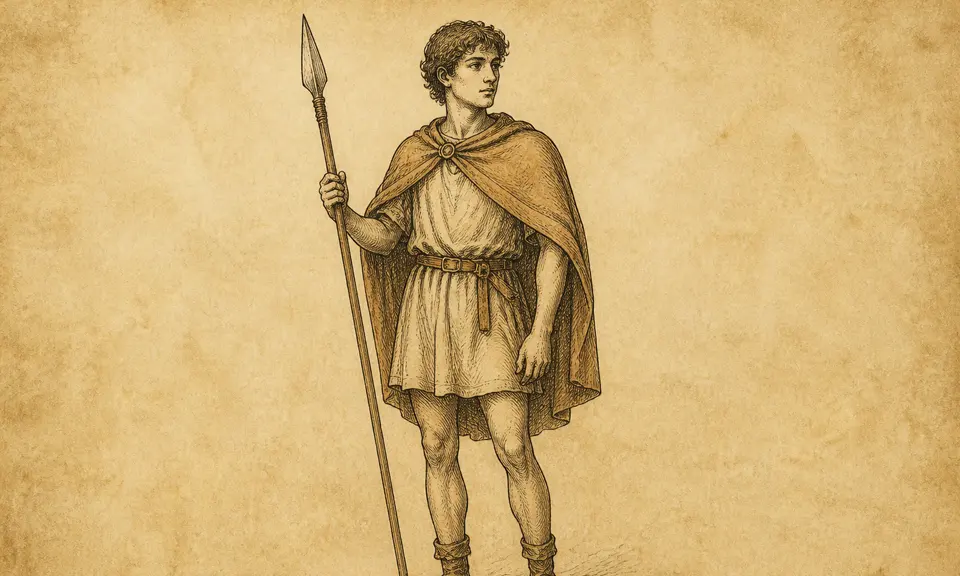
This is the longest reading of a single image Artemidorus gives, and all of it stands on one thing: serving as an ephebe is a matter of law, so the dream about it speaks of what the law allows. To a slave who dreams he is serving as an ephebe it foretells freedom, since the law allows this to free men only. To an orator it means leisure and idleness for a year, for the ephebe must keep his right hand wrapped in the cloak, because it is to be idle for works and for speeches for a year; he says a year because of the length of the ephebate. It hinders going abroad and brings the man who is in a foreign land back to his own country, for he who serves as an ephebe must stay at home. To the unmarried it foretells marriage, for the cloak is put on by law, and by law too a wife is married. A man who longs for children, or who already has a son, will not serve as an ephebe himself: his son will. To an old man, and to one past the age for it, the dream prophesies death. It convicts those who break the law and helps those who act justly, for the ephebate is pretty much the rule of an upright and healthy life. The Arabic book reads the youth quite differently, and reads him as a type: the seeing of him points to good fortune, to acceptance and to victory over enemies, by analogy with the story of Abraham, who broke the idols and cut his opponents off in their disputing; the Qur'an speaks of him as a youth.
This paragraph was generated by a model. It sums up the sources above, comes from none of them and is attributed to no one.
If a slave dreams that he is serving as an ephebe, he will be free, since the law allows this to free men only.
Passage Book I, 54
For an orator it means leisure and idleness for a year; for the ephebe must keep his right hand wrapped in the cloak, because it is to be idle for works and for speeches for a year and not to be put forth. I said a year because of the length of the ephebate; but where they serve as ephebes for three years, one must judge by the local custom.
Passage Book I, 54
It hinders going abroad, and brings the man who is in a foreign land back to his own country; for he who serves as an ephebe must stay at home.
Passage Book I, 54
And to the unmarried it foretells marriage; for the cloak is put on by law, and by law too a wife is married.
Passage Book I, 54
Should a man who longs for children, or who already has a son born to him, see the dream, not he but his son will serve as an ephebe.
Passage Book I, 54
But to an old man, and to one past the age for it, the dream prophesies death.
Passage Book I, 54
And it convicts those who break the law, while it helps those who act justly; for the ephebate is pretty much the rule of an upright and healthy life.
Passage Book I, 54
For an athlete before his admission to the games it is bad, since it foretells his rejection as being over age.
Passage Book I, 54
For a wrestler who is competing it means that he will not take the contest.
Passage Book I, 54
Should he take it, it means that he will not compete; for ephebes do not compete beyond their own borders.
Passage Book I, 54
The seeing of him in a dream points to good fortune and to acceptance and to victory over enemies, by analogy with the story of Abraham, peace be upon him, for he broke the idols and made an example of them and cut them off in their disputing. God the Most High said: {They said: we heard a youth making mention of them; he is called Abraham.} And perhaps the seeing of him points to enmity toward the people of oppression and to victory over them. And perhaps the seeing of the comely beardless youth points to the comely matter. And perhaps the seeing of him points to the meeting of needs, because it has come down in the tradition: seek help in the meeting of your needs through fair faces.
Section letter fa