Where there is no window, the middle one means the master of the house, the right one the children, and the left one the wife.
Passage Book II, 10
4 readings from 3 sources.
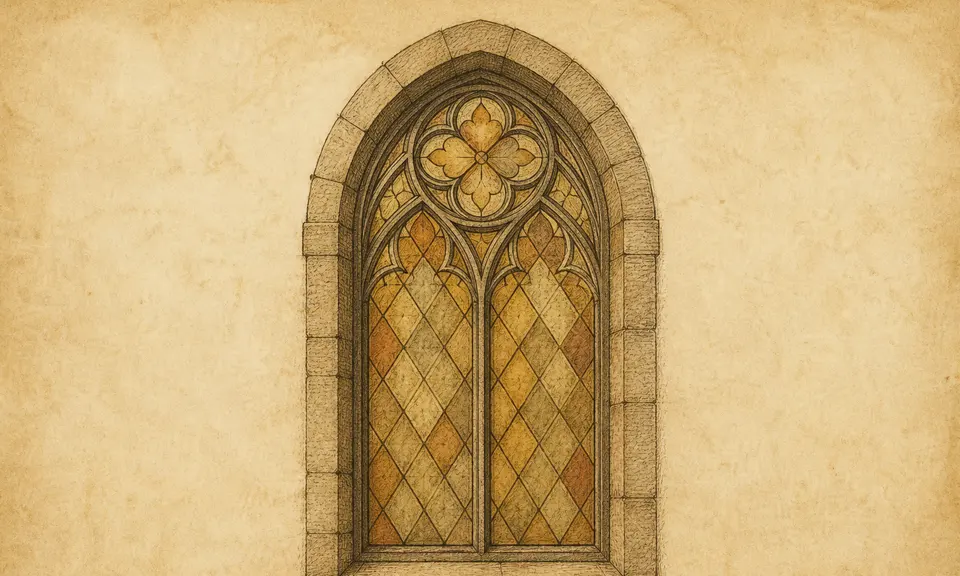
Miller reads the window as hope coming to nothing: windows seen foretell the fatal ending of bright hopes, closed ones desertion, broken ones suspicions of infidelity, sitting in one means falling prey to folly, entering a house by one means being caught compassing an honest end by dishonest means, and escaping through one a difficulty that will hold on mercilessly. an-Nabulsi reads it as the woman of the house — wide, her character is fair; narrow, it is bad — and then as the places a secret can get out: the windows are watchers who come to know what is hidden, and also news heard, cares lifted, comforts made new from the quarter the window faces. Sitting in a window, for him too, is a thing that breaks a marriage, and openly: the man divorces his wife in front of everybody. Artemidorus does not read the window as a woman or as a hope but as a seating plan for the household: where there is no window, the middle one means the master of the house, the right one the children and the left one the wife. And when the house has many windows, it foretells death to brothers and to partners as well — to the elder those toward the east of the house, to the younger those toward the west, the north to be judged like the east and the south like the west.
This paragraph was generated by a model. It sums up the sources above, comes from none of them and is attributed to no one.
Where there is no window, the middle one means the master of the house, the right one the children, and the left one the wife.
Passage Book II, 10
And when the house has many windows, it foretells death to brothers and to partners as well: to the elder, those toward the east of the house; to the younger, those toward the west. Let those toward the north be judged like the east, and those toward the south like the west.
Passage Book II, 10
It is in a dream, if it was wide, a sign of the fair character of the woman, and the narrow one a sign of the badness of her character. And the man, if he sees that he is sitting in a window, divorces his wife openly; and whoever's place was away from the window — his wife is divorced from him in secret. The windows in the house point to the watchers who come to know what is hidden, and to the lifting of cares and troubles, and to comforts made new from the quarters in which they were seen; and perhaps they point to the hearing of news, and to women and children. And whoever sees that he has by him in a dream windows of coloured glass — it points to the planting of trees and the ripening of fruits and to children made new, or sciences, or coloured or dyed clothing, or crowns for those to whom they belong. And whoever sees that he is sitting in an arched window has resolved upon the knot of marriage.
Section letter ṭa
To see windows in your dreams, is an augury of fateful culmination to bright hopes. You will see your fairest wish go down in despair. Fruitless endeavors will be your portion. To see closed windows is a representation of desertion. If they are broken, you will be hounded by miserable suspicions of disloyalty from those you love. To sit in a window, denotes that you will be the victim of folly. To enter a house through a window, denotes that you will be found out while using dishonorable means to consummate a seemingly honorable purpose. To escape by one, indicates that you will fall into a trouble whose toils will hold you unmercifully close. To look through a window when passing and strange objects appear, foretells that you will fail in your chosen avocation and lose the respect for which you risked health and contentment.