The weasel means a woman who is crafty and ill-natured, and a lawsuit: for the words for lawsuit and for weasel have the same numerical value.
Passage Book III, 28
6 readings from 3 sources.
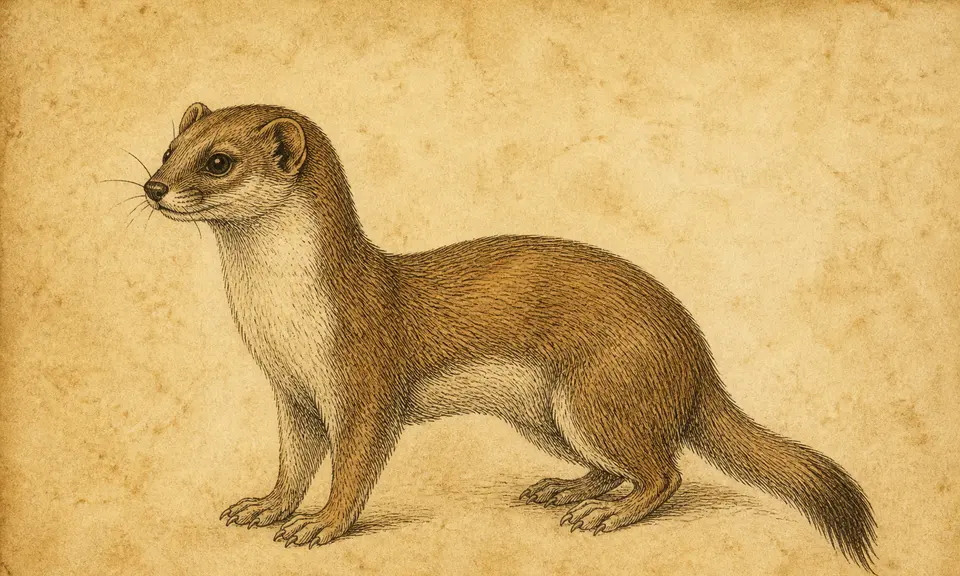
Both books say the weasel is a man who comes close and is not to be trusted. Miller makes him a former enemy wearing friendship: beware those friendships, because they will devour you at an unseemly time, and if you destroy the animal you foil the schemes laid for your defeat. Artemidorus gets four readings out of the animal and then says how to choose between them. The weasel is a woman who is crafty and ill-natured, and a lawsuit, because the words for lawsuit and for weasel have the same numerical value; and death, because whatever she takes, that she lets rot; and gainful work and profits, because some call her the profiteer. Which of these it is one may take from seeing her coming up or going away, or suffering something, or doing something pleasant or unpleasant. an-Nabulsi calls him foolish, unjust, harsh and of little mercy, and reads the reading into the house as the arrival of a cunning man. Then the Arabic book does something no other source here does with a wild animal: it describes it. The weasel is one of the transformed creatures, a reddish animal smaller than a cat which keeps to houses and is the enemy of the mouse — natural history set down beside the omen, as if the reader might not know the beast.
This paragraph was generated by a model. It sums up the sources above, comes from none of them and is attributed to no one.
The weasel means a woman who is crafty and ill-natured, and a lawsuit: for the words for lawsuit and for weasel have the same numerical value.
Passage Book III, 28
And death: for whatever she takes, that she lets rot.
Passage Book III, 28
And gainful work and profits: for by some she is called the profiteer.
Passage Book III, 28
Which of these it is one may take from seeing her coming up or going away, or suffering something, or doing something pleasant or unpleasant.
Passage Book III, 28
In a dream it is a foolish man, unjust, harsh and of little mercy, so whoever sees that it entered his house, a cunning man entered it. It is also one of the transformed creatures: a reddish animal smaller than a cat, which keeps to houses and is an enemy of the mouse.
Section letter alif
To see a weasel bent on a marauding expedition in your dreams, warns you to beware of the friendships of former enemies, as they will devour you at an unseemly time. If you destroy them, you will succeed in foiling deep schemes laid for your defeat.