It kills the sick as well, for it is put together out of bone and bronze, through which the breath goes out but does not come back.
Passage Book I, 56
6 readings from 3 sources.
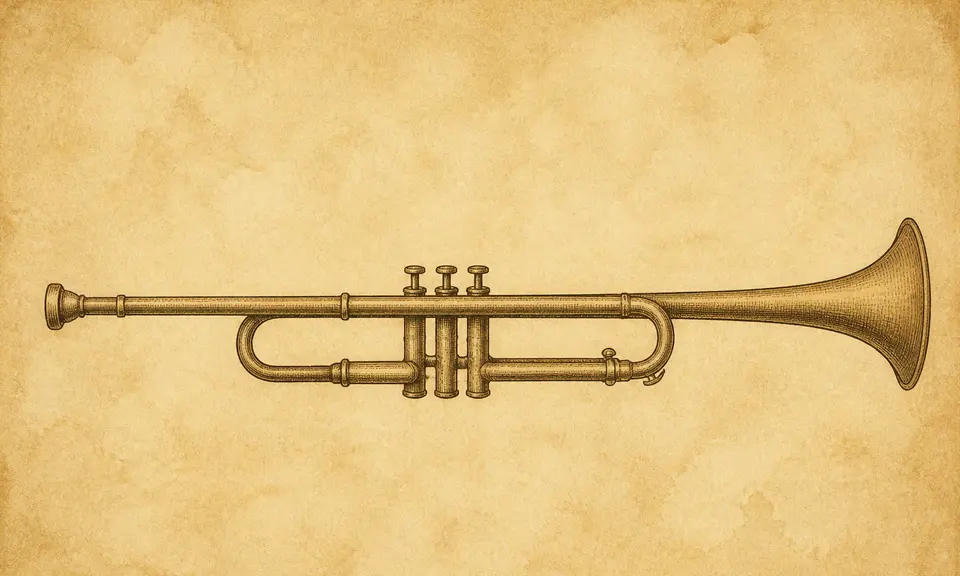
The same action gets opposite answers. To blow a trumpet in Miller signifies that the dreamer will gain his wishes; in an-Nabulsi, whoever saw that he blew into it has a battle befall him. Miller's reading is two lines long and reads the instrument as an announcement, something of unusual interest about to befall the dreamer. an-Nabulsi keeps the announcement and makes it loud and double-edged: the trumpet is good repute, and war, and the terrifying of the enemy, and whoever heard its sound in a vision is being called to a battle. The same carrying sound makes it false reports, and the owner of the trumpet is a man who is a slanderer, or a pimp — while the trumpet itself is also the good that becomes manifest. Then the reading turns the instrument into a person and leaves it there, since the trumpet is interpreted by the character of the woman, so whoever saw a flaw in his trumpet has seen something ascribed to her character. Artemidorus reads the instrument itself and gets death out of its materials: it kills the sick, for it is put together out of bone and bronze, through which the breath goes out but does not come back. Slaves and all who are in service it frees from their slavery, for the instrument belongs to free men. And on whatever instrument a man hears somebody blowing, he will be thrown into confusion; but if he only sees a trumpet, he will fall into empty fear. Miller hears news coming; the Arabic book hears who is making the noise.
This paragraph was generated by a model. It sums up the sources above, comes from none of them and is attributed to no one.
It kills the sick as well, for it is put together out of bone and bronze, through which the breath goes out but does not come back.
Passage Book I, 56
Slaves and all who are in service it frees from their slavery, for the instrument belongs to free men.
Passage Book I, 56
To blow a round trumpet is bad, for the instrument is not sacred but warlike, and whatever the man who uses this instrument says with his mouth runs back upon his own head. Hence it does not allow him to bring charges against anybody either.
Passage Book I, 56
On whatever instrument a man hears somebody blowing, he will be thrown into confusion; but if he only sees a trumpet, he will fall into empty fear.
Passage Book I, 56
In a dream it is good repute, and war, and the terrifying of the enemy. And whoever heard in a vision the sound of the trumpet is called to a battle; and if he saw that he blew into it, a battle befalls him. And the trumpet in a dream is a servant together with leadership, if it is made of horn. And the trumpet points to false reports, and the owner of the trumpet points to a man who is a slanderer, or a pimp, or a seller of wine. And the trumpet is good that becomes manifest. And the trumpet is interpreted by the character of the woman; so whoever saw a flaw in his trumpet, that is ascribed to her character.
Section letter ba
To dream of a trumpet, denotes that something of unusual interest is about to befall you. To blow a trumpet, signifies that you will gain your wishes.