Every change for the better is good for the rich, even if a man changes into a god; but there must be nothing lacking in it.
Passage Book IV
2 readings from 2 sources.
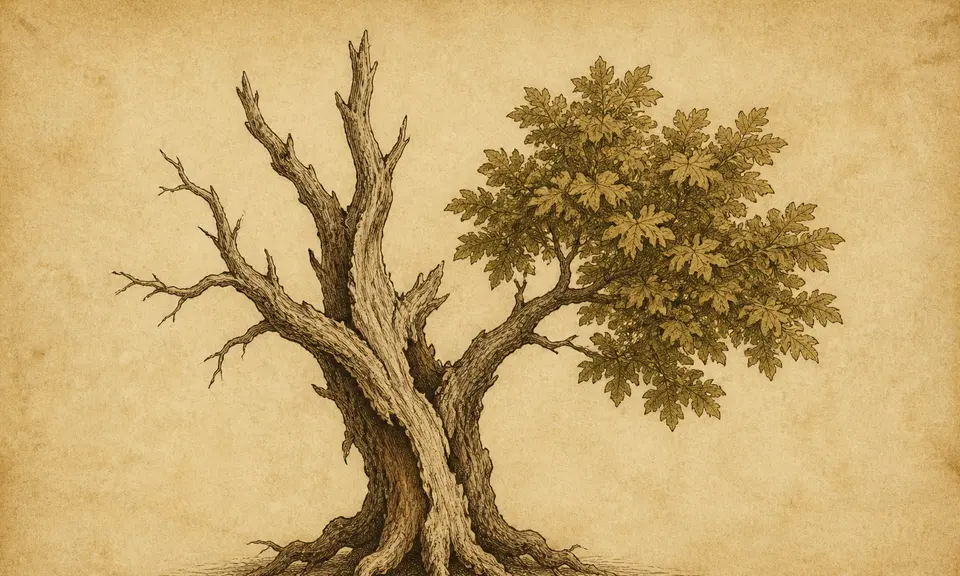
This is not a thing that can be seen in a dream — it is a rule about how to read any dream in which one thing turns into another. Both books put it as a rule, and each puts it differently. Artemidorus narrows it to a direction and to one sort of dreamer: every change for the better is good for the rich, even if a man changes into a god — and he attaches the condition that holds the whole thing together, that there must be nothing lacking in it. An incomplete change, then, is not a change for the better. an-Nabulsi does not narrow the rule and leaves it both directions: a transformation away from what is customary to things — as when a church becomes a mosque, or a dried-up tree becomes fruitful — points to a change of the holders of offices, or to a difference in the states of the doer, from evil to good and from good to evil, according to the measure of the signs of the vision. The same holds for the passing of the limbs out of their substances and of persons out of their forms, and his example is the most concrete thing in it: whoever saw that he is of middle age and is not so, it is soundness in his religion and dignity for him and an increase in his honour. The Greek rule rules out the change for the worse in advance; the Arabic leaves it open and orders it measured against the signs.
This paragraph was generated by a model. It sums up the sources above, comes from none of them and is attributed to no one.
Every change for the better is good for the rich, even if a man changes into a god; but there must be nothing lacking in it.
Passage Book IV
In a dream, away from what is customary to them, as when a church becomes a mosque, or a dried-up tree becomes fruitful: that in a dream points to a change of the holders of offices, or to a difference in the states of the doer, from evil to good and from good to evil, according to the measure of the signs of the vision. And likewise the passing of the limbs out of their substances, and of persons out of their forms. So whoever saw that he is of middle age and is not so, it is soundness in his religion and dignity for him and an increase in his honour.
Section letter ta