To have a tongue of fitting size, matched to the mouth, and to speak clearly is good for everyone.
Passage Book I, 32
12 readings from 3 sources.
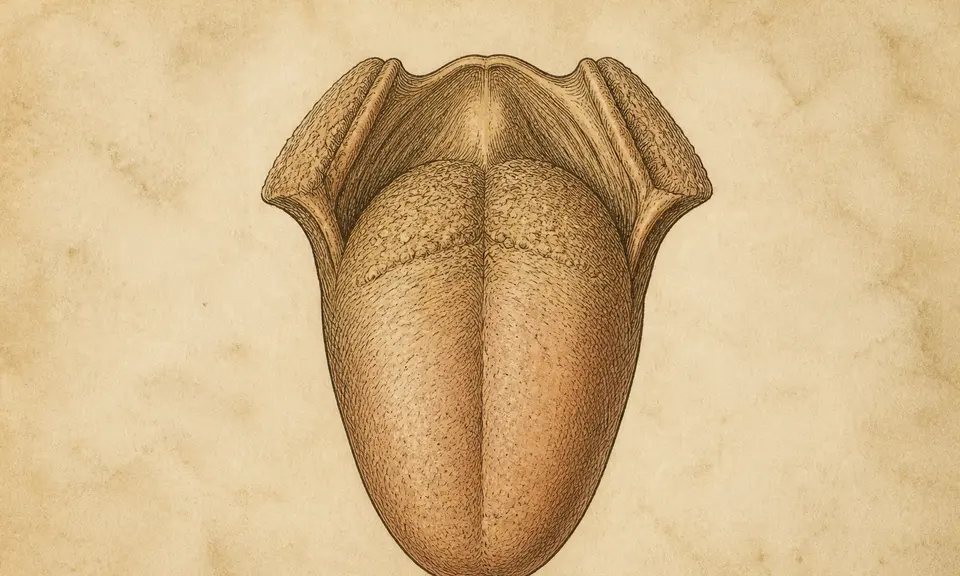
Miller reads the tongue as other people’s opinion: seeing your own means being looked on with disfavour, seeing another’s that scandal will vilify you, and a tongue affected in any way that carelessness in talking will cause trouble. an-Nabulsi reads it as the man’s own instrument — the interpreter of its owner and the manager of his affairs — and then as the place of sin, so that moving it is sinning. A tongue grown long before the men of argument is strength and victory; long without a dispute, it is foulness of speech. Two tongues mean a knowledge not his own; a tied tongue work stopped and poverty; and black hair on it an evil soon, white hair an evil later. Artemidorus reads the organ itself: a tongue of fitting size and clear speech are good for everyone, while a tongue bound or speechless is inactivity together with poverty, because poverty takes freedom of speech away as well. A swollen tongue is illness for the dreamer’s wife, and a tongue hanging out over the mouth is harm from rash words — a dream that has often exposed a wife as an adulteress. On hairs growing from the tongue he overrules what he inherited: some say it is good for men who earn their living by speaking, but he has observed it to be bad for everyone, since nothing that is not idle and untrodden grows hair, and the tongue must not be idle. And on one detail the Greek book and the Arabic one agree without knowing each other: black hairs bring the outcome on quickly, white hairs slowly.
This paragraph was generated by a model. It sums up the sources above, comes from none of them and is attributed to no one.
To have a tongue of fitting size, matched to the mouth, and to speak clearly is good for everyone.
Passage Book I, 32
But not being able to speak, or having the tongue bound, signifies inactivity together with poverty, for poverty takes away freedom of speech as well.
Passage Book I, 32
A swollen tongue signifies illness for the wife of the dreamer, if he has one; if not, for himself.
Passage Book I, 32
And a tongue falling out over the mouth signifies harm from rashness of words, and it has often exposed the dreamer's wife as an adulteress.
Passage Book I, 32
But to dream of having hairs growing out of the tongue, whether white or black, would not be good. Some say, however, that it is good for men who earn their living by speaking. We have observed that such a thing is bad for everyone: for nothing that is not idle and untrodden grows hair, and the tongue must not be idle.
Passage Book I, 32
And the black hairs bring on the outcomes more quickly, the white ones more slowly.
Passage Book I, 32
What I have observed about this dream I write down here. For those who work by the voice, the tongue got a rest from speaking; for the rest, a rest from food: either they were ill a long time and did not take their accustomed food, or, having fallen ill already, they died.
Passage Book I, 32
It makes no difference whether the hairs have grown from the tongue itself or from the palate or from the gums or from the teeth or from the lips; for they mean the same.
Passage Book I, 32
For men of letters it is good to offer their mouth to others and to have their tongue eaten: for having gained much from mouth and tongue, they will be able to provide for others as well.
Passage Book III, 23
But if a man eats up his own mouth or his own tongue, he will cease from using speech; and to private men it signifies repentance for rashness of words.
Passage Book III, 23
In a dream it is the interpreter of its owner and the manager of his affairs; and the tongue is the place of sin, so if he moved it, he sinned a sin. And if he saw in his tongue an increase of length or of breadth, or an opening out in speech before the men of argument, that is strength for him and a victory in his dispute. And if he saw his tongue long and not in a state of dispute, he is foul of tongue — and length of tongue may be a victory for its owner in his eloquence and his learning. And if he saw that he had two tongues, he is granted a knowledge other than his own and an argument other than his own, and strength and victory over his enemies. And when the tongue is tied and he cannot speak, that is a stopping of work, and it is poverty as well. And if black hair grew on the tongue, that is an evil soon; and if white, an evil later. And the tongue is completeness and beauty and an argument and a way of life and a name. And whoever saw his tongue cut off and he was a ruler — that goes back to his interpreter, by death or by removal. And a man's tongue is in the place of his pen. And when the king's tongue grew long, his lands and his kingdom and his word increased; and if it grew long until it reached the sky, he was removed for a wrong he brought about. And the tongue is read as a suckling child, and as the lion of the cave, and as a horseman of guile; so whoever let his lion out of the cave — that is his tongue. And if he saw his tongue lost, then his suckling child dies; and likewise if he saw a horseman who had let his horse loose. And if he saw that his tongue was cut off and he has a lawsuit, his argument was overthrown and he was subdued. And whoever cut off the tip of his tongue and had a witness doubts his testimony; and if he was a merchant, he lost in his trade; and if he was a seeker of knowledge, he got nothing. And whoever saw his tongue cut off is forbearing. And whoever saw his wife's tongue cut off — then she is chaste and covered; and if a man saw that his wife cut off his tongue, then she is gentle with him. And whoever cut off the tongue of a poor man gives something to a fool and stops his tongue; and if a poor man saw that he cut off the tongue of a poor man, he subdues him. And whoever saw his tongue stuck to his palate denied a right or a jewel he had been entrusted with. And whoever saw hair upon his tongue — it may be poetry he composes or recites. And whoever saw that he eats his tongue and he is of the common people regrets a word he speaks; and if he was of the governors, then he eats people's monies with his tongue. And it is said whoever ate his tongue is much silent, swallowing his rage, a man who humours others. And the cutting off of the governor's tongue is his removal. And whoever saw that he has a cave with a lion in it — the cave is his mouth and the lion his tongue; and if he loosed it upon the people to eat them, then he harms people with his tongue. And the cutting off of the poet's tongue is money that comes to him from the one who cut it. And whoever saw his tongue black becomes master over his people by his tongue; and if he was of the base, then he is a liar or a poet. And whoever was afraid and saw his tongue is subdued and abased, and his affair is not hidden from the one who tells of him. And whoever bit his tongue swallows his rage; and sometimes it points to his greed in eating. And whoever saw his tongue split in two is a liar. And whoever saw that he has many tongues and was not of noble rank is granted children; and if the colours of the tongues differed and were not even in their states, they pointed to the differing of his speech and of his argument against the one who bears witness for him; and sometimes it points to his faulty speech, or to his being one who makes mistakes in his recitation. And whoever saw that people lick his tongue or suck it — then they seek of his knowledge. And the tongue may point, for the king, to his deputy or his chamberlain or his vizier or his scribe; and sometimes it points to hoarded money and to standing and to the knowledge that comes out of him; and it points to the servant devoted to the household's affairs, or the hired man, or the house, or the beast, or the wicked enemy, or the planting that has fruit, or the bad wife who does not conceive, or the speech that comes out of him, or provision, or the sweeper in the roads, or the tracker of footprints, or the one who brings out hidden things; and sometimes it points to the policeman or to the keeper of prisoners. And sometimes the animal's tongue points to its voice or its life, because the tongue is for it like the hand with which it takes. And the king, when he saw his tongue cut off, it may point to the removal of his deputy or his chamberlain or his vizier or his scribe; and sometimes he lost a great deal of money; and sometimes the enemy overcomes some of his lands, or his mark or his name or his standing is cut off from them. And if a learned man saw that his tongue had been cut off, he was beaten in his disputing and his debating; and sometimes his servant or his pupil or his child died. And if a craftsman saw his tongue cut off, he lost his hired man or his partner; and sometimes he sold his house or let it out, or his beast died. And sometimes the loss of the tongue points to the gloating of enemies among his household or his neighbours, or to the death of one he loves, or to the cutting off of his kindness from them; and sometimes his tree's bearing was stopped, or he cut down a tree that does not bear fruit. And sometimes the loss of the tongue and its cutting point to the divorcing of the wife, or to his speech being cut off from the place he is in, or to his provision being stopped from it. And if he saw his tongue cut off, it pointed to the death of a grass-cutter or a sweeper in the roads or a tracker of footprints or a man who brings out hidden things or an evil man. And if he saw that he has tongues, it pointed to an increase in money or in household or in knowledge; and sometimes he speaks in several tongues. And if he saw that he has a tongue along with his tongue, it pointed to tale-bearing and to throwing words among people, because it is said: so-and-so has two tongues and two faces. If the extra tongue does not hinder speech nor benefit, then it may point to truthfulness and to affection, for His word, exalted be He: and grant me a tongue of truth among the later folk. And sometimes the tongue points to what a man defends himself with, of a sword or of gear; and sometimes its cutting points, for the people of knowing, to keeping silence and to standing in thankfulness to God the Exalted. And whoever saw hair grown upon his tongue — if his craft was speech, his ordering of it was spoiled for him; and if he was not of the people of speech, the matter of his food was made hard for him. And sometimes the tongue points to the captive, or to the snake in its hole. And whoever saw that he looks at his tongue is a keeper of his tongue.
Section letter lam
To dream of seeing your own tongue, denotes that you will be looked upon with disfavor by your acquaintances. To see the tongue of another, foretells that scandal will villify you. To dream that your tongue is affected in any way, denotes that your carelessness in talking will get you into trouble.