Tar

3 readings from 2 sources.

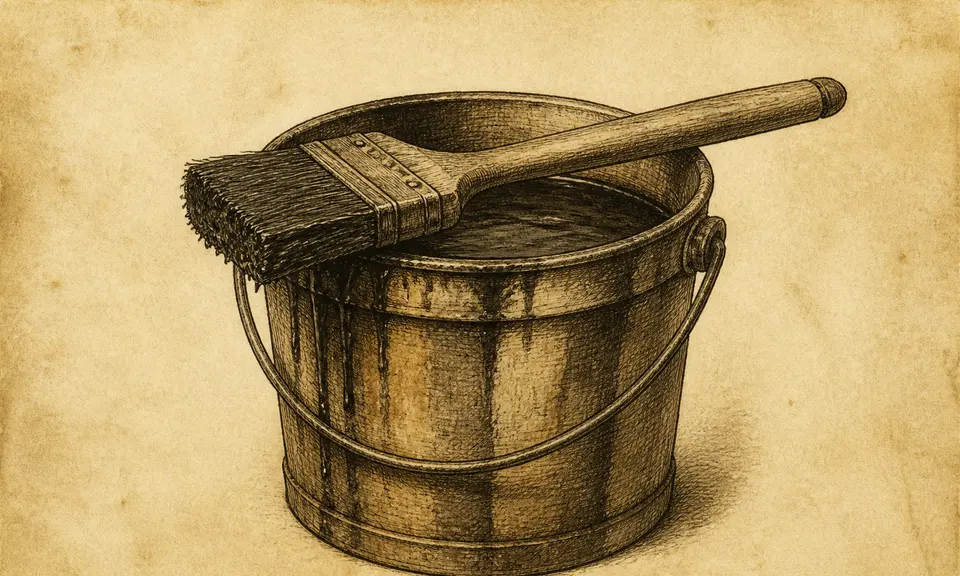
The image was generated by a model. It is not a period engraving and comes from none of the sources.

Miller reads tar as a warning and as a stain: seeing it warns against pitfalls and the designs of treacherous enemies, and having it on hands or clothing means sickness and grief. an-Nabulsi reads it twice and in opposite directions, and gives his reason each time. Tar is a man who holds back those who spread corruption, because tar kills the worm; and whoever anoints himself with it or wears a garment of it enters into sins, because of the verse about the people of the Fire whose garments shall be of tar. The stain on the clothes is in both books; only the Arabic one says where the stain is quoted from. Another Arabic reading takes the pitch the other way again and gives reasons the first one did not. It is a screen and a protection from the heat; it is money, because Ibn Sirin made all blackness money; it is profit and repentance, as charcoal and ebony were read; and it is steadfastness, because they say that what is pitched does not change. The same black stuff that quotes the verse about garments of tar also quotes a proverb about not changing.

This paragraph was generated by a model. It sums up the sources above, comes from none of them and is attributed to no one.

Arabic dream book

In a dream it is a man who holds back those who spread corruption, because it kills the worm; and whoever anointed himself with it or wore a garment of it enters into sins, for the word of God concerning the people of the Fire: their garments shall be of tar.

Section letter qaf

It is in a dream a screen and a protection from the heat; and perhaps it points to the quality that is in its own name; and perhaps it points to money, because Ibn Sirin made all blackness money. And perhaps it points to profit and to repentance, as charcoal and ebony were read. And the pitch points to steadfastness, because they say: what is pitched does not change. And the pitch may point to ships and to painted patterns.

Section letter qaf
The Perfuming of Mankind in the Interpretation of Dreams

Abd al-Ghani al-Nabulsi

before 1731; first printed Cairo 1858 · Arab-Islamic

carries the ancient tradition after Artemidorus

About this source

An Arabic dream book by the Damascene scholar al-Nabulsi, an alphabetical dictionary of two and a half thousand headwords. It draws on the ancient tradition directly: Artemidorus was translated into Arabic by Hunayn ibn Ishaq in the ninth century. The readings here almost always address the dreamer’s standing, property and faith rather than their feelings.

Rights: public domain

Where the text is from: https://shamela.ws/book/1217

Miller

If you see tar in dreams, it warns you against pitfalls and designs of treacherous enemies. To have tar on your hands or clothing, denotes sickness and grief.

Ten Thousand Dreams Interpreted; Or, What's in a Dream

Gustavus Hindman Miller

1901 · American Victorian

carries fragments of the ancient tradition without its system

About this source

An American dream book, the only one here that knows the telephone, the railroad or the elevator. Doctrinally it is the most degraded: it keeps fragments of the ancient tradition without the system that once held them together.

Rights: public domain

Where the text is from: https://www.gutenberg.org/ebooks/926