Sleep

2 readings from 2 sources.

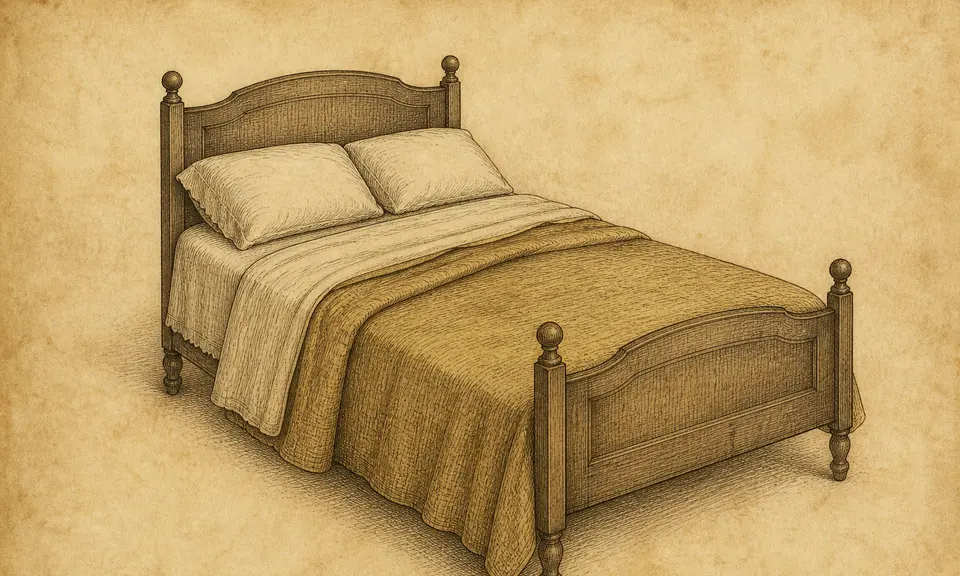
The image was generated by a model. It is not a period engraving and comes from none of the sources.

Miller writes the longest reading he has on the act of sleeping and makes every bed a verdict: clean fresh beds mean peace and favour from those one loves, unnatural resting places sickness and broken engagements, sleeping beside a little child domestic joys, sleeping with a repulsive person a love that will wane first — and for a young woman, sleeping beside her lover is a warning against yielding. an-Nabulsi needs three words: in a dream sleep is heedlessness. The dream book that exists because people sleep says the shortest thing in its whole corpus about sleeping.

This paragraph was generated by a model. It sums up the sources above, comes from none of them and is attributed to no one.

Arabic dream book

In a dream it is heedlessness. And whoever saw that he is asleep, or that he wanted to sleep — that points to idleness, and it is bad for all people, save for the one who is in fear or who looks for a hardship or a punishment to fall upon him, because sleep takes away all cares and all sorrows. And whoever saw that he is asleep in a graveyard or upon the face of a road or upon a grave — that points, for the sick man, to death, and for the sound man, to idleness. And sleep is a sign of the stopping of gains and of heedlessness of what God the Exalted has laid upon man of doing good. And sometimes sleep points to a blessed journey for the people of obedience and striving, and to withdrawing from the world and from making much of its adornment. And if he saw people asleep in a dream, it pointed to a general perishing or to a rise in prices; and sometimes it points to matters that are shut. And if the people were in something of that and he saw them asleep in a dream, it pointed to God the Exalted lifting that from them. And whoever saw that he is asleep upon his back gains a hold upon the world. And sleep points to the going away of care. And sleep upon the face is not praised, and it points, for governors, to their removal, and for others, to scarcity and poverty. And sleep for the unmarried woman is a marriage. And it is said sleep is the going away of sin, because the pens of the angels are lifted from the sleeper. And it is said sleep is a drunkenness that covers the mind; and it is said it is an illness. And whoever saw that he is asleep and was afraid is made safe. And it is said sleep points to heedlessness of one's own good. And sleep upon the back is scattering and lowliness and death, and sometimes it points to the finishing of works. And sleep upon the side is news or illness or death. And whoever saw that he lay down under many trees — his offspring and his children grew many. And sleep upon the belly is a gaining of land and of money and of a child.

Section letter nun

The Perfuming of Mankind in the Interpretation of Dreams

Abd al-Ghani al-Nabulsi

before 1731; first printed Cairo 1858 · Arab-Islamic

carries the ancient tradition after Artemidorus

About this source

An Arabic dream book by the Damascene scholar al-Nabulsi, an alphabetical dictionary of two and a half thousand headwords. It draws on the ancient tradition directly: Artemidorus was translated into Arabic by Hunayn ibn Ishaq in the ninth century. The readings here almost always address the dreamer’s standing, property and faith rather than their feelings.

Rights: public domain

Where the text is from: https://shamela.ws/book/1217

Miller

To dream of sleeping on clean, fresh beds, denotes peace and favor from those whom you love. To sleep in unnatural resting places, foretells sickness and broken engagements. To sleep beside a little child, betokens domestic joys and reciprocated love. To see others sleeping, you will overcome all opposition in your pursuit for woman's favor. To dream of sleeping with a repulsive person or object, warns you that your love will wane before that of your sweetheart, and you will suffer for your escapades. For a young woman to dream of sleeping with her lover or some fascinating object, warns her against yielding herself a willing victim to his charms.

Ten Thousand Dreams Interpreted; Or, What's in a Dream

Gustavus Hindman Miller

1901 · American Victorian

carries fragments of the ancient tradition without its system

About this source

An American dream book, the only one here that knows the telephone, the railroad or the elevator. Doctrinally it is the most degraded: it keeps fragments of the ancient tradition without the system that once held them together.

Rights: public domain

Where the text is from: https://www.gutenberg.org/ebooks/926