All shellfish, when they are taken, loosen the belly, such as the purple shell, the trumpet shell, the oyster, the conch, the sea urchin, the mussel, the giant clam, the cockle, the scallop, and anything else of the kind.
Passage Book II, 14
5 readings from 3 sources.
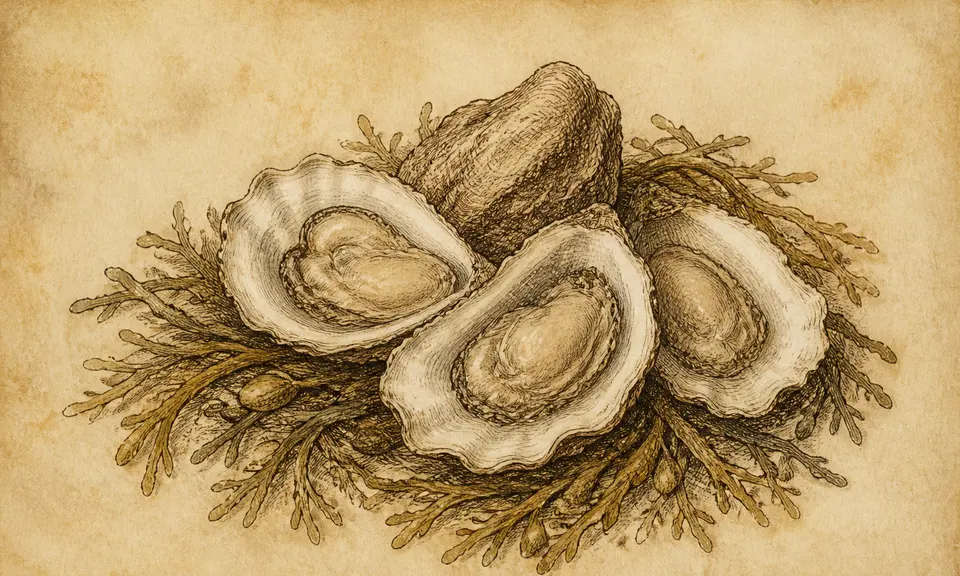
Three words stand here because the books use three, and none of the three means the oyster alone. Artemidorus's first item is not an omen but a bodily prediction: all shellfish, when they are taken, loosen the belly — and the oyster stands in that list between the purple shell, the mussel, the cockle and the scallop. His second is an omen, and he gives its reason: the pinna and the crab called the pinna-guard are good for marriage and for partnership, because of the partnership and good will they have towards each other. Miller looks at the oyster neither as food nor as a pair but as an appetite: whoever eats them loses all sense of propriety and morality in the pursuit of low pleasures and the indulgence of an insatiate thirst for gaining; whoever deals in them will not be over-modest in his mode of winning a sweetheart or a fortune; and whoever merely sees them is given easy circumstances and the promise of many children. Under the other word he reads the beach as waste: to walk among shells and gather them is extravagance, and the pleasure leaves nothing but exasperating regrets and memories. an-Nabulsi reads one shell and one dreamer — the shell points to a miscarriage for a woman with child. So the Greek book arranges it by the fidelity of two creatures that live together, the English one by the immoderation of the man who eats them and the emptiness of the man who gathers them, and the Arabic one by a loss that cannot be made good.
This paragraph was generated by a model. It sums up the sources above, comes from none of them and is attributed to no one.
All shellfish, when they are taken, loosen the belly, such as the purple shell, the trumpet shell, the oyster, the conch, the sea urchin, the mussel, the giant clam, the cockle, the scallop, and anything else of the kind.
Passage Book II, 14
The pinna and the crab called the pinna-guard are good for marriage and for partnership, because of the partnership and good will they have towards each other.
Passage Book II, 14
The shell in a dream points to a miscarriage for a woman with child.
Section letter ṣad
If you dream that you eat oysters, it denotes that you will lose all sense of propriety and morality in your pursuit of low pleasures, and the indulgence of an insatiate thirst for gaining. To deal in oysters, denotes that you will not be over-modest in your mode of winning a sweetheart, or a fortune. To see them, denotes easy circumstances, and many children are promised you.
To walk among and gather shells in your dream, denotes extravagance. Pleasure will leave you naught but exasperating regrets and memories. See Mussels and Oysters.