Covering yourself with a good quilt: wealth and rank.
Section Caps, belts, clothes, shoes and stockings
5 readings from 3 sources.
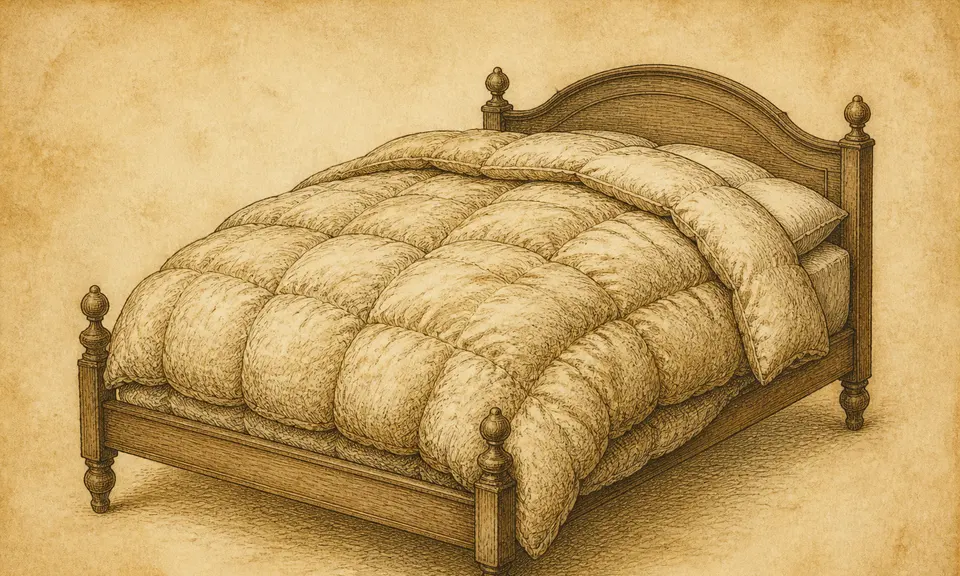
The Duke of Zhou reads the covering as standing: to cover yourself with a good quilt is wealth and rank. an-Nabulsi reads the same act as a marriage, and says it in the plainest sentence in his book — in a dream the quilt is a woman with whom the man covers himself. Miller reads the quilt as the woman’s own housekeeping instead: quilts foretell pleasant and comfortable circumstances, and a young woman’s practical, business-like ways will advance her into the esteem of a man who seeks her for a wife — clean quilts with holes in them a husband who appreciates her worth but is not the one she most wanted, and soiled quilts carelessness in her dress and manners that will cost her an upright husband. The Chinese and the Arabic readings are the same gesture seen from two distances: what a man is wrapped in, and who.
This paragraph was generated by a model. It sums up the sources above, comes from none of them and is attributed to no one.
Covering yourself with a good quilt: wealth and rank.
Section Caps, belts, clothes, shoes and stockings
highly auspicious
Covering yourself with a good quilt: greatly auspicious.
Section Clothes, curtains, blankets, mattresses, spoons and chopsticks
In a dream it is a woman with whom the man covers himself. And whoever sees that he took a quilt at night and slept in it married a woman, or came by quiet and rest. And the quilt is rest and strength; and it is said the quilt is a woman who is of use, and it points to safety and quiet.
Section letter lam
And it is the quilt that is worn, and that in a dream is strength and a back to lean upon and a support, and a woman in splendour and beauty. So whoever saw that he wrapped himself in it together with a waist-wrapper and slept, he marries a woman. And if he saw a wrap of pearl, then his wife is a keeper of the Book of God the Most High.
Section letter dal
To dream of quilts, foretells pleasant and comfortable circumstances. For a young woman, this dream foretells that her practical and wise business-like ways will advance her into the favorable esteem of a man who will seek her for a wife. If the quilts are clean, but having holes in them, she will win a husband who appreciates her worth, but he will not be the one most desired by her for a companion. If the quilts are soiled, she will bear evidence of carelessness in her dress and manners, and thus fail to secure a very upright husband.