Plague

3 readings from 2 sources.

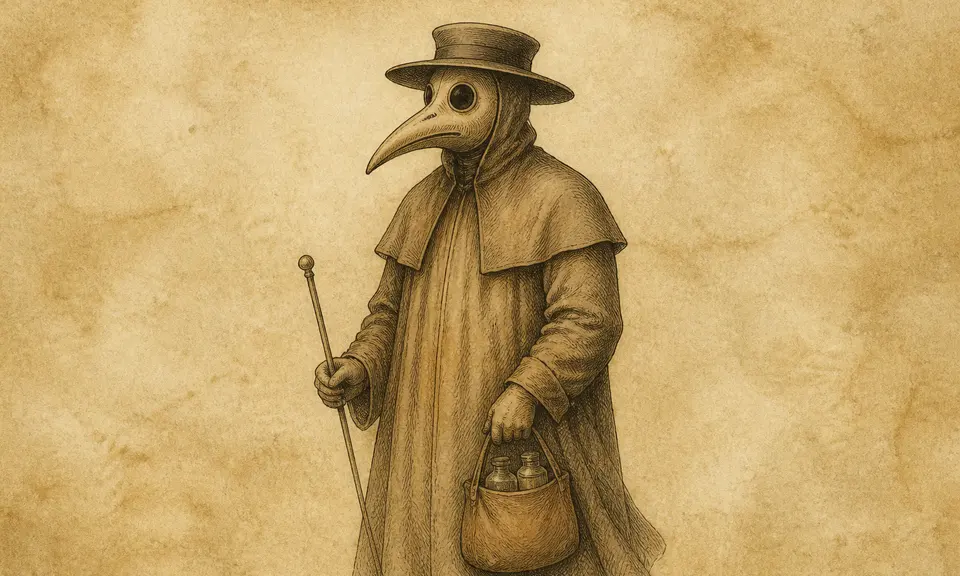
The image was generated by a model. It is not a period engraving and comes from none of the sources.

The difference here is one of scale, not of verdict. Miller takes the raging plague out of the lazaretto and puts it in the office: disappointing returns in business, a wife or lover who makes life wretched, and — if the dreamer is afflicted himself — a business kept out of embarrassment only by the greatest manoeuvring, while fleeing the plague means something impenetrable is pursuing him. an-Nabulsi gives the motif two short clauses and no catastrophe at all: in a dream it is the mange, so whoever is struck by it will be afflicted with the mange. The Arabic book reads the worst word in the language as a skin complaint; the English one reads it as money and marriage. Neither reads it as dying. Another Arabic reading is the one that reads the epidemic itself, and it does not read it as a sickness at all: a harm that comes down on people from the ruler — imprisonment, or his meaning them ill. Between the two Arabic readings the word moves from the skin to the state, and it is the second that meets Miller, who also took the plague out of the lazaretto and put it among people's affairs.

This paragraph was generated by a model. It sums up the sources above, comes from none of them and is attributed to no one.

Arabic dream book

In a dream it is the mange, so whoever sees that he has been struck by it will be afflicted with the mange. And whoever sees that the mange reached him — the plague reaches him. And the plague, when it is seen in a city, is a punishment from the ruler. And perhaps it points to the grave, and to war, and to new-fangled things, for the death and the destruction that are in it. And perhaps it points to a journey common among people, or to a loss that comes from the ruler. And whoever sees that a plague fell in his own town — a war takes place in it.

Section letter ṭa

It is in a dream a harm that comes down on people from the ruler — imprisonment, or his meaning them ill.

Section letter waw

The Perfuming of Mankind in the Interpretation of Dreams

Abd al-Ghani al-Nabulsi

before 1731; first printed Cairo 1858 · Arab-Islamic

carries the ancient tradition after Artemidorus

About this source

An Arabic dream book by the Damascene scholar al-Nabulsi, an alphabetical dictionary of two and a half thousand headwords. It draws on the ancient tradition directly: Artemidorus was translated into Arabic by Hunayn ibn Ishaq in the ninth century. The readings here almost always address the dreamer’s standing, property and faith rather than their feelings.

Rights: public domain

Where the text is from: https://shamela.ws/book/1217

Miller

To dream of a plague raging, denotes disappointing returns in business, and your wife or lover will lead you a wretched existence. If you are afflicted with the plague, you will keep your business out of embarrassment with the greatest maneuvering. If you are trying to escape it, some trouble, which looks impenetrable, is pursuing you.

Ten Thousand Dreams Interpreted; Or, What's in a Dream

Gustavus Hindman Miller

1901 · American Victorian

carries fragments of the ancient tradition without its system

About this source

An American dream book, the only one here that knows the telephone, the railroad or the elevator. Doctrinally it is the most degraded: it keeps fragments of the ancient tradition without the system that once held them together.

Rights: public domain

Where the text is from: https://www.gutenberg.org/ebooks/926