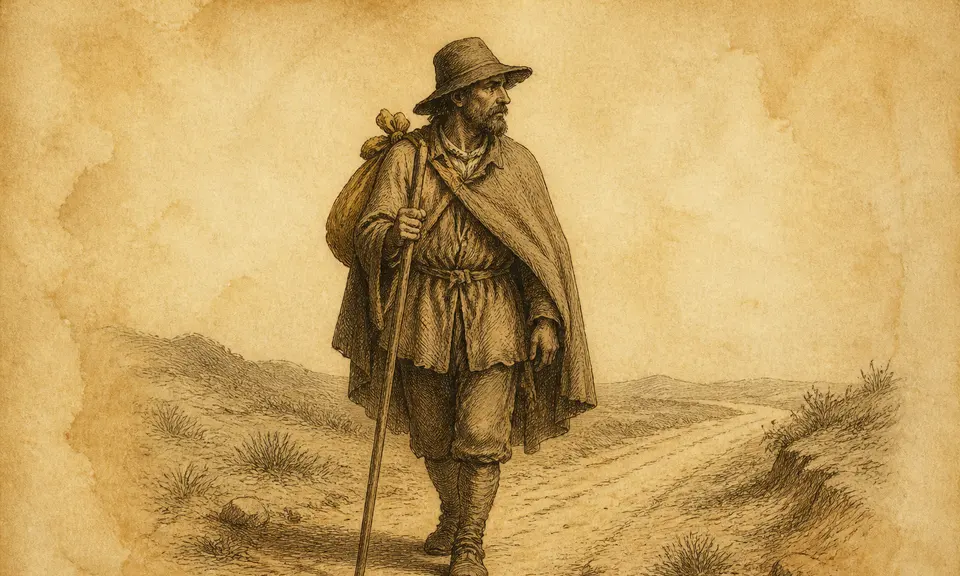
Whoever sees in a dream that he made the pilgrimage of Islam and went round the House and did something of the rites — that is the setting right of his religion and his standing straight on its road, and a reward granted him, and safety from what he fears, and a debt he pays, and trusts he discharges to the Muslims. If he sees that he is going out to the pilgrimage in its season: if he had been removed from office, he is given office; if he was travelling, he comes through safe; if he was a merchant, he profits; if he was ill, he is healed; if he was in debt, it is paid for him; and if he was straying, God guides him. And if he sees that he made the pilgrimage, greater or lesser, he lives a long life and his affairs are accepted. If he sees that he went out to the pilgrimage: if he was a governor, he is removed; if he was a merchant, he loses; if he was travelling, the road is cut off against him; if he was sound, he falls ill. If he sees that a pilgrimage is due from him, he is ungrateful for the bounties and for the discharging of trusts. The pilgrimage in a dream is a sign of going to and fro after a purpose, and of the paying of debt, and the doing of good things, or of working for the one whose kindness is due from him, such as parents and a teacher; or of migration, or of visiting a man of learning or a man of worship. And if he was idle, he works his way into a service. And perhaps the pilgrimage points to the marriage of an unmarried man, and for a king it is the shutting in of enemies and the forsaking of the people of wrongdoing and the taking of a great city out of the lands of unbelief; and perhaps the pilgrimage points to the campaign. If he was a seeker of knowledge, he gets what he wants; if he was poor, he grows rich; if he was ill, he dies; or if he was disobedient, he repents; if he was married, he divorces his wife, or he keeps company with a man who profits him in his religion or his world; and if he was an unbeliever, he takes Islam. If he travelled to the pilgrimage mounted, he is granted help in all we have named, at the hand of the one the mount stands for: if he was riding a strong camel, he keeps company with such a man, because it is the mount of the chief men; if he led a riding beast, he reaches it by the help of a woman; if he rode an elephant, he makes the pilgrimage in a king's company; and if he travelled on foot, he falls into an oath for which he owes an atonement. And perhaps it points to provision and to spoil and to the coming home from a journey, and relief after hardship, and health after illness, and a man's return to what he was. If he carried provisions with him, it points to the fear of God; and perhaps the carrying of provisions points, for the poor man, to riches, and for the man in debt, to the paying of his debt. And whoever made the pilgrimage and did none of the works of the pilgrimage goes to the ruler about a need of his. And whoever sees that he goes out to the pilgrimage alone, with the people taking their leave of him and turning back from him — that points to his death.
Section letter ḥa