A phoenix: a person of rank helps you.
Section Dragons, snakes, birds, beasts and their kind
8 readings from 3 sources.
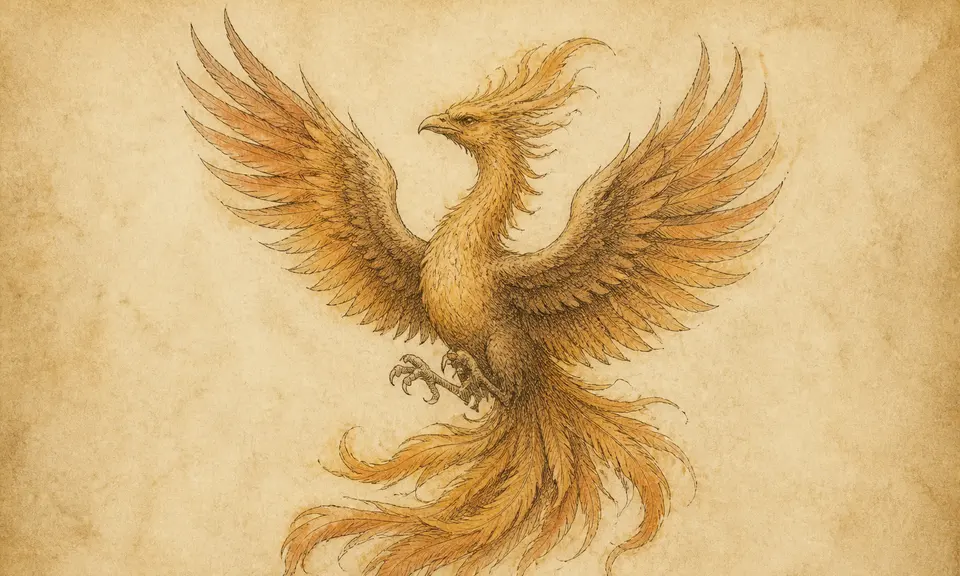
The Duke of Zhou needs six words: a phoenix, and a person of rank helps you. an-Nabulsi builds the whole court around the same bird — it is a man of high standing who starts what has no precedent and keeps no company with the people of the faith, and if it speaks to the dreamer he is given money by the caliph and may become a vizier, and if it throws him something he is given provision from God at the hand of a king. Artemidorus reads the bird through its own legend and ends at a funeral. A man dreamed that he was painting the bird phoenix, and an Egyptian said that the dreamer came to such poverty that, when his father died, he himself from great want got under the body, carried it and bore it out — for the phoenix too buries its own father. Artemidorus adds that he does not know whether the dream came out that way, only that the man told it so; and he gives the other version of the story, in which the phoenix has no father at all, but when its fated time leads it on comes into Egypt from a place men do not know, makes itself a pyre of cassia and myrrh and dies upon it, and out of the ash a worm is begotten which grows and becomes a phoenix again and flies back where the one before it came from. By that version too, he says, a man who tells the dreamer he will be left bereft of his parents will not miss the mark. Both other books agree that the bird means patronage; only the Arabic one is uneasy about who the patron is.
This paragraph was generated by a model. It sums up the sources above, comes from none of them and is attributed to no one.
A phoenix: a person of rank helps you.
Section Dragons, snakes, birds, beasts and their kind
A phoenix settling on your palm: your mother's illness is coming.
Section Dragons, snakes, birds, beasts and their kind
For instance, a man dreamed that he was painting the bird phoenix. An Egyptian said that the man who saw the dream came to such poverty that, when his father died, he himself from great want got under the body, carried it and bore it out: for the phoenix too buries its own father.
Passage Book IV
Whether the dream came out in this way I do not know, but at any rate that man told it so, and according to this version of the story it was likely to have come out.
Passage Book IV
Some say that the phoenix does not bury its father, and that it has no living father at all, nor any other of its forebears; but when its fated time leads it on, it comes into Egypt from a place men do not know, and having made itself a pyre of cassia and myrrh it dies upon it.
Passage Book IV
And when the pyre has been burned, they say that after a time a worm is begotten out of the ash, which as it grows changes and becomes a phoenix again, and flies away from Egypt to the place from which the phoenix before it had come.
Passage Book IV
So that if a man should say that the dreamer will be left bereft of his parents, he will not miss the mark according to this version of the story.
Passage Book IV
In a dream it is a man of high standing who starts what has no precedent and keeps no company with the people of the faith; so whoever sees that the phoenix speaks to him is given money by the caliph, and it is said that he becomes a vizier, and if he sees the phoenix throw him something, he is given provision from God Almighty at the hand of a king. And whoever sees that he rode the phoenix rises high and overcomes a king who has no equal. And if he caught it, he plots against such a man; and if he sold it, he wrongs him; and if he caught it without any contrivance, then it is a brave child. And whoever sees that he came by the phoenix married a beautiful, fair woman. And the phoenix is a beautiful, fair woman, and strange news, and far journeys. And perhaps it pointed to idle talk, of the sound and the sick together.
Section letter ayn