Cultivated pears are good; for their fruit, even when stored away, stays free of rot, and eaten at once it has, besides its nourishment, something of wine in it. And I know that among some people a drink is prepared from them too.
Passage Book I, 73
5 readings from 3 sources.
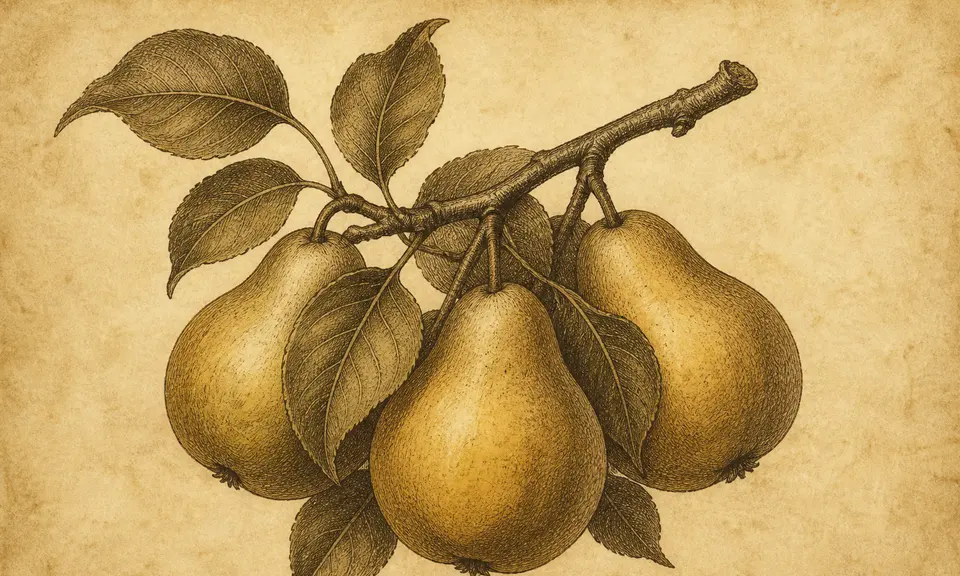
Miller sorts the pears by what is done with them: eating them means poor success and failing health, admiring the golden fruit on the trees means fortune looking more promising, gathering them means pleasant surprises after disappointment, preserving them means taking reverses philosophically, baking them means insipid love. Artemidorus sorts them by the tree they grew on and gives his reasons from the kitchen: cultivated pears are good, for their fruit stays free of rot even when stored away, and eaten at once it has, besides its nourishment, something of wine in it — and he knows that among some people a drink is prepared from them as well. Wild pears and choke-pears are of use to farmers alone, and to everyone else they are unpleasant. an-Nabulsi sorts them by the calendar, as his book does with every fruit: in their season they are provision, or somebody away has come or is coming; out of their season they are illness or care. And he ends with the one case that matters to him — a sick man who sees himself eating pears recovers.
This paragraph was generated by a model. It sums up the sources above, comes from none of them and is attributed to no one.
Cultivated pears are good; for their fruit, even when stored away, stays free of rot, and eaten at once it has, besides its nourishment, something of wine in it. And I know that among some people a drink is prepared from them too.
Passage Book I, 73
Wild pears and choke-pears are of use to farmers alone; to everyone else they are unpleasant.
Passage Book I, 73
In their season they are provision, or somebody who was away has come or is coming; and out of their season they are illness or care. And if a sick man saw that he was eating pears, he recovers.
Section letter alif
It is in a dream wealth that reaches him; and whoever ate it attained wealth and bounty. And it is said the pear is an illness, and the root of it is wealth together with illness. And whoever came upon his pear inherited gathered wealth. And it is said the pear is an indication of good, because it remains days without changing; and the eating of it in its days is better, and out of its days it is unlawful wealth. And the pear tree is a foreign man who placates his household in order to draw wealth out of them. And the pear points to a male child for the pregnant woman, or to a husband for the unmarried woman. And perhaps it points to the death of the sick man and his burial in the dust. And the pear out of its season is illness and a swelling.
Section letter kaf
To dream of eating pears, denotes poor success and debilitating health. To admire the golden fruit upon graceful trees, denotes that fortune will wear a more promising aspect than formerly. To dream of gathering them, denotes pleasant surprises will follow quickly upon disappointment. To preserve them, denotes that you will take reverses philosophically. Baking them, denotes insipid love and friendships.