Peaches and apricots and cherries and all the like, except mulberries, signify pleasures and deceptions that last only a while, and out of season wasted labour.
Passage Book I, 73
3 readings from 3 sources.
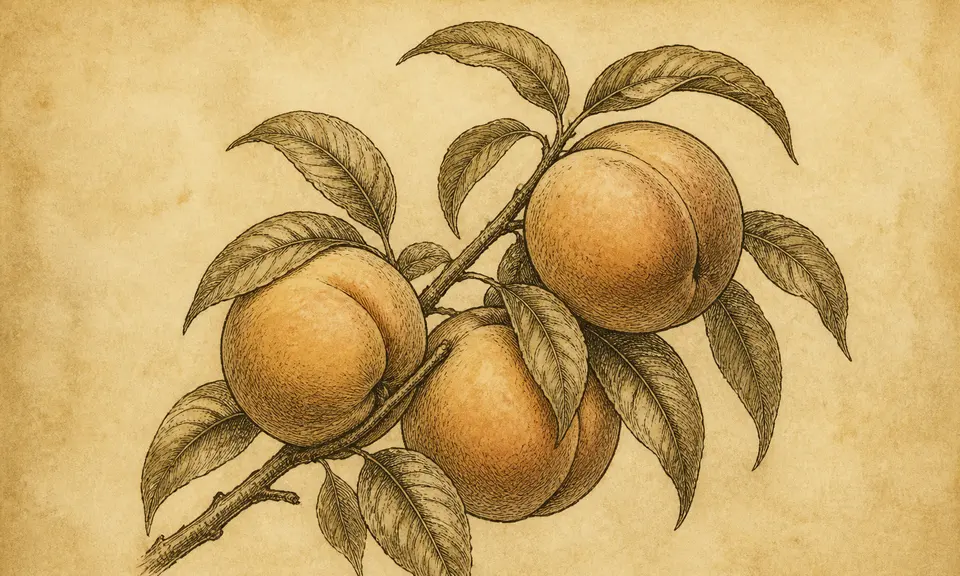
Two of the three readings here are the same sentence in two languages, down to the exception. Artemidorus: peaches and apricots and cherries and all the like, except mulberries, signify pleasures and deceptions that last only a while, and out of season wasted labour. an-Nabulsi, in the middle of his own long reading: the peach, and all its like except the mulberry, when a man sees one of them in its season, points to pleasure and to a trick, and out of season they point to weariness and to what is vain. The same rule, the same two halves, and the mulberry left out of it twice. The rest agrees on something odd: the peach is about somebody’s health.'s health. Miller makes eating them the sickness of children and disappointing returns, dried ones a theft by enemies, and green knotty ones ill health stealing a young woman's attractions — while peaches seen on a leafy tree are a position won after risking health and money. an-Nabulsi tastes first: sweet is desire fulfilled, sour is fear with every bite, and a peach out of its season is a hard illness. Where Miller has a young woman gather fruit and win a rich husband, an-Nabulsi has the picker get money from a sickly man, and makes the tree itself a rich generous man who gathers much in his youth and dies young.
This paragraph was generated by a model. It sums up the sources above, comes from none of them and is attributed to no one.
Peaches and apricots and cherries and all the like, except mulberries, signify pleasures and deceptions that last only a while, and out of season wasted labour.
Passage Book I, 73
In a dream, if it is sweet, whoever eats it gets of his desires what he wishes; and if it is sour, it is fear for whoever eats it, and with every one of them a fear reaches him. And the peach tree is a rich man of standing who spends on people, brave, steady under trial, who gathers much money in his youth and dies young. And the peach out of its season is a hard illness. And whoever sees that he picked peaches from a tree gets money from a sickly man. And the peach, and all its like except the mulberry, when a man sees one of them in its season, points to pleasure and to a trick; and out of season they point to weariness and to what is vain. And the peach in a dream brings good news of a good thing lost coming back, and warns of an evil that passed coming back; and it is a brother and a fair and noble companion.
Section letter kha
Dreaming of seeing or eating peaches, implies the sickness of children, disappointing returns in business, and failure to make anticipated visits of pleasure; but if you see them on trees with foliage, you will secure some desired position or thing after much striving and risking of health and money. To see dried peaches, denotes that enemies will steal from you. For a young woman to dream of gathering luscious peaches from well-filled trees, she will, by her personal charms and qualifications, win a husband rich in worldly goods and wise in travel. If the peaches prove to be green and knotty, she will meet with unkindness from relatives and ill health will steal away her attractions. See Orchard.