In a dream it points to a beautiful woman who is not accustomed to company, and the taking of her is the marrying of her. And it is said the flesh of the partridge is clothing.
Section letter ḥa
3 readings from 2 sources.
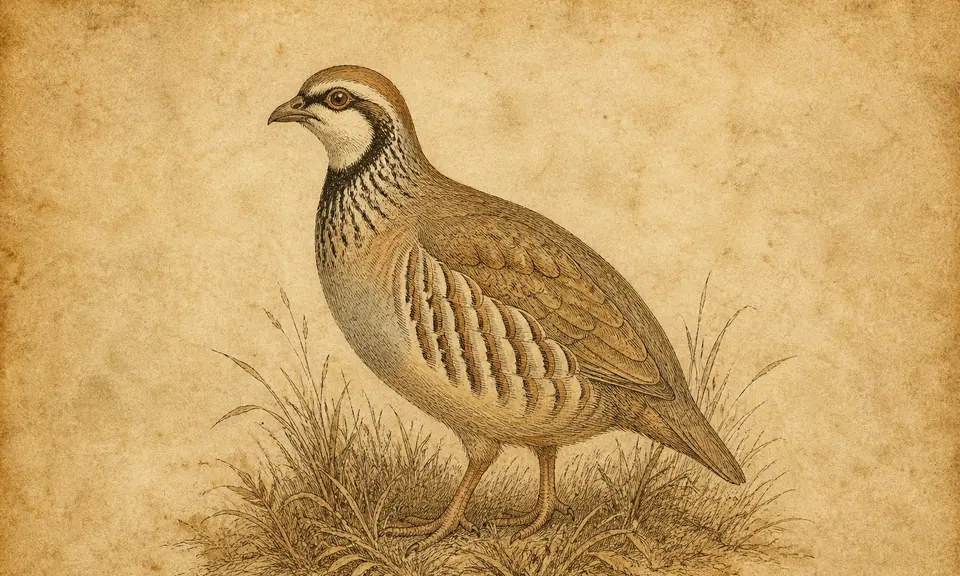
The two books apply the same verbs to the same bird and get different worlds out of them. In Miller, to see partridges means conditions are good for the accumulation of property, to ensnare them is good fortune in expectations, to kill them is success of which much will be given to others, to eat them is the enjoyment of deserved honors, and to see them flying is a promising future. an-Nabulsi carries two readings on the bird and both begin the same way: the partridge is a beautiful woman who is not accustomed to company, who is not tame, and the taking of her is the marrying of her. Miller's snare is a business forecast; the Arabic snare is a wedding. Another reading extends the count — many partridges are women, and whoever hunted many of them gains much wealth from men attached to the sultan — and adds the one detail that fixes the picture, that the partridge points to people of laughing teeth. Both Arabic readings end on the flesh, and there the bird stops being food and becomes something to wear: whoever ate the flesh of a partridge attained clothing and raiment.
This paragraph was generated by a model. It sums up the sources above, comes from none of them and is attributed to no one.
In a dream it points to a beautiful woman who is not accustomed to company, and the taking of her is the marrying of her. And it is said the flesh of the partridge is clothing.
Section letter ḥa
It in a dream is a beautiful woman who is not tame, and the taking of her is the marrying of her. And if he hunted many partridges, he gains much wealth from men attached to the sultan. And many partridges are women. And the partridge points to people of laughing teeth. And whoever ate the flesh of a partridge attained clothing and raiment.
Section letter qaf
Partridges seen in your dreams, denotes that conditions will be good in your immediate future for the accumulation of property. To ensnare them, signifies that you will be fortunate in expectations. To kill them, foretells that you will be successful, but much of your wealth will be given to others. To eat them, signifies the enjoyment of deserved honors. To see them flying, denotes that a promising future is before you.