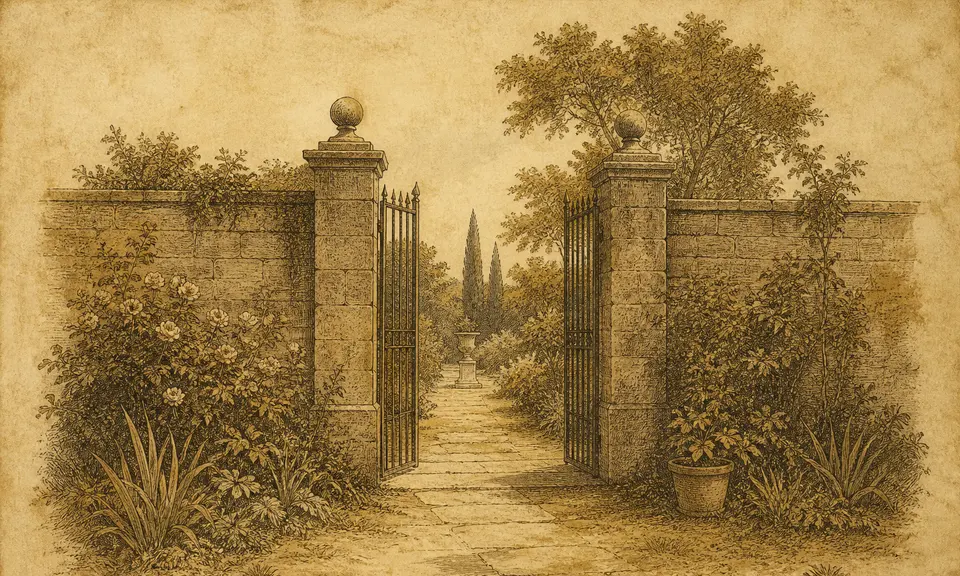
Whoever saw paradise in a dream and did not enter it: his dream is good news for him of the good of his deeds, and it is the dream of a man who deals justly and does no wrong. And it is said whoever saw paradise plainly attained what he desired and his care was lifted from him. And if he saw as though he wants to enter it and was prevented, then he becomes hindered from the pilgrimage and from the holy war after intending them, or he is prevented from repenting of a sin that he persists in and wants to repent of. And if he saw as though a gate of the gates of paradise was shut against him, one of his two parents died; and if he saw that two gates were shut against him, both his parents died; and if he saw as though all its gates are shut against him and are not opened for him, then his parents are angry with him; and if he saw as though he entered it by whichever gate he wished, then his parents are well pleased with him. And if he saw as though he entered it, he attained gladness and safety in the two abodes. And if he saw as though he was brought into paradise, then his term and his death have drawn near; and it is said that the one who has this vision takes warning and repents of the sins at the hand of the one who brought him into paradise, if he knows him. And it is said whoever saw the entering of paradise attained what he wanted after bearing hardship, because paradise is hedged about with things that are hateful; and it is said that the one who has this vision keeps company with great and noble peoples and keeps company well with the people and performs the duties laid down by God Most High. And if he saw as though he was brought into paradise and did not enter it, his vision pointed to the leaving of the religion. And if he saw as though it was said to him, you will enter paradise, then he attains an inheritance. And if he saw as though he is in the highest garden, he attained guidance and knowledge. And if he saw as though he entered paradise smiling, then he calls God Most High to mind much. And if he saw as though he drew a sword and entered paradise, then he bids what is right and forbids what is wrong, and attains blessing and praise and reward. And if he saw as though he is sitting under the tree of Tuba in paradise, then he attains the good of the two abodes. And if he saw as though he is in the meadows of paradise, he was granted sincerity and the completeness of religion. And if he saw as though he eats of its fruit, he was granted knowledge in the measure of what he eats; and likewise if he saw as though he drank of its water and its wine and its milk, he attained wisdom and knowledge and wealth. And if he saw as though he is reclining upon its bedding, it pointed to the chastity of his wife and her soundness; and if he did not know when he entered it, he attained honour and blessing in this world as long as he lived. And if he saw as though he was kept from the fruits of paradise, it pointed to the spoiling of his religion. And if he saw as though he picked the fruits of paradise and fed them to another, then he gives another a knowledge that the other works by and profits from, while he does not put it to work and does not profit by it. And if he saw as though he threw the garden into the fire, then he sells a garden and eats its price. And if he saw as though he drinks of the water of Kawthar, he attained leadership and victory over the enemy. And whoever sees as though he is in a palace of its palaces attained leadership, or married a beautiful woman. And if he saw as though he lies with the women of paradise and its boys go about around him, he attained a kingdom and blessing. And if he saw Ridwan, the keeper of paradise, he attained gladness and blessing and a sweet life as long as he is alive, and he was kept safe from affliction. And if he saw the angels coming in to him and greeting him in paradise, then he bears patiently a matter by which he comes to paradise, and he is sealed with good. And whoever sees that he entered into paradise is granted the entering of it with honour and gladness, and a worship reaches him. And whoever sees that he ate the acacia of paradise and sat in its shade attained his wish; and if he drank of its milk or of its wine or of its waters, he attained wisdom and knowledge and blessing. And whoever drank of the river Kawthar attained knowledge and deeds and a fine certainty and a following of the custom of the Prophet, God bless him and give him peace; and if he was an unbeliever he came to Islam, or a sinner he repented, or he moved from an innovation to the custom of the Prophet, or from a wicked wife to a righteous wife, or from an unlawful earning to a lawful earning. And the entering of paradise in a dream is a sign of good dealing with God Most High and of a good requital; and perhaps it pointed to inheritance; and perhaps the entering of it pointed to coming through hardships. And whoever of the sick entered paradise was kept safe from his illness. And perhaps the entering of paradise pointed to lawful money, and to dutifulness toward the household, and to the fear of God Most High. And perhaps the entering of paradise pointed to the owning of gardens, and to far-reaching lineages, and to blessing and to provision from that cause; and perhaps the entering of it pointed to the going away of sorrow. And if the people entered it all together, it pointed to ease and to command and to justice from the king, and to blessings alighting upon the fruits and the crop. And perhaps the one entering was martyred: and if he entered it and had his sword with him, or his armour and a spear, he died a martyr; and if he entered it and had his book with him, that was by his knowledge and his deeds; and if he entered it and had money or cattle with him, perhaps he entered it by way of the paying of the alms; and if he entered it and had his wife with him, it was for his keeping company with her in this world in kindness; and if he entered it calling God to mind or giving praise, then perhaps he attained it by his night vigil and his praising and his hallowing; and if he entered by the gate of Rayyan, perhaps he attained it by his fasting. And the sight of paradise in a dream points to the Friday mosque and to the assembly of the remembrance of God and to the market of profit; and it points to the pilgrimage and to the holy war and to the bidding of what is right and the forbidding of what is wrong, and to knowledge and righteous deeds. And perhaps the janna was a shield by which one is guarded from the enemy, or a shield he puts on, according to the witnesses of the vision. And if he drank of the rivers of paradise and ate of its fruits, or took shade under its trees, or saw anything of its houris and its boys, he attained knowledge and provision and kingship and offspring and a long life, and perhaps he died a martyr. And take into account what he drank of its rivers: so the river of water is a sign of provision, and the river of milk a sign of the natural religion, and the river of wine a sign of drunkenness from the love of God Most High and from the hatred of what He has forbidden, and the river of honey a sign of knowledge and of the Qur'an. And the eating of the fruits of paradise is the outcomes of righteous deeds and spouses and children. And the tree of Tuba points, for the one who took shade in its shade and leaned upon it, to a fine place of return; and perhaps it pointed to withdrawal and to devoting oneself to worship, and to profit from companions and from the people of standing. And the lote tree of the furthest boundary points to the reaching of the goal in everything that is promised. And perhaps the trees of paradise pointed to the learned who act by their knowledge and to the guiding leaders. And the houris and the boys: whoever kept their company, or took any of them as his own, loses many of the children and the women, and is given in paradise, in their place, what is better than they. And the sight of the houris and the boys, for the elect, is a standing in waking together with attachments; and the sight of them, for those who work for them, points to their deeds, or to what is counted bliss in this world, like the dwellings and the ease of living and the kinds of pleasures. And the entering of its palaces points to the attaining of high offices and to the wearing of splendid clothes and to the marrying of free women, and to wealth and to a fine outcome. And the sight of Ridwan, peace be upon him, the keeper of paradise, points to the king's treasurer and to his messenger with good, and to the fulfilling of the promise and the settling of needs and the answering of supplication. And whoever sees that he entered paradise and did not eat of its fruits and did not drink of its rivers has no profit from the knowledge he has attained. And whoever sees that he was driven out of paradise grows poor, from the story of Adam, peace be upon him. And whoever sees that he goes about in paradise, it pointed to the wideness of his provision and to the height of his standing and to safety from fear; and whoever was afraid and saw that he entered paradise was made safe; and if he was laden with care, his care was relieved from him; and if he was unmarried, he married.
Section letter jim