Those that keep to the night and do nothing by day mean adulterers or thieves or men whose work is by night, as the owl and the night-raven and the little owl and the like.
Passage Book IV
4 readings from 3 sources.
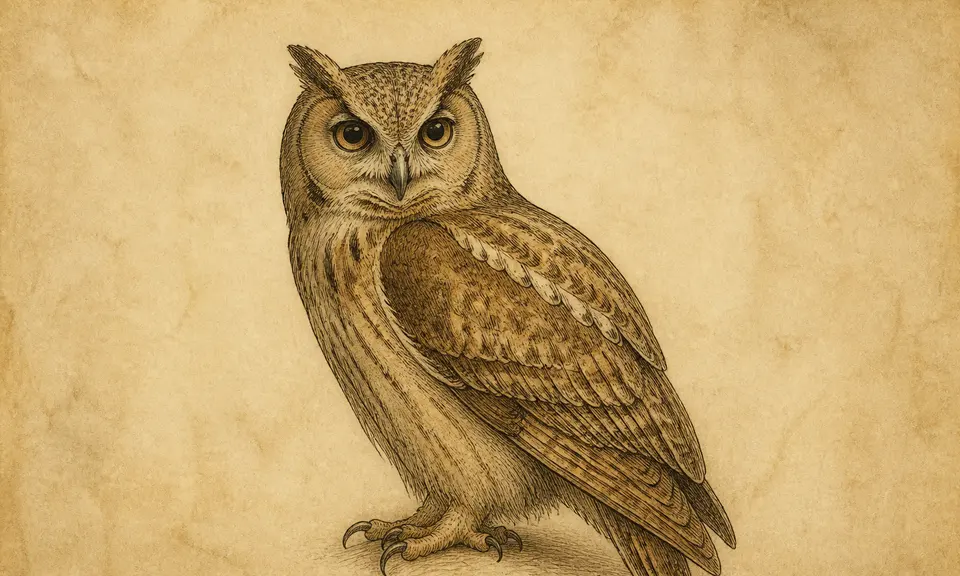
Both books read the owl as a person, and both expect harm from him. Miller hears the voice first: the muffled, unearthly call warns that death creeps close behind health and joy, bad tidings of the absent follow the dream, and merely seeing an owl means you are being secretly maligned and stand in danger from enemies — while a dead owl is a narrow escape from desperate illness. Artemidorus does not read the owl alone but the whole night shift, and names the trades: the birds that keep to the night and do nothing by day mean adulterers or thieves or men whose work is by night — the owl, the night-raven, the little owl and the like. an-Nabulsi names the person: a tyrannical king, dreadful to people, and a brazen thief sharp of thorn who has neither army nor helper, and the owl itself a treacherous, scheming creature in whom there is no good. The one line that runs the other way is Arabic and sits in the middle of that condemnation — the owl also points to the departure of terror and fear, which is the opposite of what the English book hears in the same call. Another Arabic reading names the graveyard owl and makes it a woman, which no other book does: the bird of the graves, read as a woman who procures, or as an adulteress. The harm everybody expects is still there; only here it comes from the house and not from the state.
This paragraph was generated by a model. It sums up the sources above, comes from none of them and is attributed to no one.
Those that keep to the night and do nothing by day mean adulterers or thieves or men whose work is by night, as the owl and the night-raven and the little owl and the like.
Passage Book IV
In a dream it is a tyrannical king, dreadful to people, and it is also a brazen thief, sharp of thorn, who has no army and no helper; and the owl points to idleness in work and to the departure of terror and fear. The owl is a treacherous, scheming person in whom there is no good, so whoever sees that he has dealt with an owl deals with such a person, for the sake of the folk who are with him and to establish his right. And whoever sees that an owl came down in his house — it is news that comes to him of a person's death. And the owls point to the thieves between the walls and to those who take what is forbidden in their earning; and they point to parting and to desolation and to the ruin of what was inhabited and to foul speech.
Section letter ba
She is the bird of the graves, and she points in a dream, for whoever sees her, to a woman who procures, or to an adulteress.
Section letter ha
To hear the solemn, unearthly sound of the muffled voice of the owl, warns dreamers that death creeps closely in the wake of health and joy. Precaution should be taken that life is not ruthlessly exposed to his unyielding grasp. Bad tidings of the absent will surely follow this dream. To see a dead owl, denotes a narrow escape from desperate illness or death. To see an owl, foretells that you will be secretly maligned and be in danger from enemies.