The nightingale means the same as the swallow, but less so, for she is less at home with us.
Passage Book II, 66
5 readings from 3 sources.
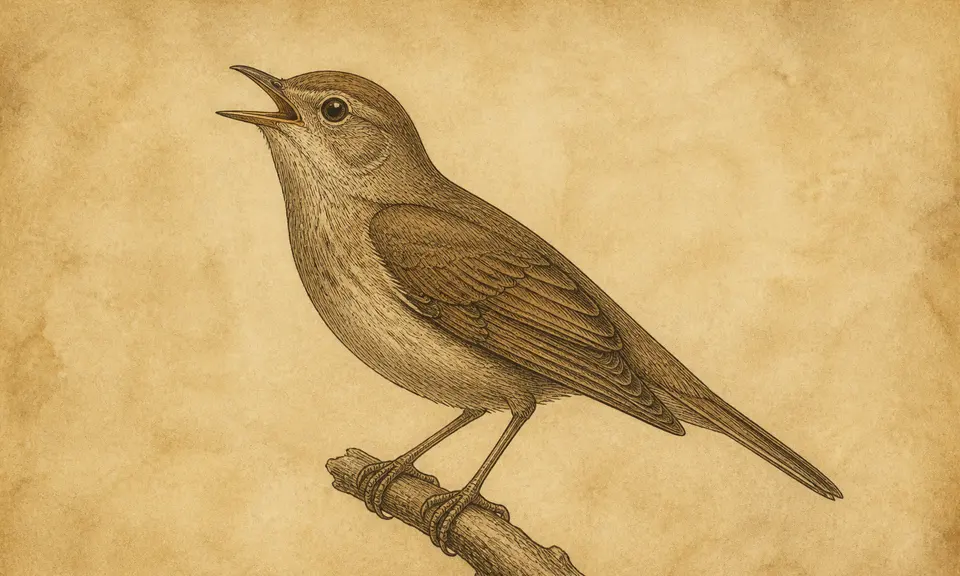
This is one of the few motifs where two books that never met agree without reservation. Miller reads the harmonious notes as a pleasing existence and prosperous, healthy surroundings, and calls it the most favourable dream there is for lovers and for parents; only silent nightingales turn it, and then only into slight misunderstandings among friends. Artemidorus gives the bird no verdict of his own and sends the reader to the swallow: the nightingale means the same as the swallow, but less so, for she is less at home with us. an-Nabulsi reads the same bird as money and as a child: a man or a woman of means, and the small nightingale a child who recites the Book of God, and a little boy. Where the English book hears a mood, the Arabic one counts a household — but both answer the song the same way, and the only warning either of them carries is silence. Another Arabic reading names the Persian bird, the hazar, and keeps the agreement without needing a word about the song: it is a clever, eloquent child, or a schoolboy. Another Arabic reading names the andalib and puts a person in the cage: a man who recites, or a singer, or a gentle woman of good speech. And then the one image that lifts the motif out of the garden — a ruler who sees a fine-voiced nightingale in his cage has a vizier good in counsel and complete in management.
This paragraph was generated by a model. It sums up the sources above, comes from none of them and is attributed to no one.
The nightingale means the same as the swallow, but less so, for she is less at home with us.
Passage Book II, 66
In a dream it points to a man of means or a woman of means, and the small nightingale points to a child who recites the Book of God Almighty, and to a little boy. And whoever sees a nightingale — it is a sign of a child by a slave girl, with no fondness between them.
Section letter ba
It is in a dream a clever, eloquent child, or a schoolboy.
Section letter ha
It is in a dream a man who recites, or a singer, or a gentle woman of good speech. And whoever was a ruler and saw in his cage a nightingale of a fine voice — his vizier is good in counsel and complete in management.
Section letter ayn
To dream that you are listening to the harmonious notes of the nightingale, foretells a pleasing existence, and prosperous and healthy surroundings. This is a most favorable dream to lovers, and parents. To see nightingales silent, foretells slight misunderstandings among friends.