Blowing into the mortar yourself: wife or concubine dies.
Section Doors, wells, stoves, kitchens and privies
3 readings from 2 sources.
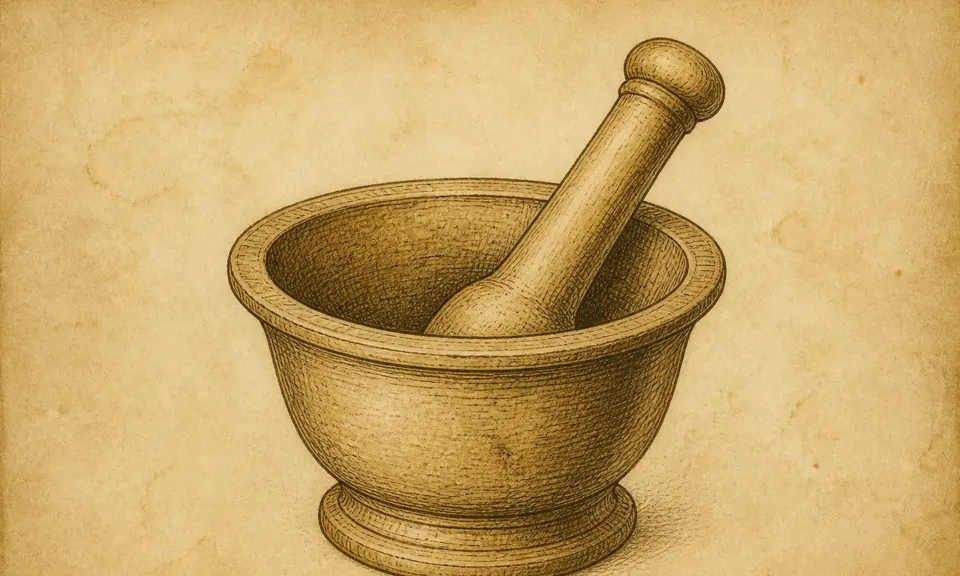
The Duke of Zhou keeps one line and it is a death in the house: blowing into the mortar yourself means wife or concubine dies. an-Nabulsi reads the vessel as the man who works it — one who labours and tires himself and sets to rights monies he cannot set right — and then as quarrelling, harshness and oppression in demanding, before allowing at the end that seeing it may also mean needs met and affairs made easy. Pounding is work that gets nowhere in both books; only the Arabic one lets it come out well. Another Arabic reading takes the mortar together with its pestle, and makes the pair a marriage: a man and a woman, neither able to do without the other, doing hard works that nobody but the two of them can do. Against the Chinese line, where the mortar is a death in the house, this one gives it honour and elevation — and then a child who recites, a singing slave girl, a boy of much talk.
This paragraph was generated by a model. It sums up the sources above, comes from none of them and is attributed to no one.
Blowing into the mortar yourself: wife or concubine dies.
Section Doors, wells, stoves, kitchens and privies
In a dream it is a man who works and tires himself and sets to rights monies he is not able to set right; and the mortar points to quarrelling and harshness and oppression in demanding, and seeing it may point to needs being met and affairs made easy.
Section letter mim
The two of them are in a dream a man and a woman, neither of whom can do without the other, who do hard works that nobody but the two of them can do. And the mortar points to honour and elevation, and to the child who recites, or to the singing slave girl, or to the boy of much talk.
Section letter ha