Ripe melons are good for friendships and for reconciliations, for the poets call what is dearest to them pepon; but for undertakings they are idle, since what is slack is also called pepon.
Passage Book I, 67
3 readings from 3 sources.
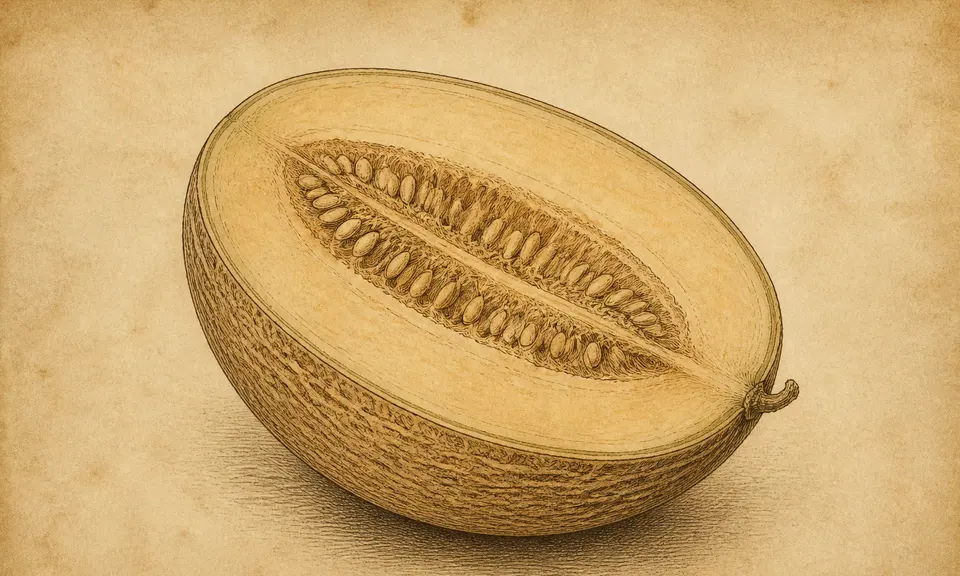
Two of the three books call the melon bad news, which on this site is already unusual, and then they disagree about what kind of bad. Miller reads the fruit's situation: melons denote ill health and unfortunate ventures in business, eating them means hasty action that will cause anxiety, but seeing them growing on green vines means present troubles will turn into good fortune for the dreamer — the vine is the way out. Artemidorus is the one with anything good in it, and he gets the good and the bad from the same word: ripe melons are good for friendships and for reconciliations, because the poets call what is dearest to them pepon; but for undertakings they are idle, since what is slack is also called pepon. an-Nabulsi leaves no way out and makes the melon a man: one burdened with cares, sick and much imprisoned. Whoever saw it has had a care befall him to which he is not guided and whose outcome he does not know. That is the sharper reading of the two, because the misfortune in it is not the illness or the loss but the not knowing: Miller's dreamer is told how his trouble ends, and an-Nabulsi's is told precisely that he will not be told.
This paragraph was generated by a model. It sums up the sources above, comes from none of them and is attributed to no one.
Ripe melons are good for friendships and for reconciliations, for the poets call what is dearest to them pepon; but for undertakings they are idle, since what is slack is also called pepon.
Passage Book I, 67
In a dream it is a man burdened with cares and sick and much imprisoned; so whoever saw it, a care befell him to which he is not guided and whose outcome he does not know.
Section letter ba
To dream of melons, denotes ill health and unfortunate ventures in business. To eat them, signifies that hasty action will cause you anxiety. To see them growing on green vines, denotes that present troubles will result in good fortune for you.