A lioness means the same as a lion, only less so; and when she fawns she prophesies that the benefits, and when she threatens and bites that the harms, will come not from men but from women.
Passage Book II, 12
2 readings from 2 sources.
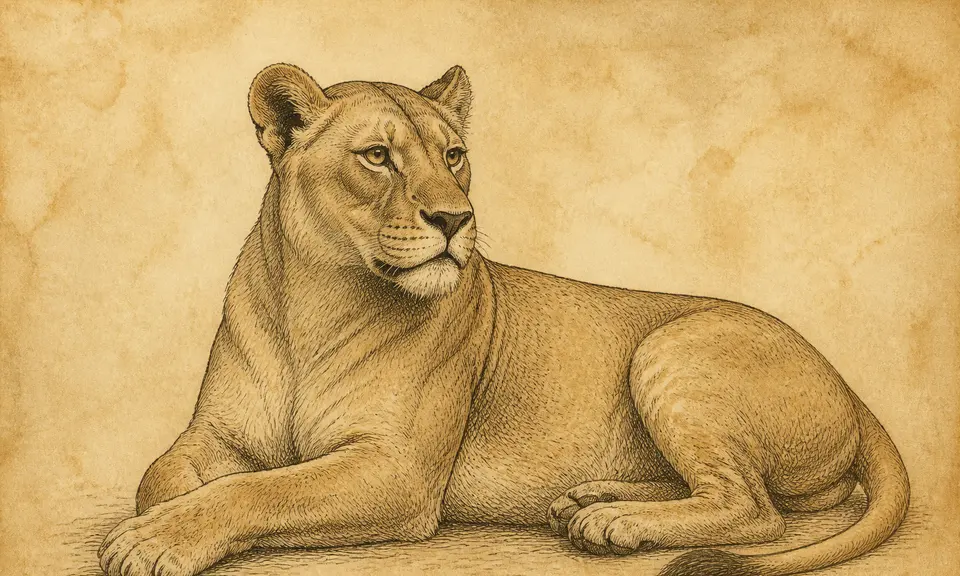
Both books read the lioness as a woman, and they use that in opposite directions. Artemidorus reads her as a lion with the sex changed: a lioness means the same as a lion, only less so, and when she fawns she prophesies that the benefits, and when she threatens and bites that the harms, will come not from men but from women. The animal tells the dreamer where his good and his harm are coming from, and nothing else. an-Nabulsi gives her a rank and then has the dreamer act upon her. She is an evil and oppressive woman whose child is hard to come by, and the lioness is the daughter of a king; whoever saw that he has intercourse with a lioness escapes from a great hardship and his affair rises and he triumphs over his enemies, and if he was in a war, he triumphed over many lands; whoever drank the milk of a lioness obtained wealth from a sultan and triumphed over his enemy; and if he ate the flesh of a lioness, he obtained authority and a great kingdom. The Arabic reading carries its own tension — the same animal is a bad woman and a king's daughter — and what resolves it is mastery: the kingdom comes of overcoming her. In the Greek book nobody masters her; she is read, and what she does in the dream only says whether a woman will help the dreamer or hurt him.
This paragraph was generated by a model. It sums up the sources above, comes from none of them and is attributed to no one.
A lioness means the same as a lion, only less so; and when she fawns she prophesies that the benefits, and when she threatens and bites that the harms, will come not from men but from women.
Passage Book II, 12
It in a dream is an evil and oppressive woman whose child is hard to come by. And the lioness is the daughter of a king. So whoever saw that he has intercourse with a lioness escapes from a great hardship and his affair rises and he triumphs over his enemies; and if he was in a war, he triumphed over many lands. And whoever drank the milk of a lioness obtained wealth from a sultan and triumphed over his enemy. And if he ate the flesh of a lioness, he obtained authority and a great kingdom.
Section letter lam