To the sick they foretell critical days, in which, if they win in the dream, they will change for the better, but if they lose, they will die.
Passage Book II, 29
4 readings from 3 sources.
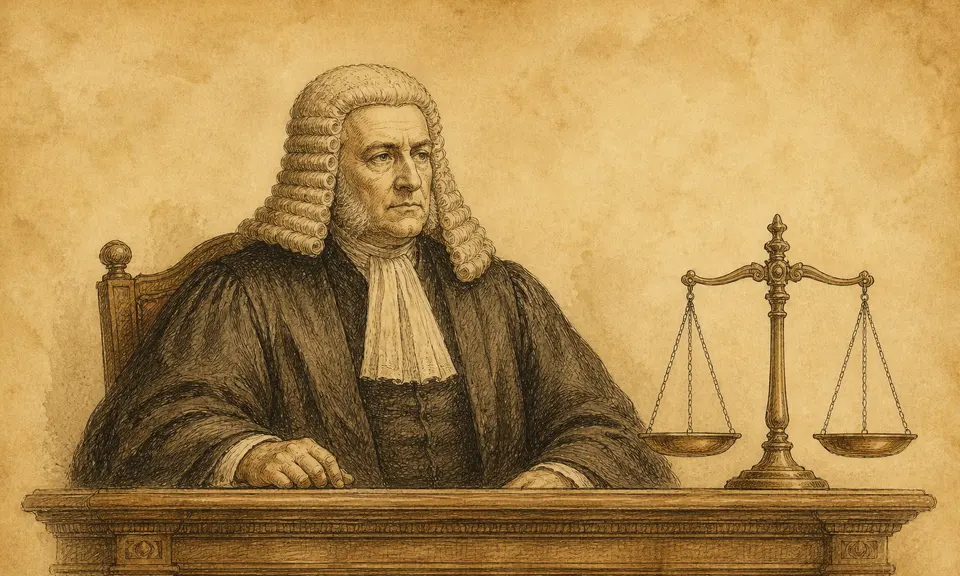
Miller reads the courtroom as procedure: to come before a judge signifies that disputes will be settled by legal proceedings, and the verdict means what it says, since decided in the dreamer's favour it is a successful termination to the suit, and decided against him it means he is the aggressor and should seek to right injustice. an-Nabulsi reads the judge as a weighing instrument, and the dream as a measurement of the dreamer rather than of his case. A man given charge of the judgeship who dealt justly is read back into his trade — if he was a merchant he was fair, if he was a man of the market he gave full measure and weight — while a man who judges without knowing how to judge is deposed if he was a governor, and has the road cut off against him if he was a traveller. A known judge ruling unjustly indicts a whole town, since the people of that place lose in their weights and give short in their measures. And the reading ends on the line Miller's courtroom has no room for, that the unknown judge is God the Most High. Artemidorus reads the courtroom as a contest and asks who is sitting where, so that to the sick, judges foretell critical days, in which, if they win in the dream, they will change for the better, and if they lose, they will die. And the one move that cannot go wrong is to take the bench: a man who has a lawsuit and takes himself to be seated in the judge's place will not lose it, for the judge does not condemn himself, but others.
This paragraph was generated by a model. It sums up the sources above, comes from none of them and is attributed to no one.
To the sick they foretell critical days, in which, if they win in the dream, they will change for the better, but if they lose, they will die.
Passage Book II, 29
But if a man who has a lawsuit takes himself to be seated in the judge’s place, he will not lose it; for the judge does not condemn himself, but others.
Passage Book II, 29
And whoever saw in a dream that he was given charge of the judgeship and dealt justly in it: if he was a merchant, he was fair; and if he was a man of the market, he gave full measure and weight. And if he saw that he judges between the people and does not know how to judge, he deals unjustly in his judging and is not just; and if he was a governor, he was deposed; and if he was a traveller, the road was cut off against him; and if not, the blessing of God the Most High upon him was changed by an affliction with which he is afflicted. And if he saw a known judge dealing unjustly in his ruling, the people of that place lose in their weights and give short in their measures. And if a base man came forward to the judge and he dealt fairly with him, the owner of the dream obtains his right from an adversary of his; and if he was careworn, relief was given him. And if the judge dealt unjustly in his ruling, then, if there was between him and a man a dispute, he does not obtain his right from him. And if he saw a judge who set down the balance and it weighed down, he has with God the Most High a wage and a reward; and if the balance rose up, it is a warning to him against disobedience. And if he saw that he weighs coppers and bad dirhams, he leans aside and hears false witness and judges by it. The unknown judge is God the Most High.
Section letter qaf
To dream of coming before a judge, signifies that disputes will be settled by legal proceedings. Business or divorce cases may assume gigantic proportions. To have the case decided in your favor, denotes a successful termination to the suit; if decided against you, then you are the aggressor and you should seek to right injustice.