The heart means a wife when a man sees it, and a husband when a woman sees it, because it has the management of the whole body; and it means the dreamer's anger and his breath, for it holds these within it. And the lung likewise.
Passage Book I, 44
3 readings from 3 sources.
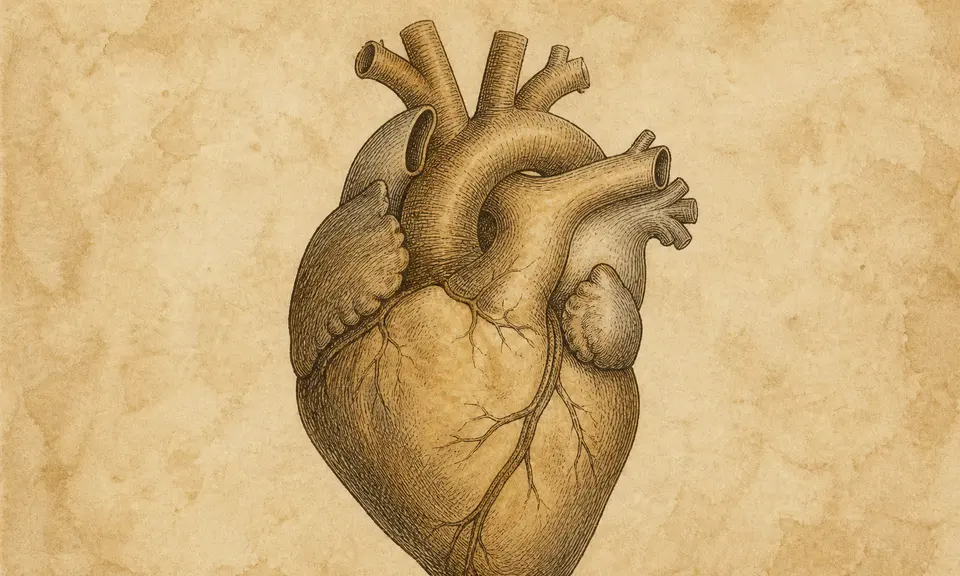
Miller reads the heart as an organ and watches what happens to it: paining and suffocating him it is trouble in business from a mistake of his own that will bring loss if it is not corrected, and merely seeing his own heart is sickness and the failure of his energy. His other two readings are not his heart at all, since an animal's heart is the overcoming of enemies and the respect of all, and eating a chicken's heart is a strange desire that drives him through a very difficult project. Artemidorus reads it as the other person in the house and gives the reason in the same clause: the heart means a wife when a man sees it, and a husband when a woman sees it, because it has the management of the whole body; and it means the dreamer's anger and his breath, for it holds these within it. an-Nabulsi does not read the heart as a part of the body, since it is a list of qualities — courage, command, gentleness, boldness, shrewdness, generosity, forbearance, character and habit — and then a constitutional claim, that the heart is the king of the body, conducting the man's affair in his religion and his world, his secret and his open life. Fright felt in the heart is good there, argued from a verse: until, when fright is lifted from their hearts. And the rule at the end is a rule for reading rather than a prediction — whatever is seen in the heart of soundness or of corruption, by that measure the interpretation falls upon the man.
This paragraph was generated by a model. It sums up the sources above, comes from none of them and is attributed to no one.
The heart means a wife when a man sees it, and a husband when a woman sees it, because it has the management of the whole body; and it means the dreamer's anger and his breath, for it holds these within it. And the lung likewise.
Passage Book I, 44
It is in a dream the man's courage and his command and his gentleness and his boldness and his shrewdness and his generosity and his open-handedness and his forbearance and his character and his habit. And if he saw fright in his heart, he is guided to the truth, by the saying of Him, the Most High: {until, when fright is lifted from their hearts}, the verse. For the heart is the king of the body and the one who conducts its affair in his religion and his world and his secret and his open life, keeping for him his governance, and it is the place of his secret. So whatever is seen in it of soundness or corruption, by the measure of that the interpretation falls upon him, as I have described.
Section letter qaf
To dream of your heart paining and suffocating you, there will be trouble in your business. Some mistake of your own will bring loss if not corrected. Seeing your heart, foretells sickness and failure of energy. To see the heart of an animal, you will overcome enemies and merit the respect of all. To eat the heart of a chicken, denotes strange desires will cause you to carry out very difficult projects for your advancement.