The cluster of grapes is good both out of season and in season, and for the most part it signifies benefits from women or through women: the white one open benefits, the black one secret ones.
Passage Book I, 73
3 readings from 3 sources.
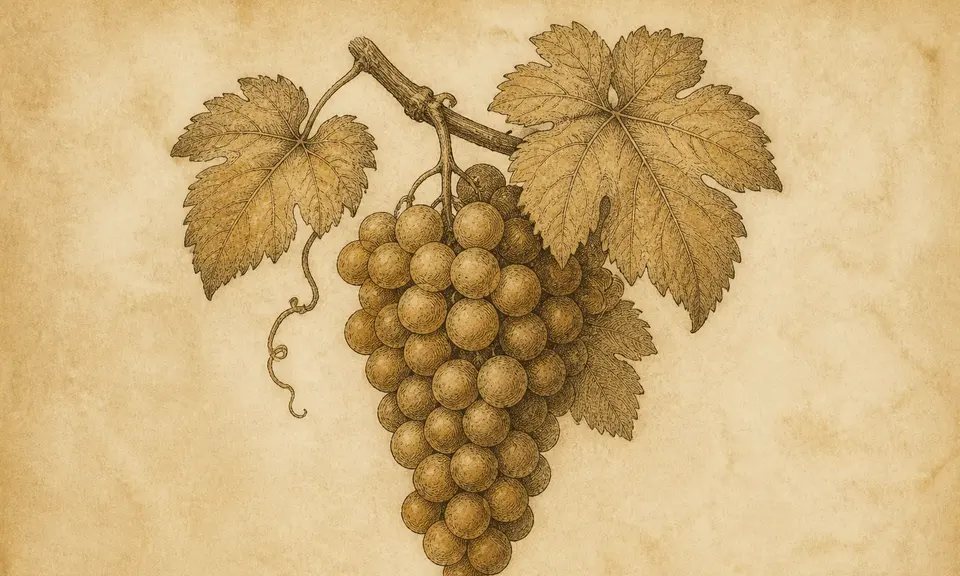
The two books split on the same picture: grapes hanging in profuseness are eminent positions and the power to impart happiness to others in Miller, and a cluster hanging down is severe fear in an-Nabulsi. Eating reverses it again, since Miller's eater is hardened with many cares while the Arabic reading makes the grape a lasting, ample, stored-up provision. an-Nabulsi then counts and prices what Miller only looks at, for a cluster picked up is wealth gathered from a woman, and a cluster in a dream is a thousand dirhams. Season decides as much as colour: in its season the grape is the freshness of this world, out of its season a good attained before the time, and perhaps something unlawful hastened to him. The white grape is nothing but good and healing, and the reading says why — Noah was stricken with consumption, and God revealed to him that he should eat grapes, and he was healed — while the black is a provision that does not remain, care in its fewness and in its muchness. And the strangest reading is a count: whoever picks up black grapes at the gate of the sultan and knows their number is beaten with whips to the number of the berries. Artemidorus takes the season out of it altogether and reads the cluster as a good sign either way, for the cluster of grapes is good both out of season and in season, and for the most part it signifies benefits from women or through women, the white one open benefits and the black one secret ones.
This paragraph was generated by a model. It sums up the sources above, comes from none of them and is attributed to no one.
The cluster of grapes is good both out of season and in season, and for the most part it signifies benefits from women or through women: the white one open benefits, the black one secret ones.
Passage Book I, 73
It in a dream is a fair provision. And the grape is a lasting, ample, stored-up provision. And in its season it is the freshness of this world, and out of its season it is good that he attains before the time; and perhaps it was unlawful, hastened to him before its time. And whoever picked up a cluster attained wealth gathered from a woman. And the cluster in a dream is a thousand dirhams. And the black grape is a provision that does not remain; and it is said that in its season it is care and out of its season sickness. And if it was hanging down, it points to severe fear. And whoever picked up black grapes from the gate of the sultan and knew their number, he is beaten with whips to the number of the berries. And the white grape is nothing but good and healing, because Noah, upon him be peace, was stricken with consumption, and God revealed to him that he should eat grapes, and he did so and was healed of his sickness. And the black grape is a small benefit; and it is said the black grape is care, in its fewness and in its muchness. And the picking up of grapes is a small benefit.
Section letter ayn
To eat grapes in your dream, you will be hardened with many cares; but if you only see them hanging in profuseness among the leaves, you will soon attain to eminent positions and will be able to impart happiness to others. For a young woman, this dream is one of bright promise. She will have her most ardent wish gratified. To dream of riding on horseback and passing musca-dine bushes and gathering and eating some of its fruit, denotes profitable employment and the realization of great desires. If there arises in your mind a question of the poisonous quality of the fruit you are eating, there will come doubts and fears of success, but they will gradually cease to worry you.