One must look at this too, that of cups those of gold and of silver and of earthenware are good for everyone and signify much safety, the first sort as being of solid stuff.
Passage Book I, 66
6 readings from 3 sources.
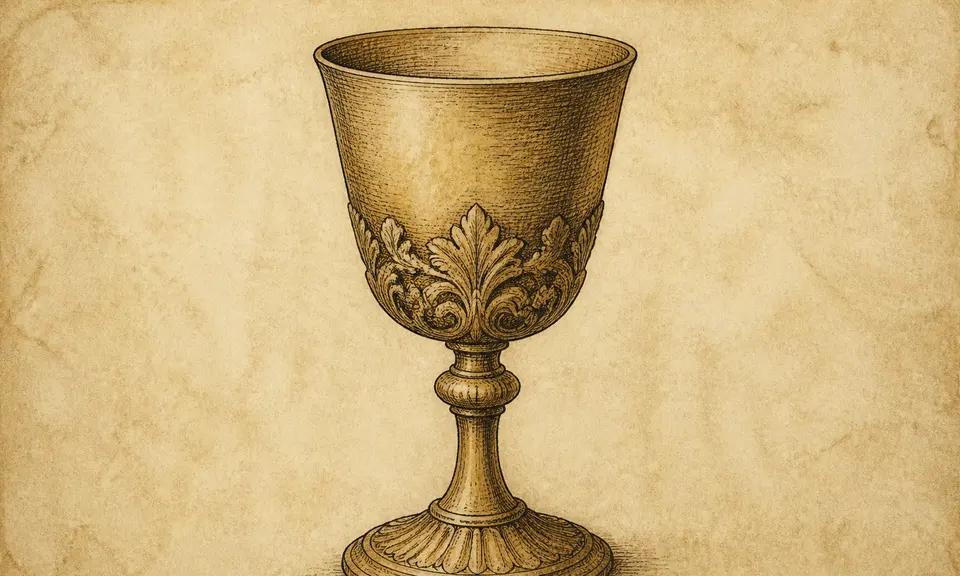
Miller reads the cup by what it is made of and who hands it over: water from a silver goblet means unfavourable business results, goblets of ancient design mean favours from strangers, and a woman handing a man a glass goblet full of water means illicit pleasures. an-Nabulsi reads the goblet as a person — it is the man's beloved — and then says what is loved of it, the sweets that are served in it. Artemidorus says the same thing first and in so many words: cups mean those who come near one's lips, so that if a cup is shattered it shows that some of them will die, and if a man is alone, it means death for himself, and he says he has observed this himself. Cups of gold and of silver and of earthenware are good for everyone and signify much safety, the first sort as being of solid stuff. Then he adds a correction out of his own practice, that there are some cups with narrow mouths, found out by men not long ago, and when these are shattered they promise release from every affliction and narrow place. The old division says a broken cup is a death and the new one says a broken narrow cup is a deliverance, and he keeps both. His case extends the rule past cups: a man dreamed that his ladle was suddenly broken, and his cup-bearer died — and let the same account, he says, be kept for all vessels and tools.
This paragraph was generated by a model. It sums up the sources above, comes from none of them and is attributed to no one.
One must look at this too, that of cups those of gold and of silver and of earthenware are good for everyone and signify much safety, the first sort as being of solid stuff.
Passage Book I, 66
There is another account too, and a right one, that cups mean those who come near one's lips. And so if a cup is shattered, it shows that some of them will die; and if a man is alone, it means death for himself. This I have observed myself as well.
Passage Book I, 66
This, then, is the old division; but nowadays a dream of this kind has come to us many times with its outcome. There are some cups with narrow mouths, found out by men not long ago. When these are shattered they promise release from every affliction and narrow place.
Passage Book I, 66
And again a man dreamed that his ladle was suddenly broken. His cup-bearer died. And let the same account be kept by you for all vessels and tools.
Passage Book IV
In a dream it is the man's beloved, and what is loved of it is the sweets that are served in it. So whoever sees that a goblet of sweet pudding was set before him will see from the one he loves an increase of love in his heart. And if there was set before him a kind he dislikes, such as greens and beans and cucumber and sour things, then he sees enmity from the one he loves, and hatred and ill will fall into his heart. And the goblet in a dream is read as a thousand dirhams, or a hundred, according to the standing of the dreamer.
Section letter jim
If you dream that you drink water from a silver goblet, you will meet unfavorable business results in the near future. To see goblets of ancient design, you will receive favors and benefits from strangers. For a woman to give a man a glass goblet full of water, denotes illicit pleasures.