Farewell

4 readings from 3 sources.

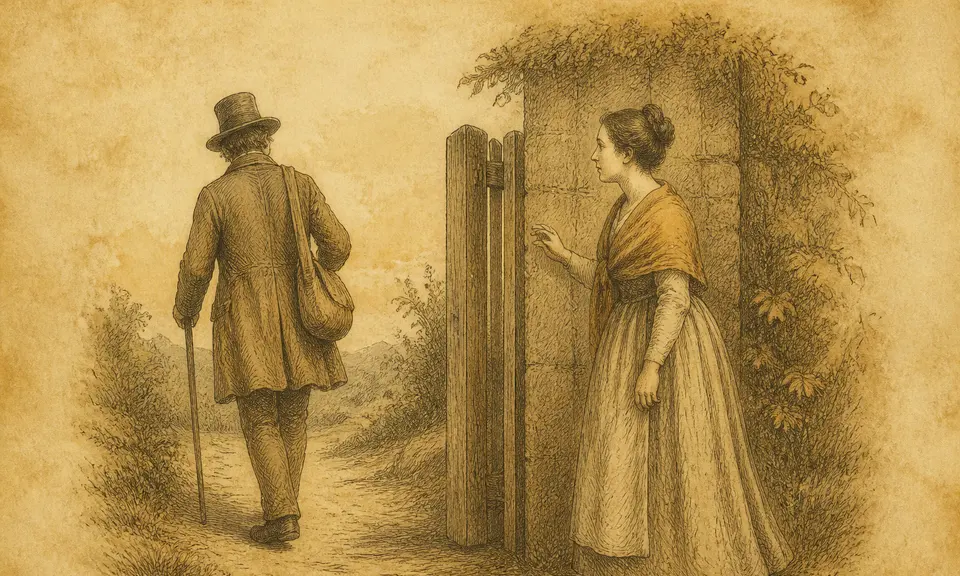
The image was generated by a model. It is not a period engraving and comes from none of the sources.

Miller reads the parting for news of the other party: to bid farewell is not very favourable, since the dreamer is likely to hear unpleasant news of absent friends, and a young woman who bids her lover farewell is being told of his indifference to her — unless she feels no sadness in the farewell, in which case she will soon find others to comfort her. an-Nabulsi reads the parting as a hinge in the dreamer's own life and measures it by where it happened, since the farewell is a removal from that which the person is in, of good or evil or riches or poverty, according to the measure of the place in which he took his leave. And it swings both ways: the divorced woman returns, the merchant profits, the deposed man gets his office, the traveller comes back from his journey, while for the sick man it is his death — and then, a few lines on, the same reading says the farewell may point to the healing of the sick man, and does nothing to reconcile the two. Another Arabic reading allows no such softening: loss of office, divorce of the wife, death of the sick man, going out from one homeland to another, and it is the same whether the dreamer bids farewell or is bidden farewell. Artemidorus reads the words themselves and refuses them both ways, for men do not say farewell and keep well when they come to one another, nor when they are about to do something, but when they part and turn to sleep — and that is why it breaks up marriages and partnerships, and kills the sick.

This paragraph was generated by a model. It sums up the sources above, comes from none of them and is attributed to no one.

Greek dream book

To say “farewell and keep well”, or to hear it, is good neither way; for men do not say these words when they come to one another, nor when they are about to do something, but when they part from one another and turn to sleep. That is why it breaks up marriages and partnerships, and kills the sick.

Passage Book I

Ὀνειροκριτικά (Oneirokritika)

Artemidorus of Daldis; edited by Rudolf Hercher

second century; Hercher’s edition 1864 · Greco-Roman

the source of the ancient tradition itself, which the others draw on

About this source

Five books of second-century Greek prose, not an alphabetical dictionary: the readings sit inside argued chapters and the author says of each one why it reads as it does. It is the source the other European and Arabic dream books draw on, including where they do not name it.

Rights: public domain

Where the text is from: https://archive.org/details/bub_gb_CRwTAAAAQAAJ

Arabic dream book

It is in a dream, for the sick man, a pointer to his death and to the divorcing of the wife, and to travel, and to a removal from that which the person is in, of good or evil or riches or poverty, according to the measure of the place in which he took his leave. And the farewell points to the return of the divorced woman and to the profit of the merchant and to the office of the one deposed; and it points to the coming back from travel. And it is not praised for the apostate, for it is his death. And perhaps it points to embracing and affection, or to weeping and separation. And the farewell may point to the healing of the sick man.

Section letter waw

In a dream it points to the loss of office, or to the divorce of the wife, or to the death of the sick man, or to going out from one homeland to another, or from one craft to another; and it is the same whether the seer is the one bidden farewell or bids farewell to another.

Section letter ta
The Perfuming of Mankind in the Interpretation of Dreams

Abd al-Ghani al-Nabulsi

before 1731; first printed Cairo 1858 · Arab-Islamic

carries the ancient tradition after Artemidorus

About this source

An Arabic dream book by the Damascene scholar al-Nabulsi, an alphabetical dictionary of two and a half thousand headwords. It draws on the ancient tradition directly: Artemidorus was translated into Arabic by Hunayn ibn Ishaq in the ninth century. The readings here almost always address the dreamer’s standing, property and faith rather than their feelings.

Rights: public domain

Where the text is from: https://shamela.ws/book/1217

Miller

To dream of bidding farewell, is not very favorable, as you are likely to hear unpleasant news of absent friends. For a young woman to bid her lover farewell, portends his indifference to her. If she feels no sadness in this farewell, she will soon find others to comfort her.

Ten Thousand Dreams Interpreted; Or, What's in a Dream

Gustavus Hindman Miller

1901 · American Victorian

carries fragments of the ancient tradition without its system

About this source

An American dream book, the only one here that knows the telephone, the railroad or the elevator. Doctrinally it is the most degraded: it keeps fragments of the ancient tradition without the system that once held them together.

Rights: public domain

Where the text is from: https://www.gutenberg.org/ebooks/926