In a dream it is prison: whoever saw that he was banished from the land will be imprisoned. Banishment is a sign that the case of the one who banishes is proven, and banishment may point to a hand being cut off.
Section letter nun
4 readings from 2 sources.
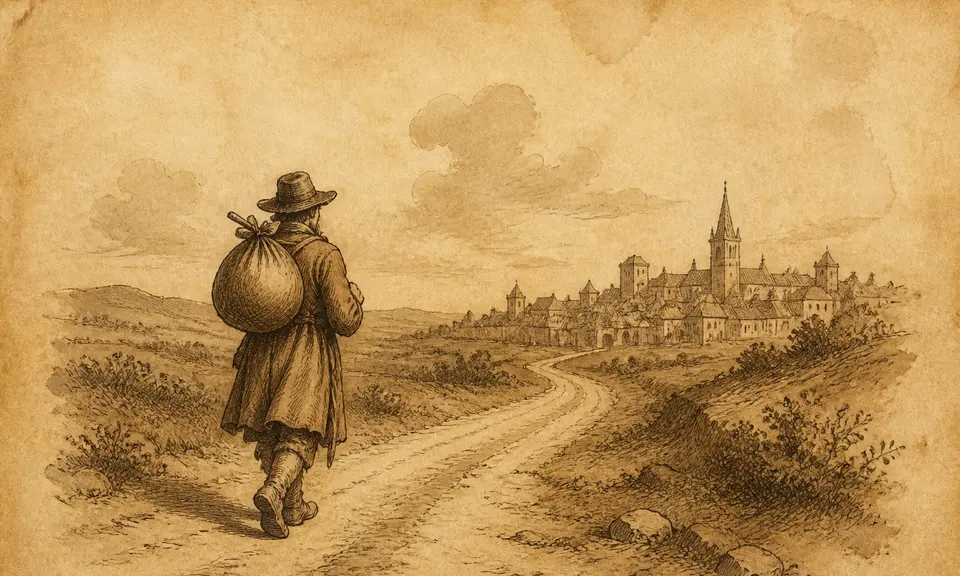
Miller writes it twice and the two readings are not the same size. Exile for a woman is a journey that gets in the way of an engagement or a pleasure; banishment, under its own headword, is a dream of fatality — evil pursuing the dreamer, and death at an early date for the one sent to foreign lands. an-Nabulsi reads it as the law would: in a dream banishment from the land is prison, it proves the case of the one who banishes, and it may point to a hand cut off. Between the three, exile is an inconvenience, a death sentence and a verdict. Another Arabic reading agrees with the first that banishment is prison, and then adds the cases: driven out of the garden means growing poor, and driving a man of learning out — or frightening him, or shouting at him — means falling into a fearful matter, with a deceitful enemy finding his way to a king. For a man whose outward show is religion, being driven out means he is turning away from the obedient and toward the noble. And the last line turns it round on the one doing the driving: it may point to a falling-short in him too.
This paragraph was generated by a model. It sums up the sources above, comes from none of them and is attributed to no one.
In a dream it is prison: whoever saw that he was banished from the land will be imprisoned. Banishment is a sign that the case of the one who banishes is proven, and banishment may point to a hand being cut off.
Section letter nun
It is in a dream imprisonment: whoever sees that he is driven out of his town will be imprisoned. Whoever sees that he was driven out of the garden grows poor. Whoever sees that he drove out a man of learning, or frightened him, or shouted at him, falls into a fearful matter, and a deceitful enemy finds a way to a king. And expulsion, for a man whose outward show is religion and righteousness, is a sign of turning away from the people of obedience and of accepting the noble and turning toward them. And perhaps it points to a falling-short in the one who drives out as well.
Section letter ṭa
Evil pursues the unfortunate dreamer. If you are banished to foreign lands, death will be your portion at an early date. To banish a child, means perjury of business allies. It is a dream of fatality.
For a woman to dream that she is exiled, denotes that she will have to make a journey which will interfere with some engagement or pleasure. See Banishment.