Eating

2 readings from 2 sources.

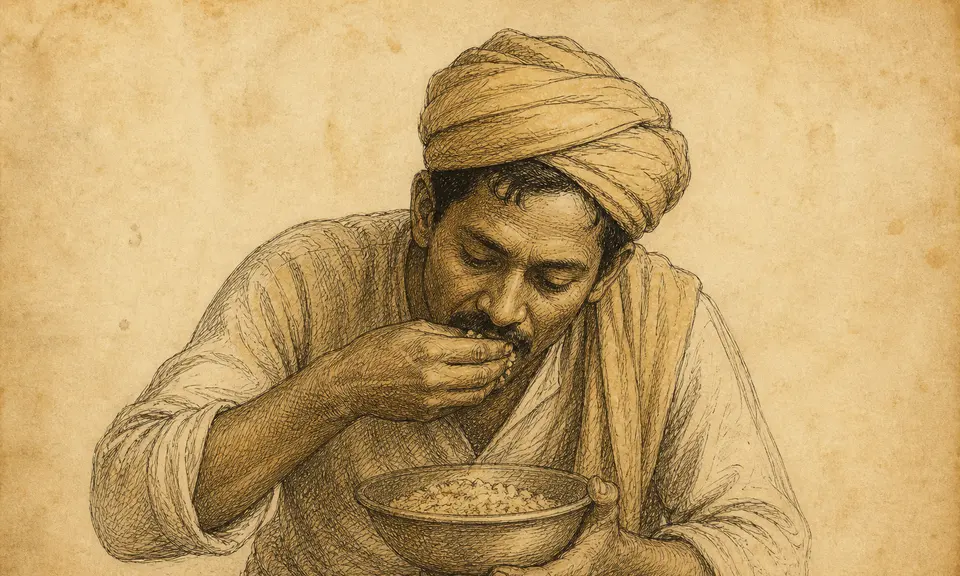
The image was generated by a model. It is not a period engraving and comes from none of the sources.

Here the two books contradict each other on the one thing both of them look at, which is the company. Miller reads eating alone as loss and melancholy spirits and eating with others as personal gain, cheerful environments and prosperous undertakings; an-Nabulsi reads eating among people as lust. What the Arabic reading watches instead is the manner. To eat from a vessel is contentment and firmness, unless the vessel is a forbidden one of silver or of gold, and then it is unlawful wealth and excess in debts. Chewing what is to be swallowed is negligence in earning and in work; swallowing what is to be chewed is debt and the hastening of the appointed term. The right hand follows the sunna, the left obeys the enemy and turns away from the friend. A morsel taken from another man's hand is chastity and trust in God, and perhaps an illness that left him unable to take food with his own hand. Miller too has a hand that carries food away, and he reads it socially: a daughter or a waiter who takes off the platter before the dreamer has finished means trouble and vexation from those beneath him.

This paragraph was generated by a model. It sums up the sources above, comes from none of them and is attributed to no one.

Arabic dream book

In a dream, from a vessel, it is contentment and firmness, unless the vessel be a forbidden one, such as a vessel of silver or of gold, for then it is unlawful wealth and excess in debts. And eating among people is lust. And the chewing of what is to be swallowed is negligence in earning and in work. And the swallowing of what is to be chewed is debt and the hastening of the appointed term. And if the taste turned into what is better than it, it pointed to the soundness of the inward. And if it turned into bitterness or sourness, it pointed to a change of spouses and of works. And if he ate with his right hand, he followed the sunna; and if he ate with his left hand, he obeyed his enemy and turned away from his friend. And if he was given a morsel from the hand of another, he is granted chastity and trust in God, and perhaps he fell ill and was unable to take food with his own hand. And if it was of a mean colour, his worth was brought low. And the eating of truffles is command and prohibition and deliberateness and an increase of life and healing for the sick and marriage for the unmarried and knowledge and guidance and provision and his craft and sickness. And the eating of the gourd is a sign of right guidance and of the following of the sunna and of sagacity.

Section letter alif

The Perfuming of Mankind in the Interpretation of Dreams

Abd al-Ghani al-Nabulsi

before 1731; first printed Cairo 1858 · Arab-Islamic

carries the ancient tradition after Artemidorus

About this source

An Arabic dream book by the Damascene scholar al-Nabulsi, an alphabetical dictionary of two and a half thousand headwords. It draws on the ancient tradition directly: Artemidorus was translated into Arabic by Hunayn ibn Ishaq in the ninth century. The readings here almost always address the dreamer’s standing, property and faith rather than their feelings.

Rights: public domain

Where the text is from: https://shamela.ws/book/1217

Miller

To dream of eating alone, signifies loss and melancholy spirits. To eat with others, denotes personal gain, cheerful environments and prosperous undertakings. If your daughter carries away the platter of meat before you are done eating, it foretells that you will have trouble and vexation from those beneath you or dependent upon you. The same would apply to a waiter or waitress. See other subjects similar.

Ten Thousand Dreams Interpreted; Or, What's in a Dream

Gustavus Hindman Miller

1901 · American Victorian

carries fragments of the ancient tradition without its system

About this source

An American dream book, the only one here that knows the telephone, the railroad or the elevator. Doctrinally it is the most degraded: it keeps fragments of the ancient tradition without the system that once held them together.

Rights: public domain

Where the text is from: https://www.gutenberg.org/ebooks/926