He dreamed that his mistress died; and a little later he himself passed away, robbed of the enjoyment that was sweetest to him.
Passage Book I, 2
3 readings from 2 sources.
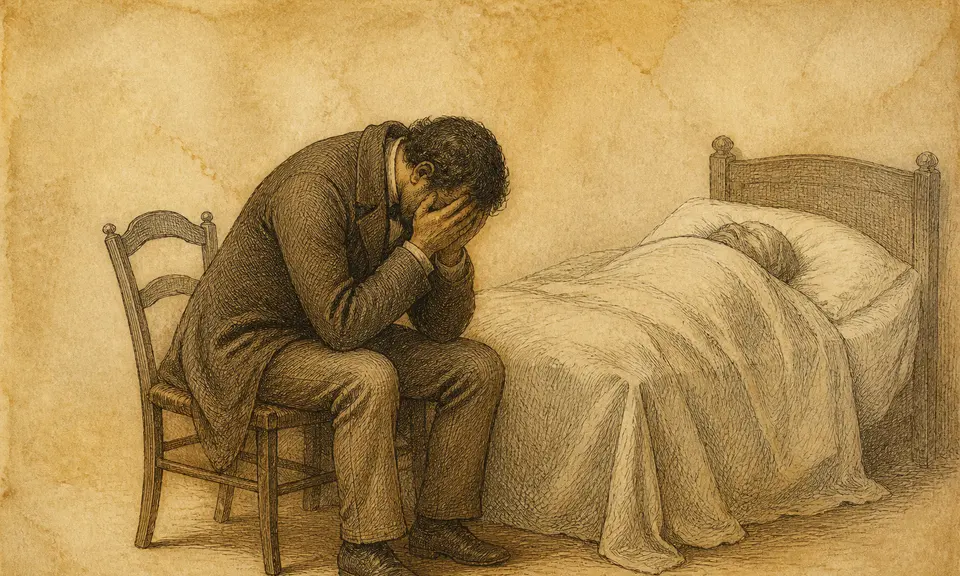
Two readings as far apart as two interpretations of the same dream can get. Artemidorus records a case and adds nothing to it: a man dreamed that his mistress died, and a little later he himself passed away, robbed of the enjoyment that was sweetest to him. The dream fell not on her but on him. Freud does not go after a single symbol at all and speaks of the whole class of such dreams: in dreams of the death of persons dear to us the repressed wish has found a path by which it can evade the censorship and the distortion the censorship imposes, and the never-failing accompaniment is that painful sensations are felt in the dream. Part of that group he sets aside, because on analysis those dreams mean something other than what they contain and are intended to cover some other wish. So one book tells of a foreboding fulfilled and the other says there is no foreboding in it at all. This is also one of the few places in the whole book where Freud is cited: here he is a treatise and not a dictionary, and he stands only where he was really writing himself.
This paragraph was generated by a model. It sums up the sources above, comes from none of them and is attributed to no one.
He dreamed that his mistress died; and a little later he himself passed away, robbed of the enjoyment that was sweetest to him.
Passage Book I, 2
In dreams of the death of persons dear to us, the repressed wish has found a path by which it can evade the censorship, and the distortion the censorship imposes. The never-failing accompaniment is then that painful sensations are felt in the dream.
Passage Die Traumdeutung, V.D.β
The dreams of the first group we may set aside; they have no claim to count as typical. When one analyses them one finds that they mean something other than what they contain, that they are intended to cover some other wish.
Passage Die Traumdeutung, V.D.β