Cucumbers being pared round are good for the sick, because they separate off the fluids.
Passage Book I, 67
4 readings from 3 sources.
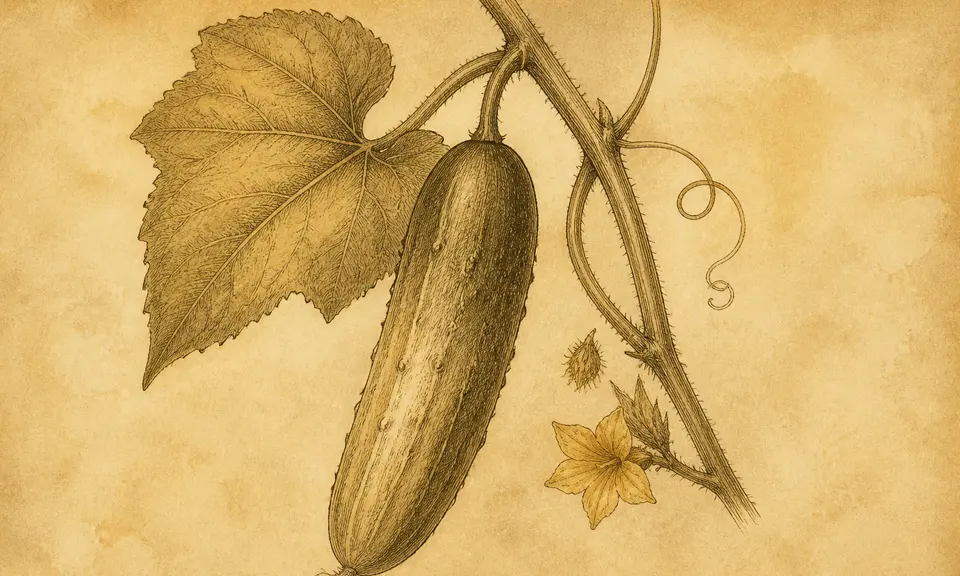
This is as flat a contradiction as the corpus holds. Miller calls it a dream of plenty: health and prosperity, speedy recovery for the sick, a pleasant change for the married. Artemidorus has one line and it is medicine: cucumbers being pared round are good for the sick, because they separate off the fluids. an-Nabulsi opens with care and sorrow — whoever eats it strives at a matter that weighs on him, the yellow one worst — and then puts in the condition his book keeps coming back to: in its season it is provision, out of its season sickness. And a cucumber seen standing in the ground is a sorrowful child, which is where the two books stop being about vegetables at all. Another Arabic reading softens the first a little and keeps the direction: a low provision with no permanence in it. Then it does what Miller never does and puts the fruit into the house — the cucumber points to the dreamer's own pregnancy, and carried indoors to his wife's; and the cucumber and the faqqus melon are easy provisions after all.
This paragraph was generated by a model. It sums up the sources above, comes from none of them and is attributed to no one.
Cucumbers being pared round are good for the sick, because they separate off the fluids.
Passage Book I, 67
In a dream it is care and sorrow: whoever ate it strives in a matter that weighs upon him, and the yellow one especially. In its season it is provision, and out of its season sickness; and if a man saw it standing in the ground, it is a sorrowful child. And whoever sees that he eats it, and his wife was with child, she bore him a girl. And the cucumber, when it is cut with iron, is good for the illness; and the cucumber is good and a good choice for whoever comes upon it.
Section letter kha
It is in a dream a low provision with no permanence in it. And the cucumber points to the dreamer's own pregnancy; if he took some of it and brought it into his house, it points to his wife's pregnancy. And the cucumber and the faqqus melon are easy provisions.
Section letter qaf
This is a dream of plenty, denoting health and prosperity. For the sick to dream of serving cucumbers, denotes their speedy recovery. For the married, a pleasant change.