A crab: a hundred illnesses melt away.
Section Turtles, soft-shelled turtles, fish, shrimp and insects
7 readings from 4 sources.
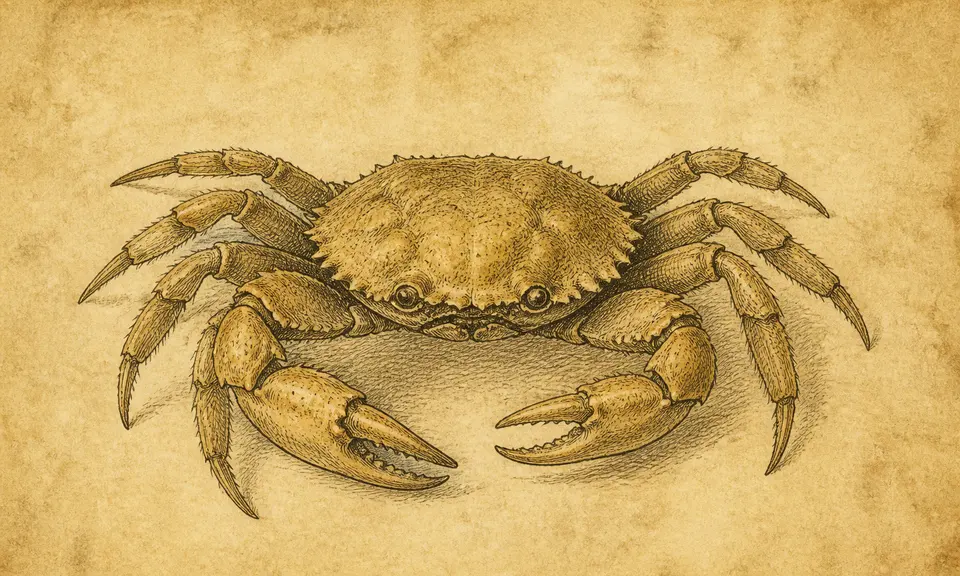
The Duke of Zhou gives the crab five words and they are the best news in the motif: a crab, and a hundred illnesses melt away. an-Nabulsi reads the animal as a man and takes his armour seriously — a man of much guile because of his many weapons, of great awe, hard to get hold of, hard in resolve and in argument, and difficult to keep company with. Then he adds the one line that agrees with the Chinese book: whoever eats the flesh of a crab gets good from a distant land. Miller reads the shell as a tangle: crabs mean many complicated affairs that will need the soundest judgment, and to lovers they portend a long and difficult courtship. Artemidorus reads not the crab but the moulting, and makes it a promise to everyone who is stuck: all fish that slough off their old age are good for the sick and for those in prison and for the poor and for all who are in any straits, because they will put off the evils that lie about them — the soft-shelled ones, the shrimp, the crayfish, the crab, the lobster and the rest. The same animals have also often prophesied blows, because they strike themselves, and journeys abroad, because they are amphibious; and crabs are of profit to fishermen and to purple-fishers and to crab-catchers. Eating the thing is favourable in the Chinese and the Arabic book, and meeting it is not.
This paragraph was generated by a model. It sums up the sources above, comes from none of them and is attributed to no one.
A crab: a hundred illnesses melt away.
Section Turtles, soft-shelled turtles, fish, shrimp and insects
Shrimp and clams calling and scattering: quarrels.
Section Turtles, soft-shelled turtles, fish, shrimp and insects
All fish that slough off their old age are good for the sick and for those in prison and for the poor and for all who are in any straits, for they will put off the evils that lie about them. Those fish that slough off their old age are the soft-shelled ones, such as the shrimp, the crayfish, the crab, the lobster, the pagurus and what is called the old woman, and whatever else is like them.
Passage Book II, 14
These have also often prophesied blows, because they strike themselves, and journeys abroad, because they are amphibious.
Passage Book II, 14
Crabs are of profit to fishermen and to purple-fishers and to crab-catchers.
Passage Book II, 14
In a dream it is a man of much guile, because of his many weapons, of great awe, hard to get hold of, hard in resolve and in argument, and difficult to keep company with; and whoever eats the flesh of a crab gets good from a distant land. And it is said: whoever sees the crab gets unlawful money.
Section letter sin
To dream of crabs, indicates that you will have many complicated affairs, for the solving of which you will be forced to exert the soundest judgment. This dream portends to lovers a long and difficult courtship.