To have plump cheeks is good for everyone, and most of all for women.
Passage Book I, 28
4 readings from 2 sources.
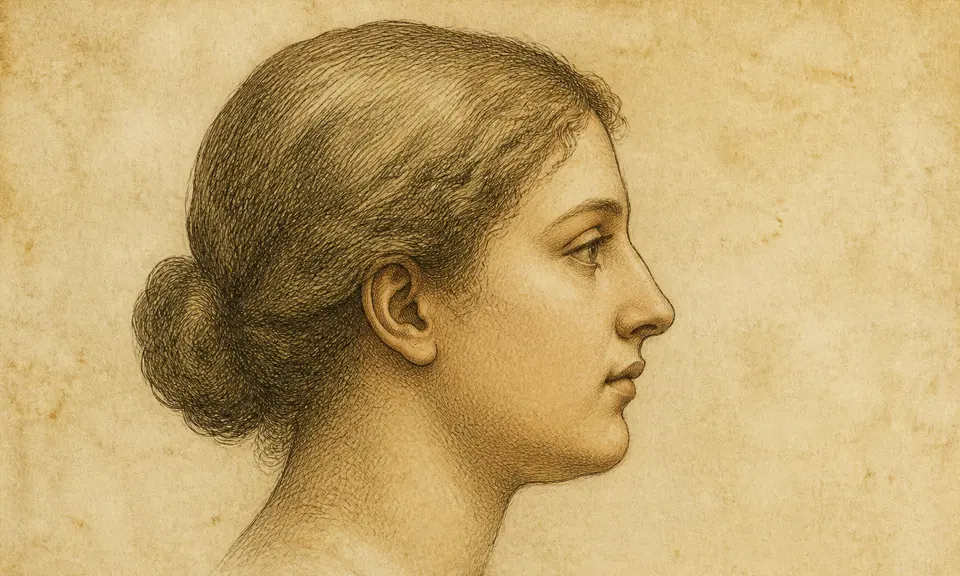
On one thing the two books agree without reservation: a full face is good. Artemidorus puts it most briefly — to have plump cheeks is good for everyone and most of all for women — and at once adds the opposite, split in two: thin cheeks mean grief, ulcerated ones mourning, because in mourning people tear at their cheeks. The Arabic book keeps the same axis and gives it colour: the redness of the cheek and its plumpness indicate standing, recovery from sicknesses, acceptance and a fair complexion, while its yellowness and blackness indicate fear, sorrows and the sinking of worth. Another Arabic reading takes the cheeks as that with which a person is made comely, or as what he desires — or as the one who kisses them, so that a mishap to them is proof of the corruption of the kisser's state. And it holds one reading found nowhere else: a cheek in the earth or dusty is lowliness and destitution, yet for the people of religion it is an increase and an elevation with God, because that is of the traits of those who keep vigil by night.
This paragraph was generated by a model. It sums up the sources above, comes from none of them and is attributed to no one.
To have plump cheeks is good for everyone, and most of all for women.
Passage Book I, 28
But to have them thin or ulcerated signifies grief or mourning — thin, grief; ulcerated, mourning; for in mourning people tear at their cheeks.
Passage Book I, 28
The two cheeks point to that with which a person is made comely, or to what he desires. And perhaps the two cheeks point to the one who kisses them; so whatever befell them of a mishap was a proof of the corruption of the state of the one who kisses him. And perhaps the cheek points to lowliness and destitution if it was earth or dusty; and that, for the people of religion, is an increase and an elevation with God the Most High, because that is of the traits of those who keep vigil by night.
Section letter kha
It is in a dream the sign of good and of plenty and of living and of relief, and of harm and of care, and of health and of sickness; and what befalls in it of increase or of decrease is in what I have mentioned. And the two cheeks are a man's work. And the redness of the cheek and its plumpness are an indication of standing and of recovery from sicknesses and of fortune and of acceptance and of fair complexion. And its yellowness and its blackness are an indication of fear and of sorrows and of the sinking of worth.
Section letter waw