But if a man in bonds sees this dream, the divine power will heap other evils upon him besides his not being set free.
Passage Book I, 16
5 readings from 3 sources.
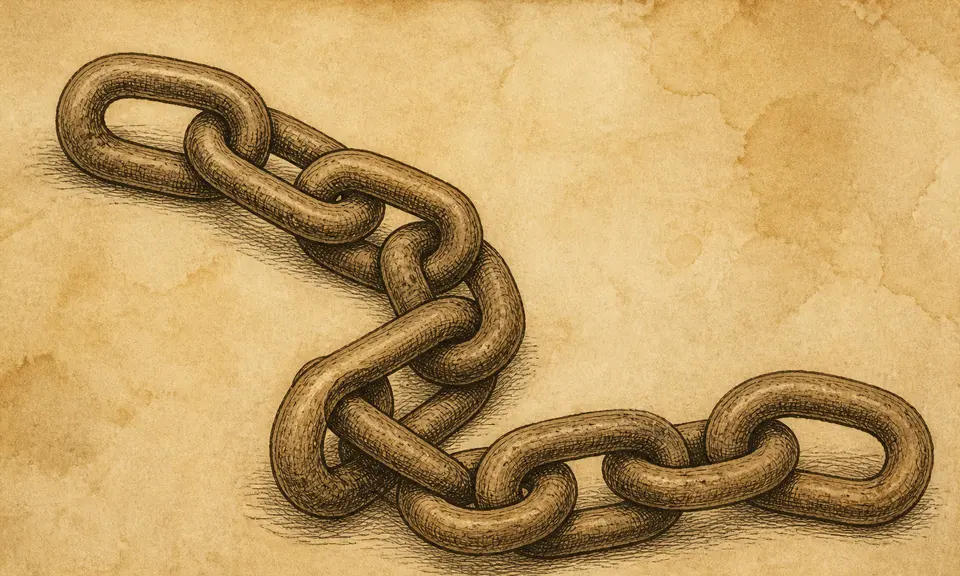
Miller reads the chain as an injustice done to the dreamer: being bound means unjust burdens about to be thrown on his shoulders, breaking them means freeing himself from an unpleasant engagement, seeing chains brings calumny and the treacherous designs of the envious, and seeing others in them means bad fortune for them. Artemidorus reads not the chain but the man already in bonds, and measures the dream by whether it loosens him: dancing is good for a man in bonds, because of the easy movement and the free play of the body, for he will be loosed — while there are dreams which, seen by a man in bonds, mean that the divine power will heap other evils upon him besides his not being set free. And his one case turns the chain into an office: a man dreamt that he was bound with a chain to the base of the Poseidon on the Isthmus, and he became a priest of Poseidon, for he had to be inseparable from the places of his priesthood. an-Nabulsi reads the links as something that lasts, and a chain is first a woman of long life with lasting lawful money — then, without pause, a threat and a menace. He ends by putting it on the dreamer himself: a chain seen in his hand or round his neck is a disobedience.
This paragraph was generated by a model. It sums up the sources above, comes from none of them and is attributed to no one.
But if a man in bonds sees this dream, the divine power will heap other evils upon him besides his not being set free.
Passage Book I, 16
But dancing is good for a man in bonds: for he will be loosed, because of the easy movement and the free play of the body.
Passage Book I, 76
A man dreamt that he was bound with a chain to the base of the Poseidon on the Isthmus. He became a priest of Poseidon, for he had to be inseparable from the places of his priesthood.
Passage Book V
In a dream it points to a woman of long life with lasting lawful money; and it may point to threat and menace. The chain in a dream is a disobedience, if he saw it in his hand or round his neck. And whoever sees a chain on his neck marries a woman of bad character; and the chain points to matters knotting up. And whoever sees that he was bound with a chain — care reached him. And whoever sees the chain of Khosrow and was wronged is given the victory; and the chain of Khosrow points to the justice of the king who is seen in his own country.
Section letter sin
To dream of being bound in chains, denotes that unjust burdens are about to be thrown upon your shoulders; but if you succeed in breaking them you will free yourself from some unpleasant business or social engagement. To see chains, brings calumny and treacherous designs of the envious. Seeing others in chains, denotes bad fortunes for them.