A man dreamed that his staff had been broken. He fell ill and was paralysed; for the support of the body was shown by the staff, that is, its strength and good condition.
Passage Book V
6 readings from 3 sources.
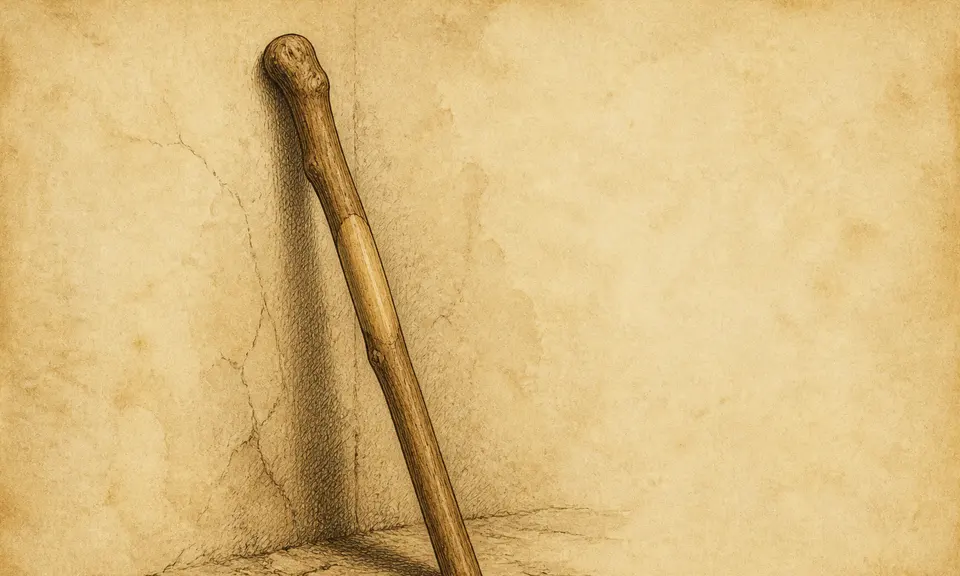
The stick is a support that stands for something other than itself in all three books, and Artemidorus uses it to show that the same picture can mean its own opposite. One man dreamed his stick broke: he fell ill and was paralysed, because the stick stood for the support of the body, that is its strength and good condition. The same man had the same dream again, when he could no longer bear the paralysis — and recovered completely at once, because he was to need the support no longer. What decides, then, is the state the dreamer was in, not the picture. an-Nabulsi reads the stick as a person: a man of good family, unassailable, willing to help, in whom there is hypocrisy, so that whoever holds it in his hand seeks help from such a man, gains his request and grows strong on his money, while a hollow stick leaned on means money that will go, a broken one a governor deposed and a merchant's trade undone, and to strike the ground with it is to prevail over that ground or its owner. To Miller the leaning itself is the mistake: to see a walking stick foretells contracts entered without due consideration, to lean on one while walking means being dependent on the advice of others, and to admire fine sticks means entrusting your interest to others, who this time will be faithful.
This paragraph was generated by a model. It sums up the sources above, comes from none of them and is attributed to no one.
A man dreamed that his staff had been broken. He fell ill and was paralysed; for the support of the body was shown by the staff, that is, its strength and good condition.
Passage Book V
The same man, distressed and out of patience because his paralysis had lasted so long, dreamed that his staff was broken. He at once recovered his strength; for he would no longer have need of a support.
Passage Book V
It in a dream points to blame and to reproach; and if it is said of it that it is a short staff, it points to subjugation and to highness and elevation and wealth and to the helper toward good and toward evil.
Section letter mim
It is in a dream a man of good birth, unassailable, ready to help. So whoever saw that a staff is in his hand seeks the help of a man of good birth and unassailable, in whom there is hypocrisy, and reaches his request and what he wants, and grows strong by his wealth, and gains victory over his enemy. And if it was hollow and he was leaning upon it, then his wealth goes and he hides that from people. And if he saw that it broke, and he was a governor, he was deposed; and if he was a merchant, God made his trade go away. And if he saw that he struck with it the ground he is upon, then he prevails over that ground, or over the owner of that plot upon which he stands, if it be of what is disputed.
Section letter ayn
To dream of a mallet, denotes you will meet unkind treatment from friends on account of your ill health. Disorder in the home is indicated.
To see a walking stick in a dream, foretells you will enter into contracts without proper deliberation, and will consequently suffer reverses. If you use one in walking, you will be dependent upon the advice of others. To admire handsome ones, you will entrust your interest to others, but they will be faithful.