To carry one of the living is better than to be carried, in so far as it is also better to be able to defend someone than to stand in need of requital.
Passage Book II, 56
2 readings from 2 sources.
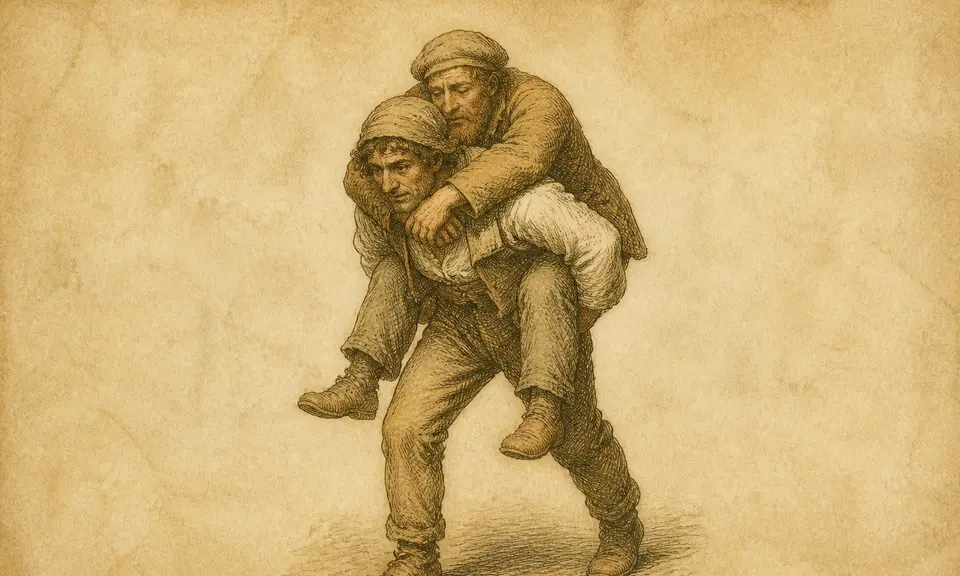
Artemidorus reads the burden as a living man on one's back and compares the two positions: to carry one of the living is better than to be carried, in so far as it is also better to be able to defend someone than to stand in need of requital. an-Nabulsi does not weigh the positions; he weighs the load. A man's burden, if it is heavy, points to the evil neighbour, and the heavy burden may be sins; and the heavy burden for a woman is a pregnancy or a husband of evil. So the two books take opposite sides of the same back: for the Greek book carrying is the better place to be, because it is the place of the stronger man, and for the Arabic book the weight is the whole reading, and what it names — the neighbour, the sins, the bad husband — is in each case something the carrier cannot put down.
This paragraph was generated by a model. It sums up the sources above, comes from none of them and is attributed to no one.
To carry one of the living is better than to be carried, in so far as it is also better to be able to defend someone than to stand in need of requital.
Passage Book II, 56
In a dream, if it is heavy, it points to the evil neighbour, and the heavy burden may be sins; and the heavy burden for a woman is a pregnancy or a husband of evil.
Section letter ḥa