But to give birth and to bring forth does not signify the same as still dreaming that one is carrying in the womb: it shows that a sick man will die quickly, since every body that gives birth lets out breath.
Passage Book I, 14
16 readings from 3 sources.
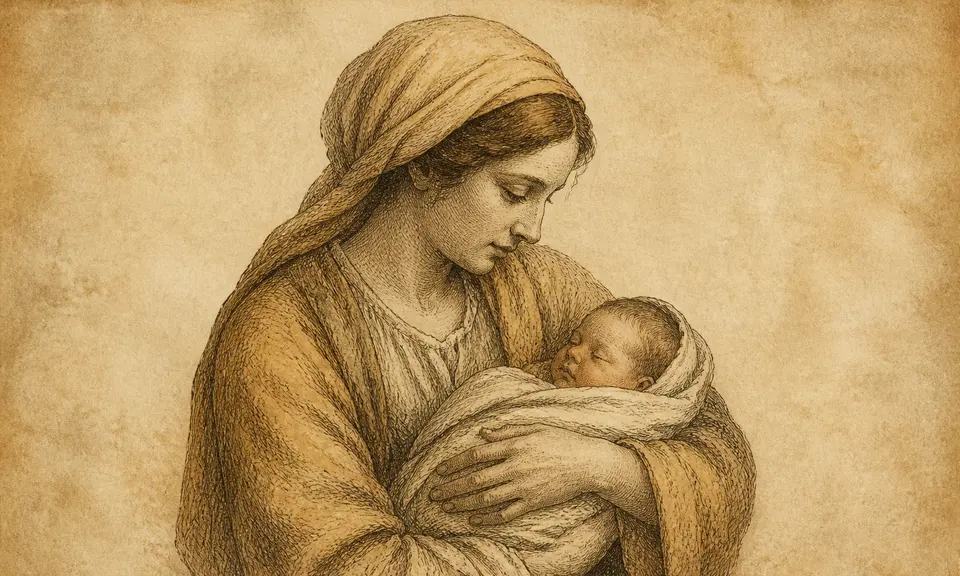
Miller splits the birth by the mother's standing: for a married woman great joy and a handsome legacy, for a single woman loss of virtue and abandonment by her lover. an-Nabulsi splits it by sex and reverses both the dream and the reading: a woman with child who dreams of a son will deliver a daughter and the other way about, and the daughter is relief while the son is care. A prisoner's relief is the birth of a daughter. Then the hard side — a sick man who dreams his mother gave birth to him dies, because the infant is wrapped in rags like a corpse, and the rich man who dreams it will not keep his riches, because the infant lies in another's hands; for the poor and the imprisoned the same dream is escape. Artemidorus reads giving birth as a letting go and sorts it by who has something to lose: to a poor man, a debtor, a slave and everyone in distress it is the laying aside of present hardships, and it brings hidden things to light, since the infant that was hidden has come into view — but it harms rich men, moneylenders and all who are trusted with something, for they will lay aside what they had, while traders and shipowners will dispose of their cargoes. For the sick it is death, since every body that gives birth lets out breath. And his case cuts the other way: a pancratiast dreamed before a contest that he had given birth and was nursing his own baby, lost, and gave up the athlete's life, since he was seen to be enduring the work not of a man but of a woman.
This paragraph was generated by a model. It sums up the sources above, comes from none of them and is attributed to no one.
But to give birth and to bring forth does not signify the same as still dreaming that one is carrying in the womb: it shows that a sick man will die quickly, since every body that gives birth lets out breath.
Passage Book I, 14
To a poor man, to one in debt, to a slave and to everyone in any kind of distress it signifies the laying aside of the present hardships, and the reason is plain. It also brings hidden things to light, since the infant that was hidden until then has come into view.
Passage Book I, 14
But it harms rich men, moneylenders, men of business and all who are trusted with something, for they will lay aside what they had before.
Passage Book I, 14
To traders and shipowners it is good, for they will dispose of their cargoes.
Passage Book I, 14
And many have lost kinsmen too, because the infant, being of their blood, was cast out.
Passage Book I, 14
If someone dreams that he is being born of some woman or other, this is how it ought to be judged. For a poor man it is good, since he will have someone to feed him and to look after him, just as babies have.
Passage Book I, 13
Unless he happens to be a craftsman: to him it foretells idleness, for babies are inactive and have their hands wrapped up.
Passage Book I, 13
To a rich man it means not being master of his own house but being ruled by people he does not want, for babies too are ruled by others, and not as they themselves see fit.
Passage Book I, 13
To a man who has a wife that is not with child it means that he will be deprived of his wife, for babies do not consort with women either.
Passage Book I, 13
Further, to a man whose wife is with child it means that a son will be born to him who is like him in everything; for in that way he himself might seem to be born.
Passage Book I, 13
To a slave it means that he will be loved by his master and, even if he does wrong, be thought worthy of pardon — but that he will not be set free yet.
Passage Book I, 13
A man who was a pancratiast dreamt, before a contest, that he had given birth and was nursing his own baby. He was beaten in that contest, and from then on he gave up the athlete's life: for he was seen to be enduring not the work of a man but of a woman.
Passage Book V
A man dreamed that he was born again from his own mother. Brought back from abroad to his own country, he found his mother ill and inherited from her. And this was what being born from her meant: to be set by his mother from poverty into plenty; for he happened to be in great want and poverty.
Passage Book V
Those dreams that mean the begetting of children or a marriage also bring back children who are abroad, and a wife who has been put away.
Passage Book IV
If a king sees in a dream that his wife bore a son and she was not with child, he comes into hoards. If a woman with child sees that she bore a son, she will deliver a daughter; and if she bore a daughter, she will deliver a son — for the daughter is relief in the reading and the son is care. If a sick man sees that his mother gave birth to him, he dies, because the infant is wrapped in rags like a dead man. And if he was a craftsman, hindrances come up that cut him off from his work; and if he was poor, he will find somebody to feed him and look after his affairs; and if he was rich, he will not keep his riches, and another will be given power over him by force, because the infant is in another's hands. And if he was a man with a wife, her childbearing is cut off and she will not bear; and if his wife was with child, she bears a son like the dreamer. If a slave sees it, it points to his master's love: if he sinned, the master forgives him, but he will not set him free. If a traveller sees it, he cannot get out of his lodging. If a man in a lawsuit sees it, his argument will not stand against the claim before the judge. And if a woman sees that she gave birth out of her mouth, she dies and her soul goes out of her mouth. The birth of a daughter is the prisoner's relief. And if a man sees that he bore a boy, he falls ill and comes safely out of a grief and wins against his enemy and is rid of a bad woman; and if he bore a girl, it was for him a relief from every hardship, and out of his line will come one who masters his household and is great. And if a woman bore an animal out of her womb: if she bore a cat, the child is a thief. Childbirth is a coming out of hardships and illnesses, or a parting from household and neighbours; and childbirth is rest and relief and the paying of a debt and repentance. If a woman sees that she bore a boy, she gets in the end of her affair relief and good news and gladness and an escape from a weight; and if she bore a girl, she gets honour and plenty and ease after hardship and is granted a wide and blessed provision in joy. Whoever sees that he gives birth: if he was poor, he becomes rich; and if he was rich, he falls into care and grief; and if he was unmarried, he marries quickly, so that it is the woman who bears. And the rest of people, when they see that, it points to their falling ill; and the sick man who sees that he gives birth — it points to death. And for the poor and the needy and the slaves and the people of care, it points to relief and to escape from hardship. For merchants this dream points to the loss of what they have, and for travellers to the lightening of their load; and it points to the death of a kinsman of the dreamer.
Section letter waw
For a married woman to dream of giving birth to a child, great joy and a handsome legacy is foretold. For a single woman, loss of virtue and abandonment by her lover.