Beef too is bad, because it is hard to chew, and because of its cheapness it signifies small earnings; and to slaves it signifies torments, on account of the strap and the ox-hide whip.
Passage Book I, 70
2 readings from 2 sources.
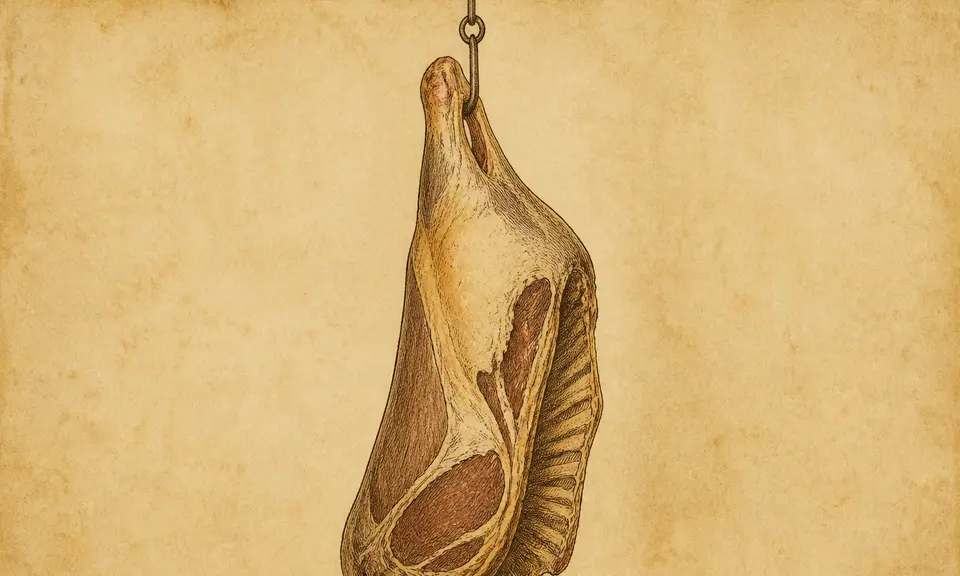
The two books agree that beef is bad and arrive there by quite different routes. Artemidorus reads the meat itself: beef is hard to chew, and because of its cheapness it signifies small earnings, while to slaves it signifies torments, on account of the strap and the ox-hide whip. Miller reads the serving. Raw and bloody, it means cancers and tumors of a malignant nature will attack the dreamer, who is to be on his guard as to bruises and hurts of any kind; seen or eaten cooked, it means anguish surpassing human aid and loss of life by horrible means; and properly served under pleasing surroundings it turns, denoting harmonious states in love and business, with evil foreboded if it is otherwise, though it may be of a trifling nature. Only Miller leaves a way out of the dream, and it is the table that provides it: the Greek book finds the omen in what the meat costs and how it chews, and nothing about the meal can change that.
This paragraph was generated by a model. It sums up the sources above, comes from none of them and is attributed to no one.
Beef too is bad, because it is hard to chew, and because of its cheapness it signifies small earnings; and to slaves it signifies torments, on account of the strap and the ox-hide whip.
Passage Book I, 70
If raw and bloody, cancers and tumors of a malignant nature will attack the subject. Be on your guard as to bruises and hurts of any kind. To see, or eat cooked beef, anguish surpassing human aid is before you. Loss of life by horrible means will occur. Beef properly served under pleasing surroundings denotes harmonious states in love and business, if otherwise, evil is foreboded, though it may be of a trifling nature.