Bedbugs signify low spirits and cares, for they too make men sleepless just as cares do; and besides, they bring unpleasantness and ill feeling towards some of the household, and for the most part towards women.
Passage Book III, 8
4 readings from 3 sources.
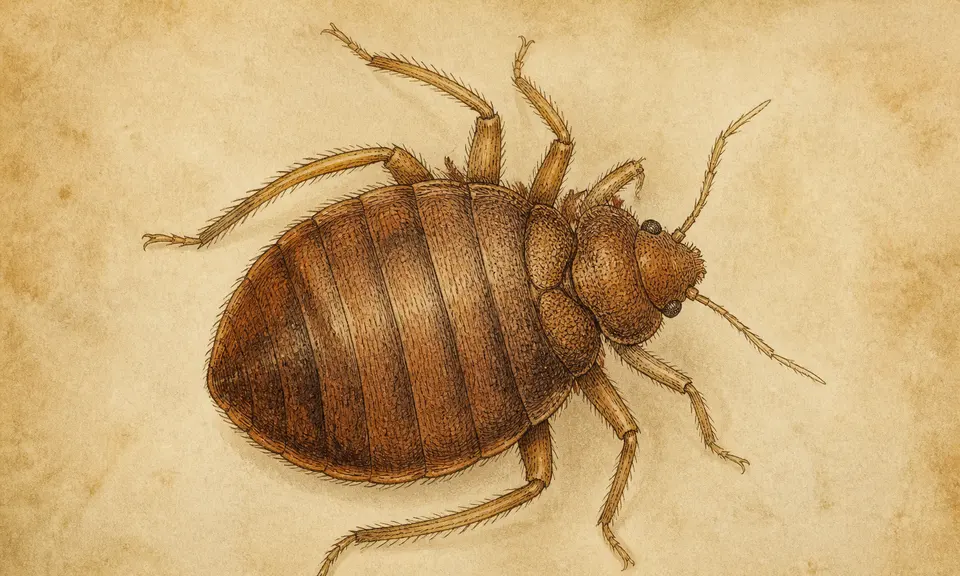
Miller writes a whole paragraph of sickroom detail: bedbugs mean continued sickness and unhappy states, in profusion they intimate fatalities, simulating death unhappiness caused by illness, mashed and giving water instead of blood an alarming but not fatal illness — and bedbugs crawling up white walls that scalding water will not destroy, a serious complication. Artemidorus reads them as the reason nobody sleeps, and says so: bedbugs signify low spirits and cares, for they too make men sleepless just as cares do; and besides, they bring unpleasantness and ill feeling towards some of the household, and for the most part towards women. His case is the one that puts the household into the shirt: a man dreamt that he found a great many large bedbugs in his own tunic and was disgusted, and that although he wanted to throw them off he could not. On the next day he learnt that his wife was committing adultery; he was grieved, but he was not parted from her, because of some hindrance that arose — for the tunic signified the woman who clung about him, and the bedbugs the disgrace, and since he could not take them off although he wanted to, neither could he be parted from his wife although he wanted to. an-Nabulsi reads them as people: weak enemies, or soldiers with no faithfulness in them; the bedbug points to care and sorrow, and a single bug is a man given to stabbing with his tongue, wretched and weak.
This paragraph was generated by a model. It sums up the sources above, comes from none of them and is attributed to no one.
Bedbugs signify low spirits and cares, for they too make men sleepless just as cares do; and besides, they bring unpleasantness and ill feeling towards some of the household, and for the most part towards women.
Passage Book III, 8
A man dreamt that he found a great many large bedbugs in his own tunic and was disgusted, and that although he wanted to throw them off he could not. On the next day he learnt that his wife was committing adultery; he was grieved, but he was not parted from her, because of some hindrance that arose: for the tunic signified for him the woman who clung about him, and the bedbugs the disgrace. And since he had not been able to take them off although he wanted to, neither was he able to be parted from his wife although he wanted to.
Passage Book V
In a dream they are weak enemies, or soldiers with no faithfulness in them; and the bedbug points to care and sorrow. The single bug is a man given to stabbing with his tongue, wretched and weak. And whoever sees as if the bedbugs closed on him and crowded about him — wicked people spoke shame of him, and he grieved and sorrowed; and they are base folk with low voices. And whoever sees that he works at a bedbug works at a weak person. And whoever sees that a bedbug went into his throat or reached his belly — a weak person comes in upon him, and he comes by a scant good from him and a little gladness, not much.
Section letter ba
Seen in your dreams, they indicate continued sickness and unhappy states. Fatalities are intimated if you see them in profusion. To see bedbugs simulating death, foretells unhappiness caused by illness. To mash them, and water appears instead of blood, denotes alarming but not fatal illness or accident. To see bedbugs crawling up white walls, and you throw scalding water upon them, denotes grave illness will distress you, but there will be useless fear of fatality. If the water fails to destroy them, some serious complication with fatal results is not improbable.