Ashes

2 readings from 2 sources.

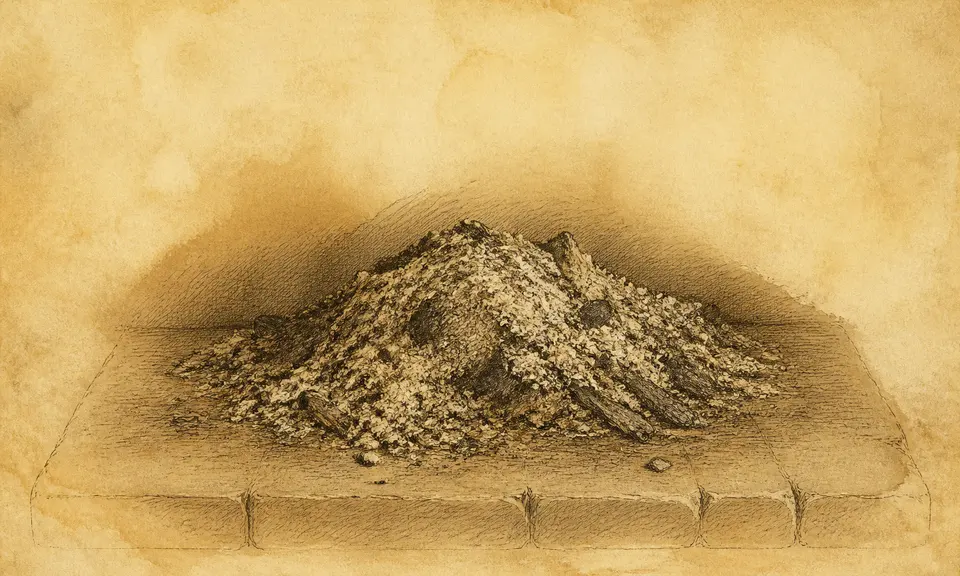
The image was generated by a model. It is not a period engraving and comes from none of the sources.

Both books read ashes as the remains of something that was worth more before it burned, and both are gloomy about it. Miller spreads it over trades: woe and bitter changes, blasted crops for the farmer, unsuccessful deals for the trader, and parents reaping the sorrows of wayward children. an-Nabulsi says what burned — unlawful money — and then, as his book often does, allows the opposite reading in the same breath: it is said it is a provision from the ruler, and whoever sees ashes wearies himself in a ruler's business for nothing but hardship. He closes with the sharpest line either book has: the ashes are empty talk, or knowledge of no use.

This paragraph was generated by a model. It sums up the sources above, comes from none of them and is attributed to no one.

Arabic dream book

It is unlawful money burnt up, and it is said it is a provision from the ruler. Whoever saw ashes wearies himself in a ruler's business and gets nothing out of it but hardship and toil; and it is said the ashes are empty talk, or knowledge of no use. And whoever sees that he came by ashes, or carried them, or gathered them, carries something empty of speech or of knowledge and has no use of it. And the ashes point to sorrow and to the soreness of the eye, or to straying after guidance. And perhaps they point to the putting out of strife and ill, and to safety from fear. And ashes gathered from single people point to money out of alms, or to a surfeit of talk.

Section letter ra

The Perfuming of Mankind in the Interpretation of Dreams

Abd al-Ghani al-Nabulsi

before 1731; first printed Cairo 1858 · Arab-Islamic

carries the ancient tradition after Artemidorus

About this source

An Arabic dream book by the Damascene scholar al-Nabulsi, an alphabetical dictionary of two and a half thousand headwords. It draws on the ancient tradition directly: Artemidorus was translated into Arabic by Hunayn ibn Ishaq in the ninth century. The readings here almost always address the dreamer’s standing, property and faith rather than their feelings.

Rights: public domain

Where the text is from: https://shamela.ws/book/1217

Miller

Dreaming of ashes omens woe, and many bitter changes are sure to come to the dreamer. Blasted crops to the farmer. Unsuccessful deals for the trader. Parents will reap the sorrows of wayward children.

Ten Thousand Dreams Interpreted; Or, What's in a Dream

Gustavus Hindman Miller

1901 · American Victorian

carries fragments of the ancient tradition without its system

About this source

An American dream book, the only one here that knows the telephone, the railroad or the elevator. Doctrinally it is the most degraded: it keeps fragments of the ancient tradition without the system that once held them together.

Rights: public domain

Where the text is from: https://www.gutenberg.org/ebooks/926