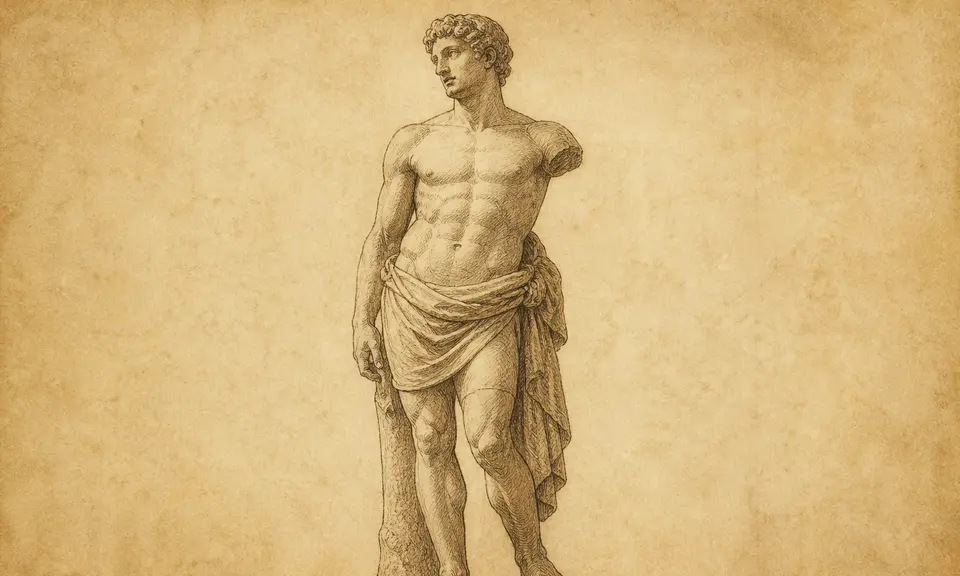
Amputation

3 readings from 3 sources.

The image was generated by a model. It is not a period engraving and comes from none of the sources.

Both books take the loss of a limb as a loss, and then they measure different things. Miller measures how much is gone: ordinary amputation is small offices lost, whole legs or arms an unusual depression in trade, and to seamen storm and loss of property — after which he steps outside the dream altogether and instructs that afflicted persons be warned to watchfulness, one of the few places where he gives the waking reader an order. Artemidorus measures neither, and has a case in which the severed part is a person: a woman dreamed that she held her husband's member in her hands, severed from the rest of his body, and that she took much thought that it should be kept safe — she had a son by her husband, whom she reared, for the member was a sign of the child, since the child had come from it, and because it had been severed, once she had reared the child she was parted from her husband. an-Nabulsi measures which part, so that the hand is the leaving of prayer, hand and foot on opposite sides corruption in religion, the private parts the absence of offspring, and the nose and the ear a sign of the crime and perhaps poverty. And then, on the tongue, he does what Miller never does and reads the same cut twice, as the voiding of an argument and as a kindness done to the man, because it cuts his tongue off from begging. The one book counts what the body has lost; the other asks what the body was using it for.

This paragraph was generated by a model. It sums up the sources above, comes from none of them and is attributed to no one.

Greek dream book

A woman dreamed that she held her husband's member in her hands, severed from the rest of his body, and that she cared for it and took much thought that it should be kept safe. She had a son by her husband, whom she reared; for the husband's member was a sign of the child, since the child had come from it. And because it had been severed from the rest of the body, once she had reared the child she was parted from her husband.

Passage Book V

Ὀνειροκριτικά (Oneirokritika)

Artemidorus of Daldis; edited by Rudolf Hercher

second century; Hercher’s edition 1864 · Greco-Roman

the source of the ancient tradition itself, which the others draw on

About this source

Five books of second-century Greek prose, not an alphabetical dictionary: the readings sit inside argued chapters and the author says of each one why it reads as it does. It is the source the other European and Arabic dream books draw on, including where they do not name it.

Rights: public domain

Where the text is from: https://archive.org/details/bub_gb_CRwTAAAAQAAJ

Arabic dream book

The cutting off of the hand in a dream points to the leaving of prayer, or to the one cut off being made free of begging by a wealth he attains, or to repentance. And the cutting off of the hand and the foot on opposite sides is corruption in religion. And the cutting off of the private parts points to the absence of offspring, or to the cutting off of rest from children and family. And the cutting off of the nose and the ear is a sign of the crime, and perhaps it points to poverty and to the cutting off of news. And the cutting off of the tongue is the voiding of an argument, or a kindness done to him by cutting his tongue off from begging.

Section letter qaf

The Perfuming of Mankind in the Interpretation of Dreams

Abd al-Ghani al-Nabulsi

before 1731; first printed Cairo 1858 · Arab-Islamic

carries the ancient tradition after Artemidorus

About this source

An Arabic dream book by the Damascene scholar al-Nabulsi, an alphabetical dictionary of two and a half thousand headwords. It draws on the ancient tradition directly: Artemidorus was translated into Arabic by Hunayn ibn Ishaq in the ninth century. The readings here almost always address the dreamer’s standing, property and faith rather than their feelings.

Rights: public domain

Where the text is from: https://shamela.ws/book/1217

Miller

Ordinary amputation of limbs, denotes small offices lost; the loss of entire legs or arms, unusual depression in trade. To seamen, storm and loss of property. Afflicted persons should be warned to watchfulness after this dream.

Ten Thousand Dreams Interpreted; Or, What's in a Dream

Gustavus Hindman Miller

1901 · American Victorian

carries fragments of the ancient tradition without its system

About this source

An American dream book, the only one here that knows the telephone, the railroad or the elevator. Doctrinally it is the most degraded: it keeps fragments of the ancient tradition without the system that once held them together.

Rights: public domain

Where the text is from: https://www.gutenberg.org/ebooks/926