And so too for a man to turn into an old man, since each of them is changing into what is held in more honour.
Passage Book I, 50
10 readings from 2 sources.
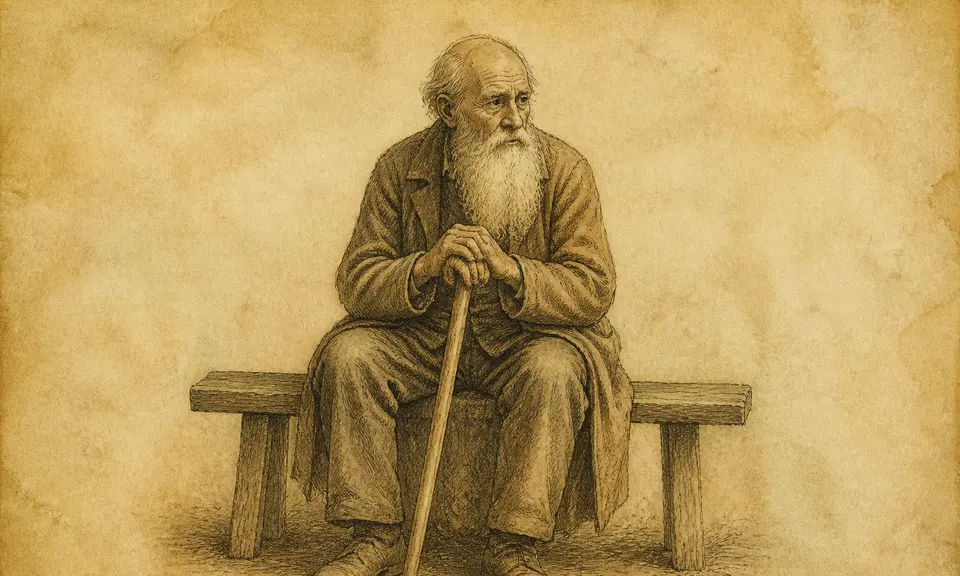
Artemidorus does not read age but the change of age, and he reads it as a promotion: to turn into an old man is good, since each is changing into what is held in more honour. A youth who turns into an old man will not die as the boy does but will fall ill; and a man who turns into a boy will be harmed by taking something in hand without sense — the poet's line about the minds of younger men ever fluttering is, he says, rightly said. Miller reads age as failure: it portends failures in any undertaking, and the dreamer who dreams of his own age brings down the indignation of relatives by perversity of opinion. For women he turns it into a mirror — to see herself looking aged means possible sickness or unsatisfactory ventures, and to see her lover aged means she is in danger of losing him.
This paragraph was generated by a model. It sums up the sources above, comes from none of them and is attributed to no one.
And so too for a man to turn into an old man, since each of them is changing into what is held in more honour.
Passage Book I, 50
But if a youth should turn into an old man, he will not die as the boy does, but he will fall ill.
Passage Book I, 50
And if a man should turn into a boy, he will be harmed by taking something in hand without sense; for the poet’s line is rightly said: the minds of younger men are ever fluttering.
Passage Book I, 50
When a man is within the number named, it is clear that the whole is signified to him together with the years already gone by. For instance, if a man of thirty dreams that someone says to him “you will live fifty years”, he will live twenty more, so that the twenty to come, with the thirty before, make him fifty.
Passage Book II
But if a man of seventy dreams that someone says to him “you will live fifty years”, it is clear that he does not say it of the fifty counted with the first years, since the first are more than fifty; nor again is it possible or admissible to live another fifty years on top of seventy. He will therefore live thirteen more, because nu, the letter that stands for fifty, is set thirteenth in order.
Passage Book II
This too. Days and months and years we find, for the most part, not at all of equal force: months and days are indicated by years, years and days by months, and months and years by days. So that this may not fall into doubt: when someone names years, if they are moderate and admissible, let them be reckoned years; if many, months; if beyond measure, days.
Passage Book II
The reckoning turns about from days as well: if they are many, let them be reckoned days; if moderate, months; if few, years. In the same way let months be taken by what is admissible. What is admissible and what is not will be shown, where the matter is the length of life, by the dreamer's age, and in other appointed terms by what the business leads one to expect.
Passage Book II
One must remember that the gods often pronounce as though about the length of life, yet do not always signify the length of life.
Passage Book II
It may be about freedom for slaves, and about the other things that the discourse on death set out above contains.
Passage Book II
To dream of age, portends failures in any kind of undertaking. To dream of your own age, indicates that perversity of opinion will bring down upon you the indignation of relatives. For a young woman to dream of being accused of being older than she is, denotes that she will fall into bad companionship, and her denial of stated things will be brought to scorn. To see herself looking aged, intimates possible sickness, or unsatisfactory ventures. If it is her lover she sees aged, she will be in danger of losing him.