To penetrate a woman who is under a husband, married according to the laws, is not good, because of the law: for to the same penalties to which the law brings a man caught in adultery, the dream brings him too.
Passage Book I, 78
4 readings from 3 sources.
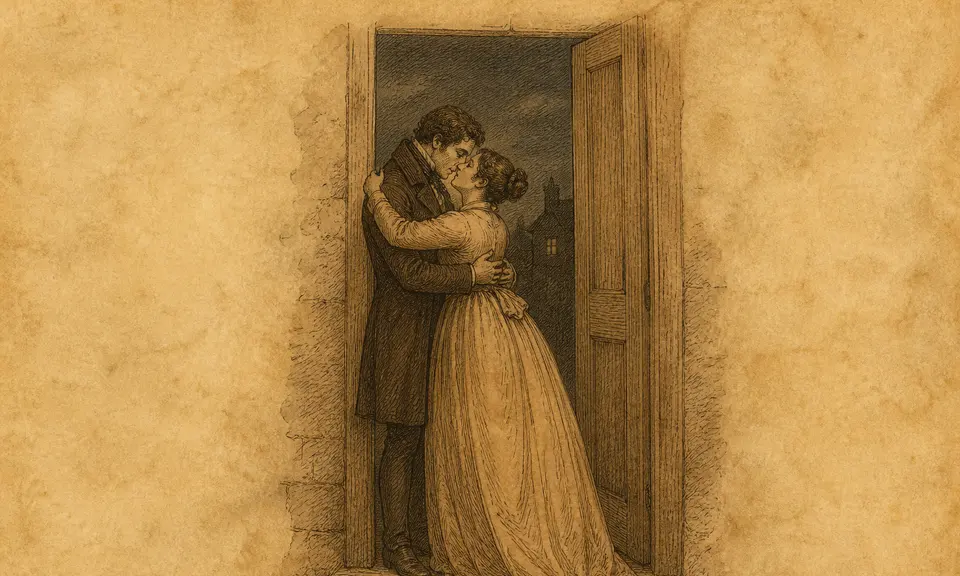
Miller reads the dream forward into consequences: whoever dreams of committing adultery will be arraigned for some illegal action, the woman who dreams it fails to hold her husband's affections, and the one who thinks she is enticing a youth is in danger of desertion and divorce for her open intriguing. Half his reading then leaves the dream altogether to argue about the dreamer's constitution, since the man of low ideals has vampirish influences swarming around him while the man of high ideals is exempt from lascivious dreams. an-Nabulsi reads no consequences at all, because for him the act is a figure for another act: adultery is treachery, so whoever saw that he commits it has been treacherous, and it is also theft — argued not from the harm done but from the manner, because the adulterer hides himself as the thief does. And where Miller's danger grows with how well the dreamer knows the other party, the Arabic sign runs the other way, for the unknown adulteress is good and stronger than the known one. Artemidorus reads the act forward into the law and into the household: to penetrate a woman who is under a husband, married according to the laws, is not good because of the law, for to the same penalties to which the law brings a man caught in adultery the dream brings him too — and then the enmity Miller never names, since hatred from the husband of the woman he lies with follows upon the adulterer.
This paragraph was generated by a model. It sums up the sources above, comes from none of them and is attributed to no one.
To penetrate a woman who is under a husband, married according to the laws, is not good, because of the law: for to the same penalties to which the law brings a man caught in adultery, the dream brings him too.
Passage Book I, 78
Whatever follows upon certain things comes about by day when they are seen in a dream. Above all, committing adultery makes enmity for the dreamer towards the husband of the woman he lies with: for hatred from her husband follows upon the adulterer.
Passage Book IV
In a dream it is treachery. So whoever saw that he commits adultery has been treacherous. And the unknown adulteress is good, and she is stronger than the known one. And adultery is theft, because the adulterer hides himself as the thief does.
Section letter zay
To dream that you commit adultery, foretells that you will be arrainged{sic} for some illegal action. If a woman has this dream, she will fail to hold her husband's affections, letting her temper and spite overwhelm her at the least provocation. If it is with her husband's friend, she will be unjustly ignored by her husband. Her rights will be cruelly trampled upon by him. If she thinks she is enticing a youth into this act, she will be in danger of desertion and divorced for her open intriguing. For a young woman this implies abasement and low desires, in which she will find strange adventures afford her pleasure. It is always good to dream that you have successfully resisted any temptation. To yield, is bad. If a man chooses low ideals, vampirish influences will swarm around him ready to help him in his nefarious designs. Such dreams may only be the result of depraved elementary influences. If a man chooses high ideals, he will be illuminated by the deific principle within him, and will be exempt from lascivious dreams. The man who denies the existence and power of evil spirits has no arcana or occult knowledge. Did not the black magicians of Pharaoh's time, and Simon Magnus, the Sorcerer, rival the men of God? The dreamer of amorous sweets is warned to beware of scandal.