To flatter is of use only to those who make a habit of it; the rest it brings low, for flatterers are the lesser men beside those they flatter.
Passage Book IV
5 readings from 3 sources.
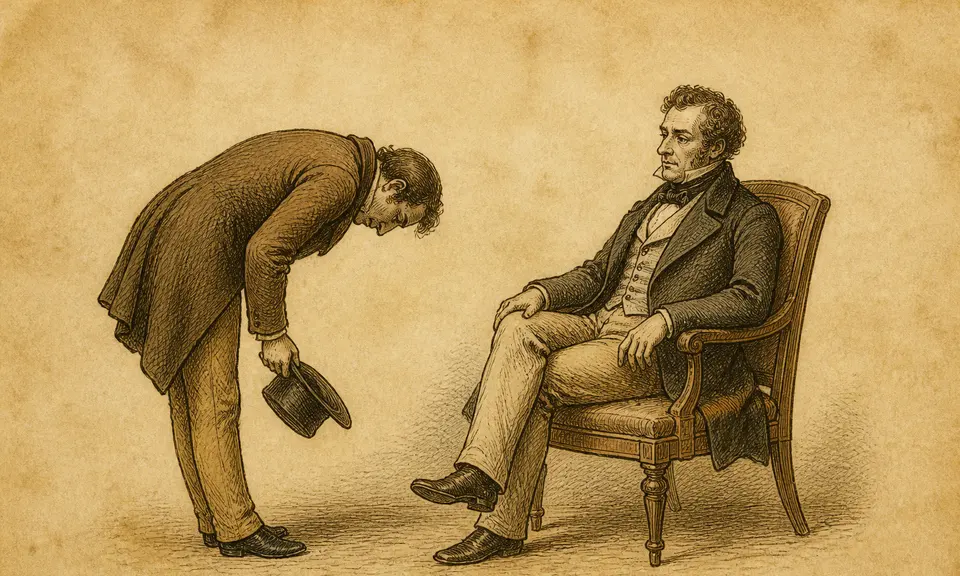
The two books put flattery on opposite sides of the moral ledger. Miller has no good word for it: to seek adulation foretells that the dreamer will pompously fill unmerited positions of honour, and to offer it means he will part with something dear in the hope of furthering his material interests. an-Nabulsi reads the same behaviour as a virtue and brings a hadith to settle it — flattery and conciliation are a proof of selflessness and of piety and of alms, because the believer's conciliating of others in defence of his honour is itself alms. Artemidorus stands with Miller and sharpens the reason: to flatter is of use only to those who make a habit of it, and the rest it brings low, for flatterers are the lesser men beside those they flatter, while to be flattered is of use to no one, and least of all by someone one knows, for from him one must expect betrayal. The act is identical — saying what smooths another man over — and one book sees a man buying a position he has not earned where the other sees him paying out of his own dignity to keep the peace and counts the payment as charity. Another Arabic reading settles the account by asking what the flattery is for, and comes nearer to Miller than the hadith does: fawning for something of the goods of this world is abhorred, fawning for a knowledge one means to practise brings honour, and in either case it is no reproach to the man accustomed to it and lowliness in the man who is not.
This paragraph was generated by a model. It sums up the sources above, comes from none of them and is attributed to no one.
To flatter is of use only to those who make a habit of it; the rest it brings low, for flatterers are the lesser men beside those they flatter.
Passage Book IV
To be flattered is of use to no one, and least of all by someone one knows, for from him one must expect betrayal.
Passage Book IV
It is in a dream a proof of selflessness and of piety and of alms. He, God bless him and grant him peace, said: “The believer's conciliating of others in defence of his honour is alms.”
Section letter mim
Whoever saw in a dream as though he fawns upon a man for something of the goods of this world, that is abhorred. And if he saw as though he fawns upon him for a knowledge he wishes to put into practice, or for a work among the means of piety in which he seeks his help, he attains honour and his religion is made sound and he reaches what he seeks. And it is said: fawning, for him who is accustomed to that in his circumstances, is not abhorred in the interpretation; and for him who is not accustomed to it, it is lowliness and contempt. And if the fawning was from a woman he knows, that points to his being kept safe from the hand of his enemy. And the doing of fawning and of smooth flattery in a dream is a proof of preferring others and of piety and of alms.
Section letter ta
To dream that you seek adulation, foretells that you will pompously fill unmerited positions of honor. If you offer adulation, you will expressly part with some dear belonging in the hope of furthering material interests.