Abuse

3 readings from 2 sources.

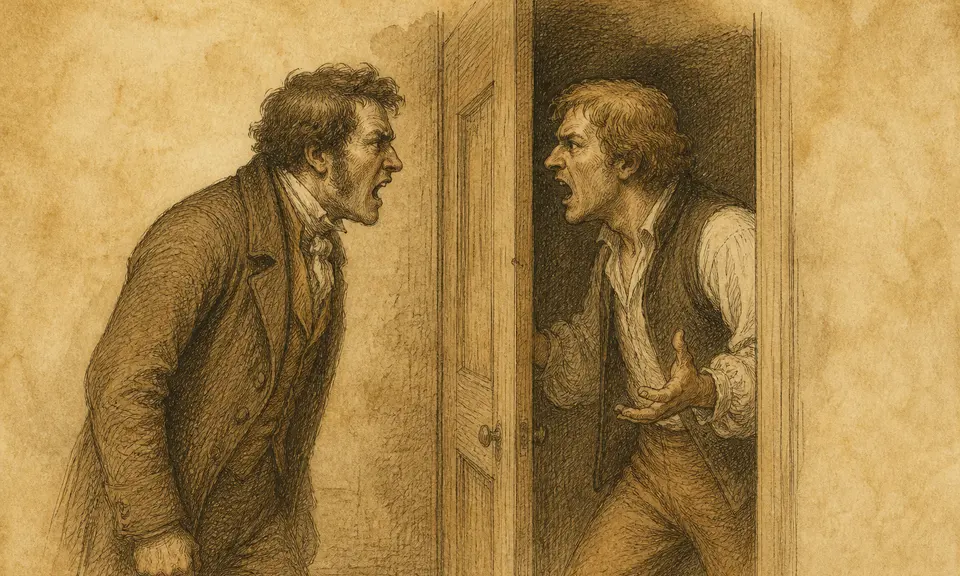
The image was generated by a model. It is not a period engraving and comes from none of the sources.

Miller reads abuse by who gives and who takes it: abusing a person means being unfortunate in one's affairs and losing money through over-bearing persistency, feeling oneself abused means being molested by the enmity of others, and a young woman who hears abusive language falls under somebody's jealousy — while one who uses it meets rebuffs and remorse. an-Nabulsi reads it as a transfer of standing: abuse is humiliation for the one abused and honour for the one who abuses — unless a low man abuses a high one, and then it is a calamity that comes down on the abuser from the man he abused. Another Arabic reading goes further and is the harder of the two: reviling is killing; and to revile the one whose obedience is due from you and whose kindness reaches you points to disobedience toward the parents and to turning away from God, or else to obedience to the very man you reviled in the dream.

This paragraph was generated by a model. It sums up the sources above, comes from none of them and is attributed to no one.

Arabic dream book

In a dream it is humiliation for the one abused and honour for the one who abuses — unless a low man abuses a high one, and then it is a calamity that comes down on the abuser from the man he abused. And whoever sees a person reviling him comes by harm from the reviler, and then he is given the victory and gets the better of him. And it is said it is a right that falls due to the reviled against the reviler. And if the reviler was a king, then the reviled is in a better state than the reviler, because he is the one wronged, and the one wronged is given the victory.

Section letter shin

It in a dream is killing. And the reviling of the people of the covenant and of others among the unbelievers points to dictation among the people and to the hurling of words. Or that he reviles one whose obedience is due from him and whose kindness reaches him — it points to disobedience toward the parents and to turning away from God the Most High, or to obedience to the one he reviled in the dream.

Section letter sin

The Perfuming of Mankind in the Interpretation of Dreams

Abd al-Ghani al-Nabulsi

before 1731; first printed Cairo 1858 · Arab-Islamic

carries the ancient tradition after Artemidorus

About this source

An Arabic dream book by the Damascene scholar al-Nabulsi, an alphabetical dictionary of two and a half thousand headwords. It draws on the ancient tradition directly: Artemidorus was translated into Arabic by Hunayn ibn Ishaq in the ninth century. The readings here almost always address the dreamer’s standing, property and faith rather than their feelings.

Rights: public domain

Where the text is from: https://shamela.ws/book/1217

Miller

To dream of abusing a person, means that you will be unfortunate in your affairs, losing good money through over-bearing persistency in business relations with others. To feel yourself abused, you will be molested in your daily pursuits by the enmity of others. For a young woman to dream that she hears abusive language, foretells that she will fall under the ban of some person's jealousy and envy. If she uses the language herself, she will meet with unexpected rebuffs, that may fill her with mortification and remorse for her past unworthy conduct toward friends.

Ten Thousand Dreams Interpreted; Or, What's in a Dream

Gustavus Hindman Miller

1901 · American Victorian

carries fragments of the ancient tradition without its system

About this source

An American dream book, the only one here that knows the telephone, the railroad or the elevator. Doctrinally it is the most degraded: it keeps fragments of the ancient tradition without the system that once held them together.

Rights: public domain

Where the text is from: https://www.gutenberg.org/ebooks/926