To have wool instead of hair means long illnesses and consumption.
Passage Book I, 19
4 readings from 4 sources.
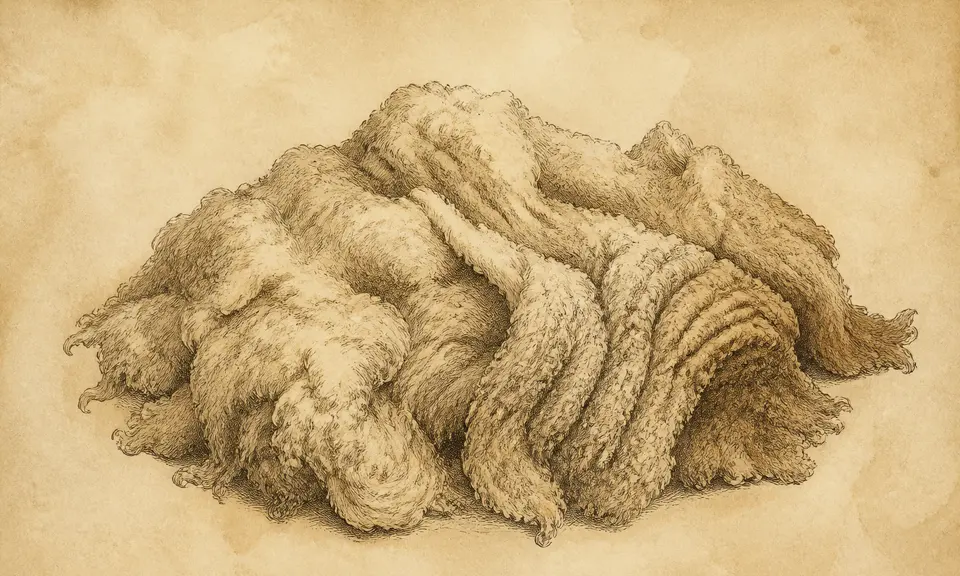
Four books and four jobs for the same fleece. Artemidorus does not read the fleece as cloth at all and puts it on the body: to have wool instead of hair means long illnesses and consumption. The Kaluga book watches the work and dislikes it: spinning wool in a dream means loss and illness. Miller watches the trade: wool is a pleasing sign of prosperous opportunities, and soiled wool means seeking employment with people who detest one's principles. an-Nabulsi watches the cloth on the dreamer's back and reads it as money — much money gathered and honourable, perhaps a lump of silver — and then gives his reason, which is the nobility of the sheep and the many uses it has, for no cloth is better than wool.
This paragraph was generated by a model. It sums up the sources above, comes from none of them and is attributed to no one.
To have wool instead of hair means long illnesses and consumption.
Passage Book I, 19
In a dream, for the one who saw that he wore it, it is much money gathered and honourable that comes to him; and it may be a lump of silver, because of the nobility of the sheep it comes from, for the many benefits it gives people — for there is no kind of cloth better than wool. And whoever sees that he slept on wool came by great money from the quarter of his wife, and his sleeping stands in the place of the bed, and the bed is a woman. And the burning of the wool is the spoiling of religion and the going of money. And if a learned man saw that he wears clothes of wool, he turns from the world and calls people to turn from the world and makes them wish for the work of the next world. And whoever sees that he wore a sheepskin with the wool on it, with no other clothing over it or under it, comes by money from a man of rank. And if he saw a dog wearing wool, then a low man comes into money by the money of a man of rank. And if he saw a lion wearing wool, then an overbearing ruler strips people of their money. And wool in a dream is clearness — unless it was coarse and did not suit the man who wore it, and then it is poverty and lowness.
Section letter ṣad
To spin wool in a dream means loss and illness.
To dream of wool, is a pleasing sign of prosperous opportunities to expand your interests. To see soiled, or dirty wool, foretells that you will seek employment with those who detest your principles.