The thighs mean everything else just as the genitals do; only when they have turned fat have they been observed to be unwelcome to the rich, for in most cases they mean expenses on love — and hardly even expenses, but losses.
Passage Book I, 46
4 readings from 3 sources.
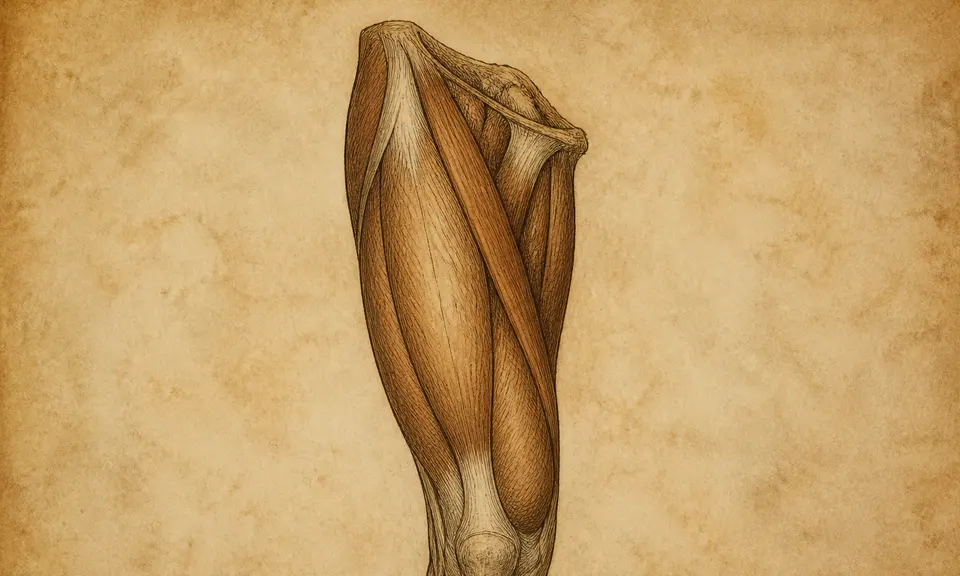
Miller looks at the limb itself and reads its condition: a thigh smooth and white means unusual good luck, wounded thighs foretell illness and treachery, and a young woman admiring her own thigh is warned about her conduct. an-Nabulsi needs five words and does not look at the limb at all — in a dream the thigh is the man's clan. It is the Arabic book's habit in one line: a part of the body stands for the people a man comes from, so that what is wrong with the thigh is wrong with the family. Artemidorus reads the thigh as the genitals read and then adds what fat on it costs: the thighs mean everything else just as the genitals do, only when they have turned fat have they been observed to be unwelcome to the rich, for in most cases they mean expenses on love — and hardly even expenses, but losses. His case on the limb is the strangest in the motif: a man dreamed that Charon was playing at draughts with a certain man and that he himself took that man’s side; that Charon, beaten on this account, grew angry and chased him; and that he fled into an inn called the Camel and barred the doors, and the spirit went off and left him, and out of one of his two thighs grass grew. Of all this there came one single outcome: the house he lived in fell, timbers crashed down upon him and he broke his thigh.
This paragraph was generated by a model. It sums up the sources above, comes from none of them and is attributed to no one.
The thighs mean everything else just as the genitals do; only when they have turned fat have they been observed to be unwelcome to the rich, for in most cases they mean expenses on love — and hardly even expenses, but losses.
Passage Book I, 46
A man dreamed that Charon was playing at draughts with a certain man and that he himself was taking that man's side; and that Charon, beaten on this account, grew angry and chased him; and that he turned away and fled, and when he reached an inn whose name was the Camel, ran into a room and barred the doors. The spirit then went off and left him, and out of one of his two thighs grass grew. Of all this there came one single outcome: the house he lived in fell, timbers crashed down upon him and he broke his thigh.
Passage Book I, 5
In a dream it is the man's clan. And whoever sees a lack in his thigh has no clan and he is a stranger. And whoever sees a pain in his thigh has done ill to his clan. And whoever sees that his thigh came away from him grows unable, and does not prosper, and no affair is completed for him. And whoever sees a piece of flesh that has stuck to his thigh — a child that is not of him is ascribed to him. And the thigh points to one of the pillars of the house and to one of its props. And perhaps it points to what he leans upon, of money, or a master, or a father, or a child, or a wife, or a husband, or an earning, or a beast, or a tool that helps him in his earning. And the thigh points to the tribe that he is of; so whoever saw his thigh grown fine, it pointed to the fineness of the state of the one it points to; and likewise, if he saw in it a bad increase, it was the contrary of that. And perhaps the failing of the thigh's use points to the stopping of the use of the wife or of the mount. And the thigh points to the prayer and to its completion and to the sitting back upon the haunch in it. And it points to what guards him, of clothing or of gear, or to what he sits upon. And whoever sees that his thigh was cut off goes far from his people until he dies a stranger. And whoever sees that his thigh is of copper — then his clan is bold in acts of disobedience.
Section letter fa
To dream of seeing your thigh smooth and white, denotes unusual good luck and pleasure. To see wounded thighs, foretells illness and treachery. For a young woman to admire her thigh, signifies willingness to engage in adventures, and she should heed this as a warning to be careful of her conduct.