The table differs in nothing from the tripod, nor does any other vessel at which a man dines.
Passage Book I, 74
3 readings from 3 sources.
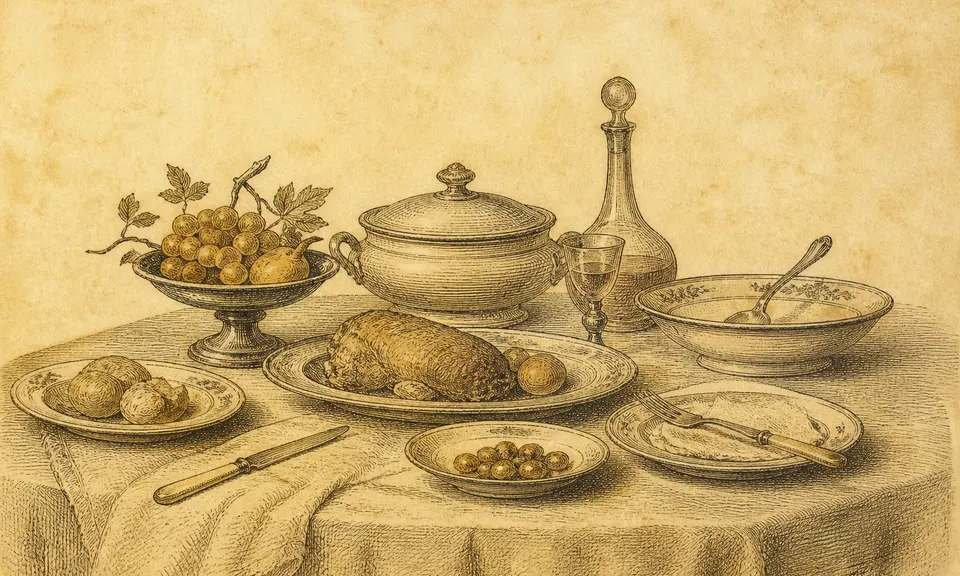
The one reading the two books share is the table taken away. To clear away the table in Miller denotes that pleasure will soon assume the form of trouble and indifference; the lifting away of the table in an-Nabulsi is the passing of that spoil, because the table itself is spoil amid danger. Everything else diverges. Miller watches the furniture and the linen: setting a table preparatory to a meal foretells happy unions and prosperous circumstances, empty tables signify poverty or disagreements, a soiled cloth is disobedience from servants or children, eating from a table with no cloth at all is an independent disposition, and a broken table is ominous of decaying fortune. an-Nabulsi does not describe a table at all; he reads what it does. It is a blessing, the answering of an invitation, ease of living and victory over enemies, and it is food and livelihood for him to whom it belonged or who ate from it. The warning in it is accounting rather than etiquette: what is eaten from it is taken into account. And at the end the table stops being furniture and becomes the host — a renowned thing, in which there is need of helpers in the governing of a town, and a great man, dutiful and generous. Artemidorus gives it the shortest reading of the three and makes the table not worth distinguishing: the table differs in nothing from the tripod, nor does any other vessel at which a man dines.
This paragraph was generated by a model. It sums up the sources above, comes from none of them and is attributed to no one.
The table differs in nothing from the tripod, nor does any other vessel at which a man dines.
Passage Book I, 74
In a dream it is a blessing, and the answering of an invitation, and ease of living, and it points to victory over enemies; and what is eaten from it is taken into account. And the table is spoil amid danger, and the lifting of it away is the passing of that spoil. And the table is food and livelihood for him to whom it belonged or who ate from it. And the table is renowned, and in it there is need of helpers in the governing of a town or of a thriving village. And the table is a great man, dutiful and generous.
Section letter mim
To dream of setting a table preparatory to a meal, foretells happy unions and prosperous circumstances. To see empty tables, signifies poverty or disagreements. To clear away the table, denotes that pleasure will soon assume the form of trouble and indifference. To eat from a table without a cloth, foretells that you will be possessed of an independent disposition, and the prosperity or conduct of others will give you no concern. To see a table walking or moving in some mysterious way, foretells that dissatisfaction will soon enter your life, and you will seek relief in change. To dream of a soiled cloth on a table, denotes disobedience from servants or children, and quarreling will invariably follow pleasure. To see a broken table, is ominous of decaying fortune. To see one standing or sitting on a table, foretells that to obtain their desires they will be guilty of indiscretions. To see or hear table-rapping or writing, denotes that you will undergo change of feelings towards your friends, and your fortune will be threatened. A loss from the depreciation of relatives or friends is indicated.