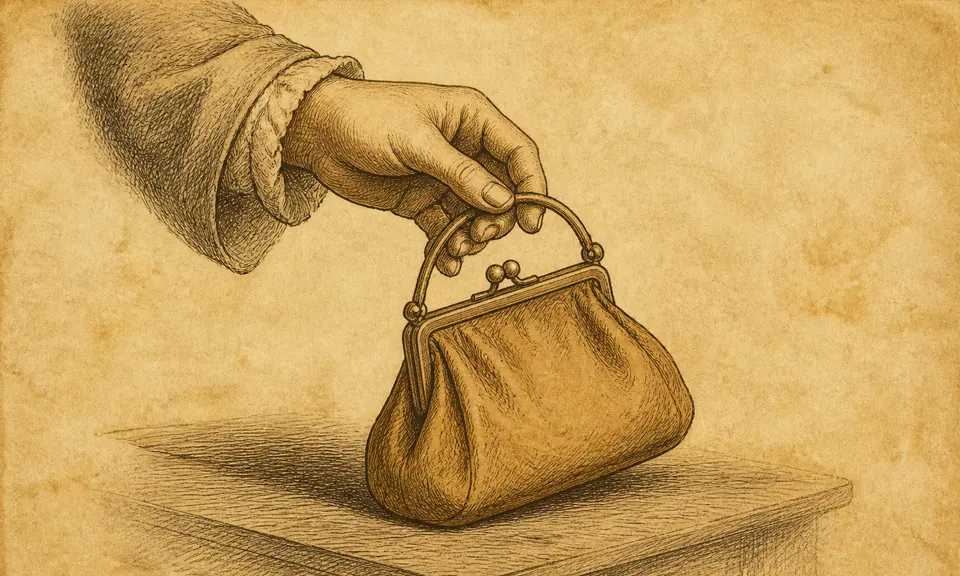
Stealing

2 readings from 2 sources.

The image was generated by a model. It is not a period engraving and comes from none of the sources.

Miller reads the theft as reputation: stealing, or watching it done, foretells bad luck and loss of character; being accused of it means being misunderstood and suffering for it, though the favour comes round in the end; accusing others means you have treated somebody with hasty inconsideration. an-Nabulsi keeps the loss but moves it off the character and onto the household. An unknown thief is the angel of death: let him take the basin, the wrap or the flask and it is the wife or the household that dies. A known thief is a talebearer, and if he is unknown and old, the tales come from a friend; if young, from an enemy. Then the line Miller would not write: theft is praised and is a sign of good — except for the man who means to deceive. And the closing thought is the shape of the act itself: whoever steals in a dream commits adultery or lies, because the adulterer hides himself as the thief does.

This paragraph was generated by a model. It sums up the sources above, comes from none of them and is attributed to no one.

Arabic dream book

Theft out of a place of safekeeping points in a dream to adultery and to usury. And the thief in a dream is the angel of death, if he is unknown; and if he is known, then the thief takes from the man he robbed some knowledge or craft, or a word he profits by. If he sees an unknown thief come into his house and steal his basin, his wife dies; and the same if he steals her wrap or her flask or anything else that belongs to women — it points to the death of his household; and the same if the thing stolen belongs to the servants. If he sees that his money was stolen and the thief was known, that man is a talebearer who carries tales; and if the thief was unknown and an old man, his friend carries tales against him, and if a young man, his enemy does. And it is said that theft is praised and is a sign of good — except for the man who means to deceive. Whoever sees that he skulks about or steals, thieves are to be feared for him; and theft may be a sin that the thief commits. And whoever sees that he steals commits adultery or lies, because the adulterer hides himself as the thief hides himself.

Section letter sin

The Perfuming of Mankind in the Interpretation of Dreams

Abd al-Ghani al-Nabulsi

before 1731; first printed Cairo 1858 · Arab-Islamic

carries the ancient tradition after Artemidorus

About this source

An Arabic dream book by the Damascene scholar al-Nabulsi, an alphabetical dictionary of two and a half thousand headwords. It draws on the ancient tradition directly: Artemidorus was translated into Arabic by Hunayn ibn Ishaq in the ninth century. The readings here almost always address the dreamer’s standing, property and faith rather than their feelings.

Rights: public domain

Where the text is from: https://shamela.ws/book/1217

Miller

To dream of stealing, or of seeing others commit this act, foretells bad luck and loss of character. To be accused of stealing, denotes that you will be misunderstood in some affair, and suffer therefrom, but you will eventually find that this will bring you favor. To accuse others, denotes that you will treat some person with hasty inconsideration.

Ten Thousand Dreams Interpreted; Or, What's in a Dream

Gustavus Hindman Miller

1901 · American Victorian

carries fragments of the ancient tradition without its system

About this source

An American dream book, the only one here that knows the telephone, the railroad or the elevator. Doctrinally it is the most degraded: it keeps fragments of the ancient tradition without the system that once held them together.

Rights: public domain

Where the text is from: https://www.gutenberg.org/ebooks/926