It is a blowing out of breath together with some spittle from the mouth, and in a dream it points to sorcery; God, be He exalted, has said: and from the evil of the women who blow upon knots.
Section letter nun
3 readings from 2 sources.
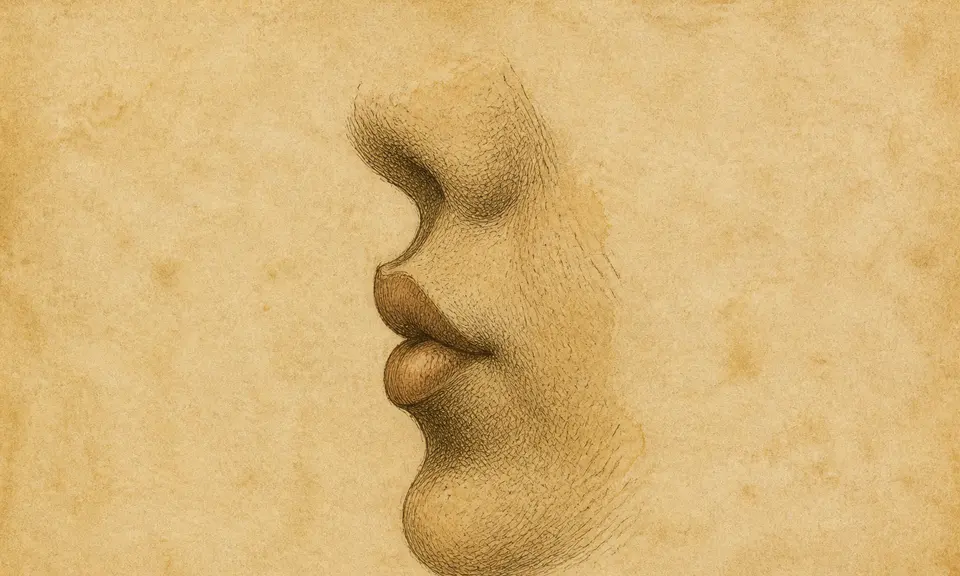
Miller stays among people: spitting ends seemingly auspicious undertakings unhappily, and being spat upon foretells disagreements and affections turning away. an-Nabulsi is not reading the same act. His reading defines it first — a blowing out of breath together with some spittle from the mouth — and then points to sorcery, with the Qur'anic line about those who blow upon knots. The English book has an insult in front of it; the Arabic book has a spell. Another Arabic reading leaves the sorcery behind and reads the spittle as a man's strength and his money. Dry spittle means he cannot do what his equals do and his word counts for little; foam and froth mean empty talk or a lie he has made up. And then the whole thing turns on where he spits: on a wall, his money goes into the holy war or into trade; on the ground, he buys land; on a tree, he breaks an oath; on a person, he slanders him. Hot spittle is a long life and cold spittle is death.
This paragraph was generated by a model. It sums up the sources above, comes from none of them and is attributed to no one.
It is a blowing out of breath together with some spittle from the mouth, and in a dream it points to sorcery; God, be He exalted, has said: and from the evil of the women who blow upon knots.
Section letter nun
It points in a dream to a man's strength: whoever sees his spittle dry is unable for what he wants of the things his equals do, and his word and his place grow small. Whoever sees that foam and froth came out of his mouth — it points to empty talk he speaks, or to a lie he makes up. And spittle is a man's money and his power: whoever sees that he spits on a wall spends his money in the holy war, or puts his money to work in trade; and if he spat on the ground, he bought an estate or a piece of land; and if he spat on a tree, he broke a covenant or broke an oath; and if he spat on a person, he slanders him. Hot spittle is a sign of a long life, and cold spittle a sign of death, and the drying of the spittle in the mouth is poverty. And spittle is what is over and above in speech, or in knowledge, or in money. And perhaps spittle points to the drawing of rest and the seeking of it from the marriage bed; and perhaps it points to health and to sickness. And if a man sees his spittle changed, it points to a bad mixture in him; and the cutting off of the saliva, which is the spittle, is in a dream a sign of the cutting off of rest and pleasure and of the loss of children; and much of it in a dream is a sign of care and trouble. Whoever sees as if he spits — evil speech comes out of him; and if there was blood in it, or thick phlegm, it is his speech in what is not lawful for him. Whoever sees that he spat in the face of a person or of a beast — speech comes out of him that is not lawful for him.
Section letter ba
To dream of spitting, denotes unhappy terminations of seemingly auspicious undertakings. For some one to spit on you, foretells disagreements and alienation of affections.